How Learning to See Becomes Learning to Collect
Learning to See
Essays on Beauty, Craftsmanship, and the Experience of Art
VI. The Beginning of Stewardship
"Every meaningful collection begins long before the first purchase."
People often ask how to begin collecting art.
They expect practical advice.
What should I buy?
Which artists are a good investment?
How do I know if something is authentic?
Those are worthwhile questions.
But they are not the first questions.
The first question is quieter.
What kind of collector do I hope to become?
There is an important distinction between acquiring objects and building a collection.
One fills space.
The other tells a story.
Collections are rarely assembled all at once.
They grow through years of curiosity, patience, and attention.
Each work becomes part of an ongoing conversation between the collector and the world.
The finest collections often reveal less about changing tastes than about a person's way of seeing.
When people visit galleries, they sometimes feel pressure to make the "right" decision.
To choose the most famous artist.
The safest investment.
The piece everyone else admires.
Yet lasting collections are seldom built this way.
They are built through recognition.
Not recognition of financial opportunity.
Recognition of oneself.
A work stops you.
You return to it.
You think about it days later.
Months later you still remember it.
Something within the work has quietly become part of your own life.
That is usually where collecting begins.
Japanese woodblock prints offer a beautiful example of this process.
Many new collectors first notice their craftsmanship.
The remarkable carving.
The subtle gradations of color.
The harmony of composition.
These qualities are extraordinary.
But over time, something shifts.
The collector begins noticing something deeper.
How morning light feels different from evening light.
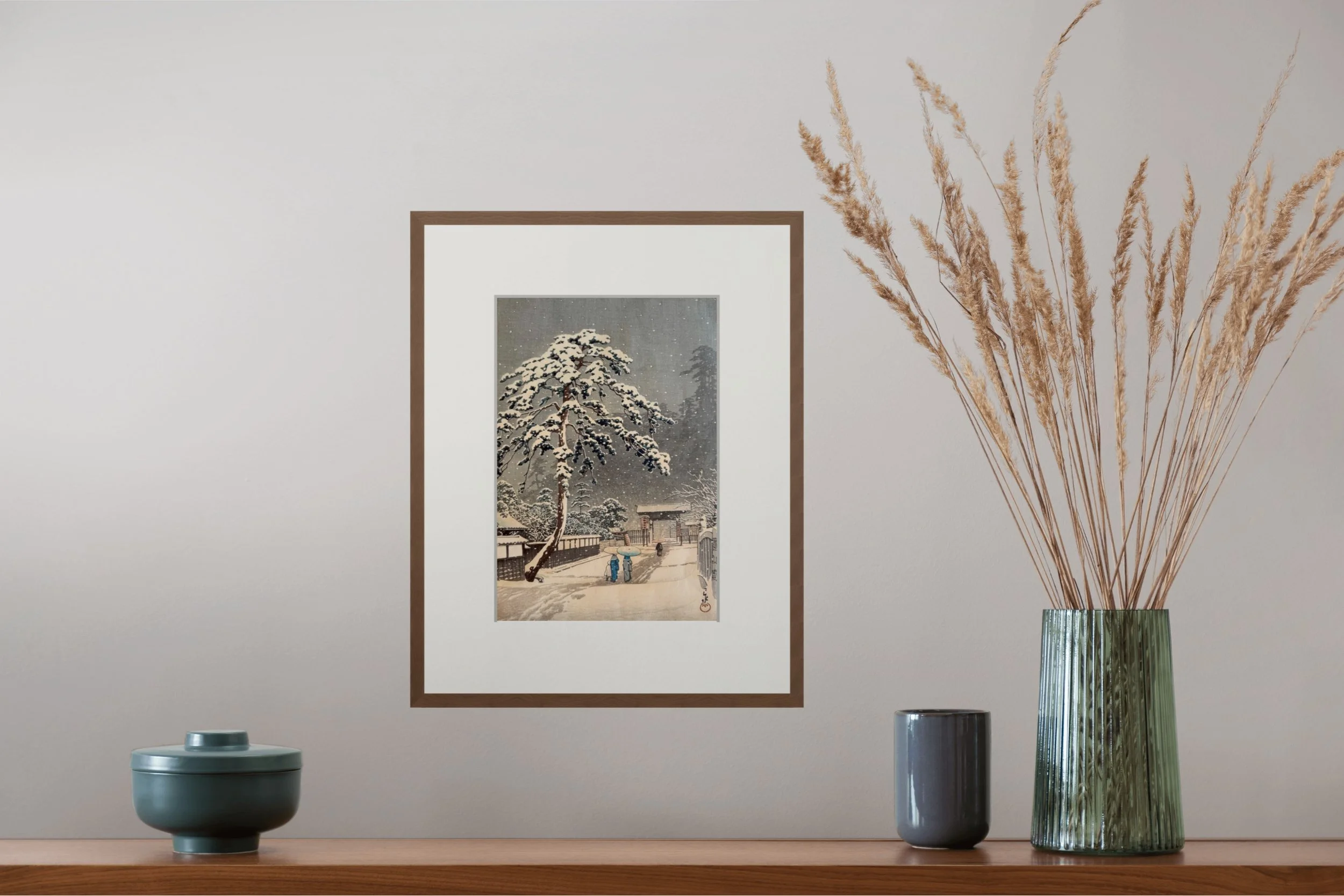
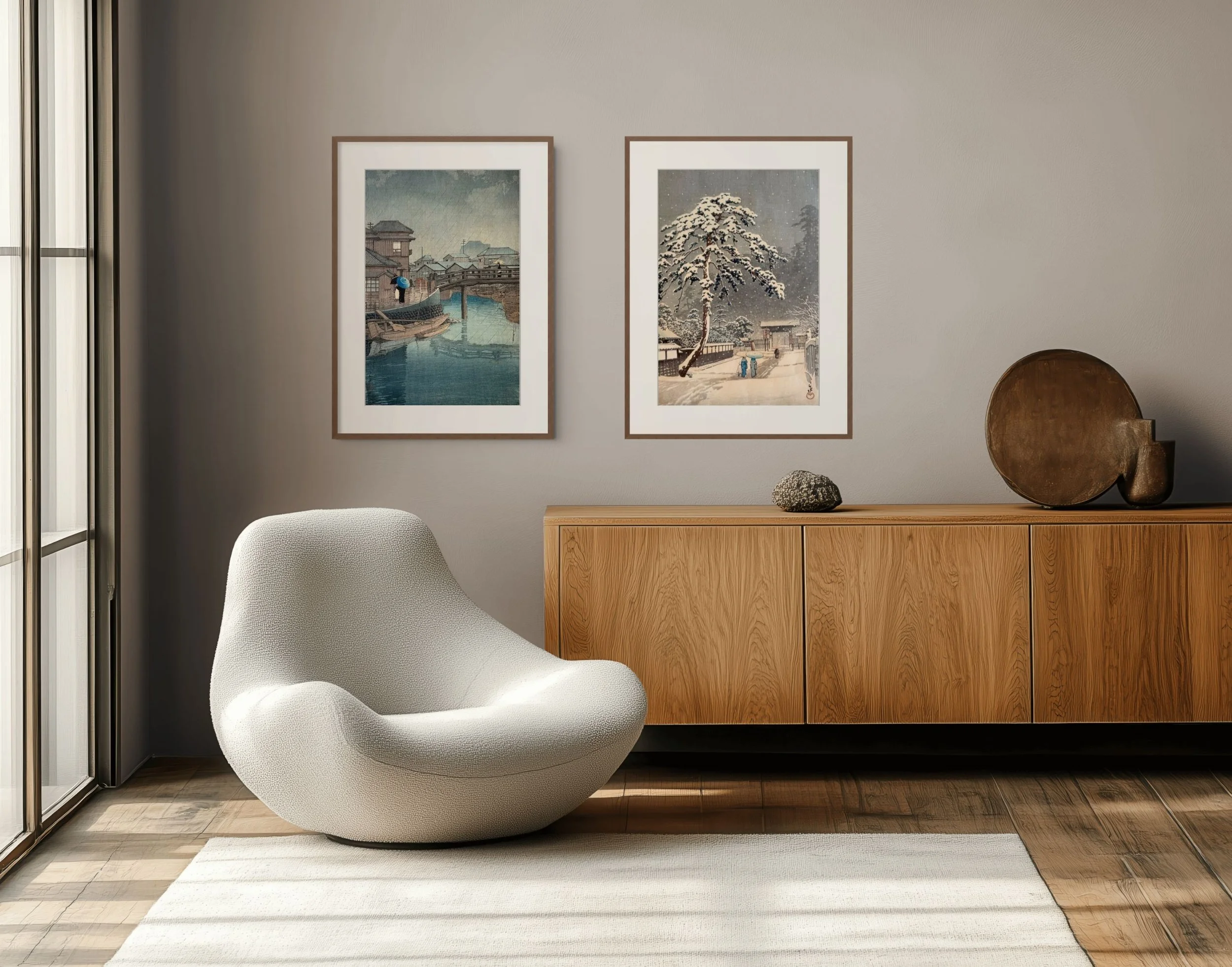
How rain transforms a city.
How snow reveals structure.
How atmosphere carries emotion.
The print has quietly accomplished something remarkable.
It has changed not merely what the collector owns.
It has changed what the collector notices.
That is education in its highest form.
Practical knowledge matters, of course.
Collectors should learn how prints were made.
How publishers worked.
How editions differ.
How condition influences value.
How provenance strengthens confidence.
How to distinguish original woodblock impressions from later reproductions.
These skills are important.
They protect both the artwork and the collector.
But knowledge alone does not create wisdom.
Wisdom emerges through lived attention.
The more carefully we look, the more confidently we recognize quality.
Not because someone tells us what to admire.
Because we have learned to see it ourselves.
There is another truth that reveals itself slowly.
Collectors do not truly own great works of art.
They care for them.
Every painting, every print, every photograph has lived before us.
If we are fortunate, it will live after us as well.
Our role is wonderfully temporary.
We become custodians for a chapter in an artwork's much longer life.
That perspective changes everything.
Instead of asking,
"How much is this worth?"
We begin asking,
"How well can I care for it?"
Instead of asking,
"Will this appreciate?"
We wonder,
"What does this add to the life of my family?"
Instead of asking,
"Does this match my furniture?"
We begin asking,
"Does this belong to the story I hope my home tells?"
These are the questions of stewardship.
Perhaps that is why the most memorable collections often feel deeply personal.
They are not assembled to impress visitors.
They become quiet autobiographies.
A landscape discovered while traveling.
A photograph that reminds someone of childhood.
A print whose atmosphere never quite leaves their thoughts.
Seen together, these works reveal something no financial statement ever could.
They reveal a life.
At House of Stefani, we believe collecting is one of the most hopeful forms of cultural participation.
Every thoughtfully acquired work supports artists.
Preserves craftsmanship.
Protects cultural memory.
Creates beauty within daily life.
And, perhaps most importantly, teaches us to live with greater attention.
A home filled with original art is not simply more beautiful.
It becomes a place where observation is practiced.
Where conversation deepens.
Where children grow up asking questions.
Where guests pause.
Where ordinary afternoons are quietly enriched by the presence of something made with extraordinary care.
That is the true gift of collecting.
Not possession.
Relationship.
An Invitation
If you are just beginning your journey as a collector, give yourself permission to move slowly.
Visit galleries.
Return to works more than once.
Read about artists.
Ask questions.
Learn how things are made.
Allow your eye to mature before your collection grows.
The finest collections are not built by those who purchase the fastest.
They are built by those who learn to see the deepest.
Epilogue
The Work of Seeing
This series began with a simple question.
Why do certain works of art remain with us for a lifetime?
Along the way we encountered rain, snow, quiet landscapes, extraordinary craftsmanship, and one remarkable Japanese printmaker.
But those subjects were never the destination.
They were invitations.
Invitations to slow down.
To notice.
To discover that beauty often lives not in spectacle, but in careful attention.
Art changes us in curious ways.
Not all at once.
Not dramatically.
Almost imperceptibly.
After living with beautiful work for years, we begin seeing the world differently.
Morning light becomes more interesting.
Old trees become more expressive.
A rainy street becomes unexpectedly beautiful.
Winter becomes less something to endure than something to experience.
The artwork has not changed.
We have.
Perhaps that is the deepest purpose of art.
Not merely to decorate our homes.
Not merely to preserve culture.
Not merely to express ideas.
But to cultivate perception.
To teach us, patiently and generously, how to see.
And perhaps that is the work of a lifetime.