By Christina Stefani for House of Stefani
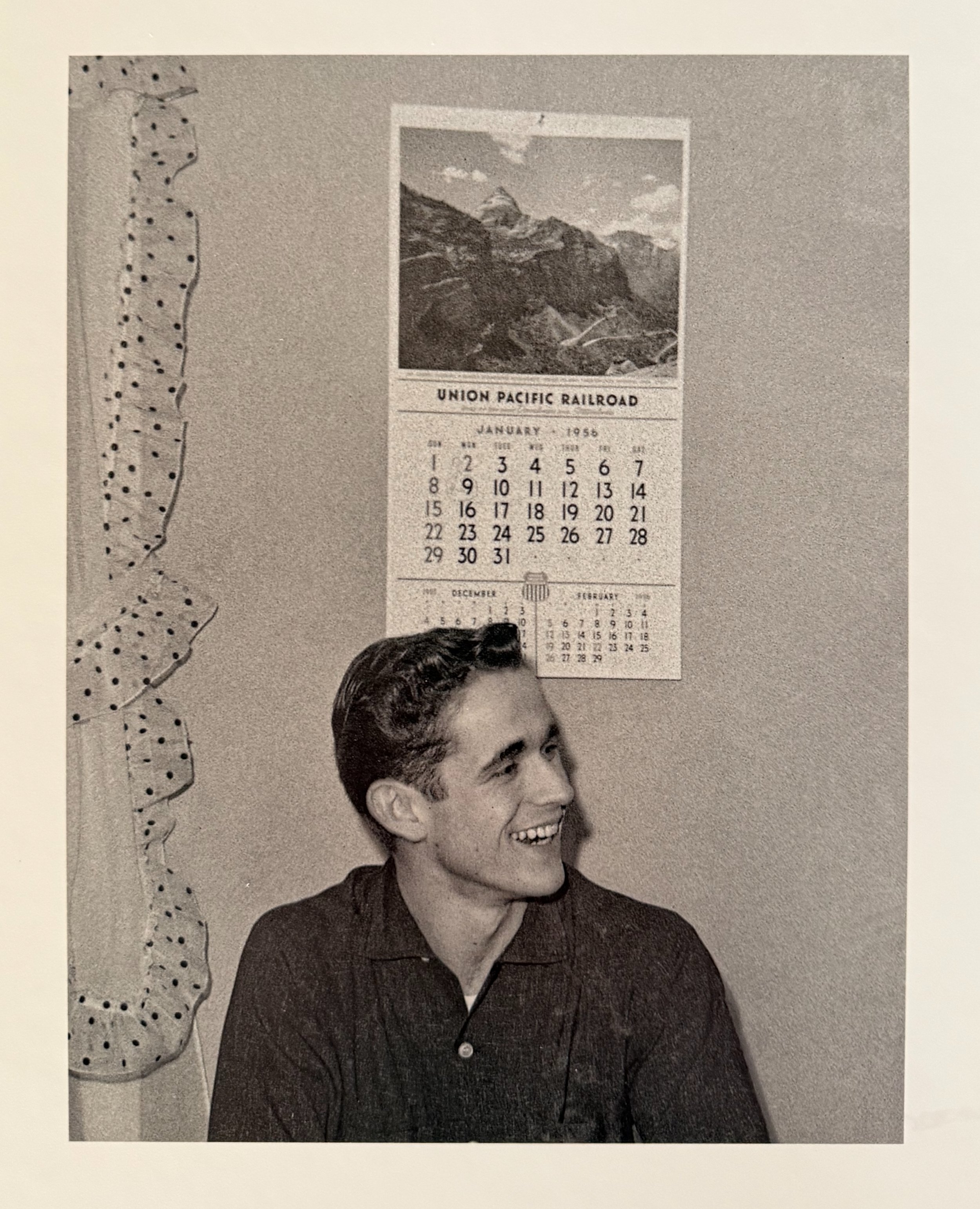
Richard Stefani at 23. January, 1956. ©Richard Stefani Estate
Before the studio, before the awards, before anyone knew his name, there was a young man learning to see.
There is a photograph of Richard Stefani taken in January 1956.
He is twenty-two years old, soon to turn twenty-three.
He is sitting beneath a Union Pacific Railroad calendar, turned toward someone outside the frame. He is laughing.
There is nothing particularly historic about the moment.
And that may be precisely why the photograph matters.
We are accustomed to meeting artists after we know what they became.
The biography has already been written. The important works have been selected. Awards and exhibitions have been cataloged. A life that was once uncertain has acquired the reassuring order of chronology.
But Richard did not know any of that yet.
In January 1956, there was no Stefani Photography.
There was no Master of Photography degree.
There were no decades of portraits, no national competitions, no professional reputation, no photographic legacy bearing his name.
There was simply Richard.
And a camera was beginning to matter very much to him.
Before Photography Became a Life
Richard's introduction to photography had begun years earlier.
His uncle Floyd was an amateur photographer during the Great Depression, and Richard remembered being fascinated by the camera's ability to preserve something that otherwise disappeared.
That fascination followed him into military service during the Korean War.
While serving aboard Navy ships, he watched photographers work. He experimented in the ship's darkroom. During leave in Hawaii and Japan, he made photographs of his own.
When he returned to Oregon, however, photography was not waiting for him as a profession.
The family business was.
Richard joined Stefani Lumber Co. in Canby, Oregon.
It was practical work. Responsible work. The sort of work around which a young man might reasonably have expected to build a life.
But he kept photographing.
There is something important in that.
The career did not come first.
The looking came first.
Fall 1956
Several months after this photograph was made, Richard traveled east along the Columbia River.
He was twenty-three.
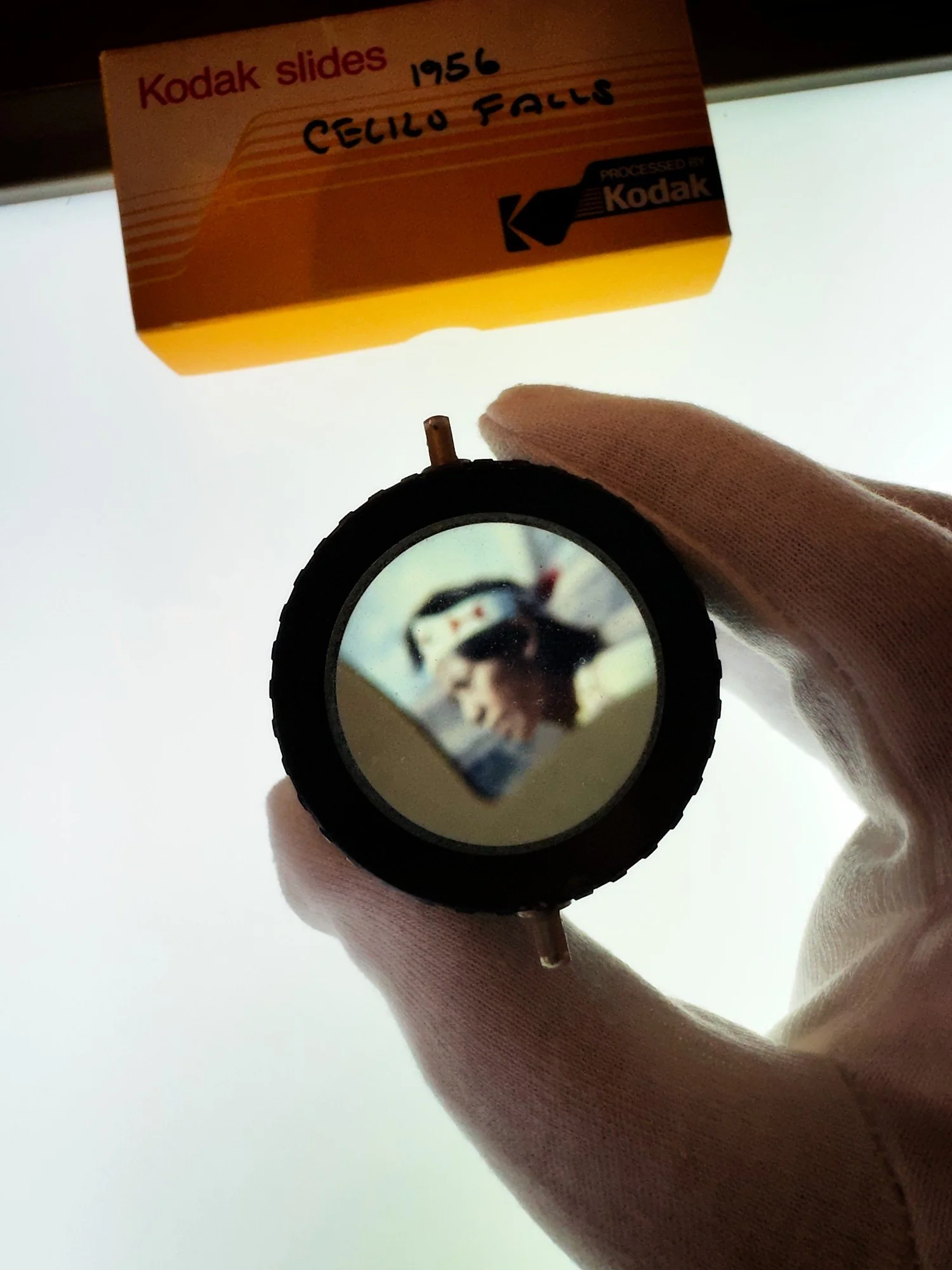
With him were two cameras and two rolls of color film.
And eventually he arrived at Celilo Falls.
We do not have to invent a grand artistic intention for what happened next.
In fact, doing so would diminish it.
Richard wasn't working for a magazine.
He wasn't carrying out a government documentation project.
He had not been commissioned to record a threatened cultural landscape.
He was simply a young photographer who found himself somewhere extraordinary and understood that he wanted to make photographs.
So he looked.
At the river.
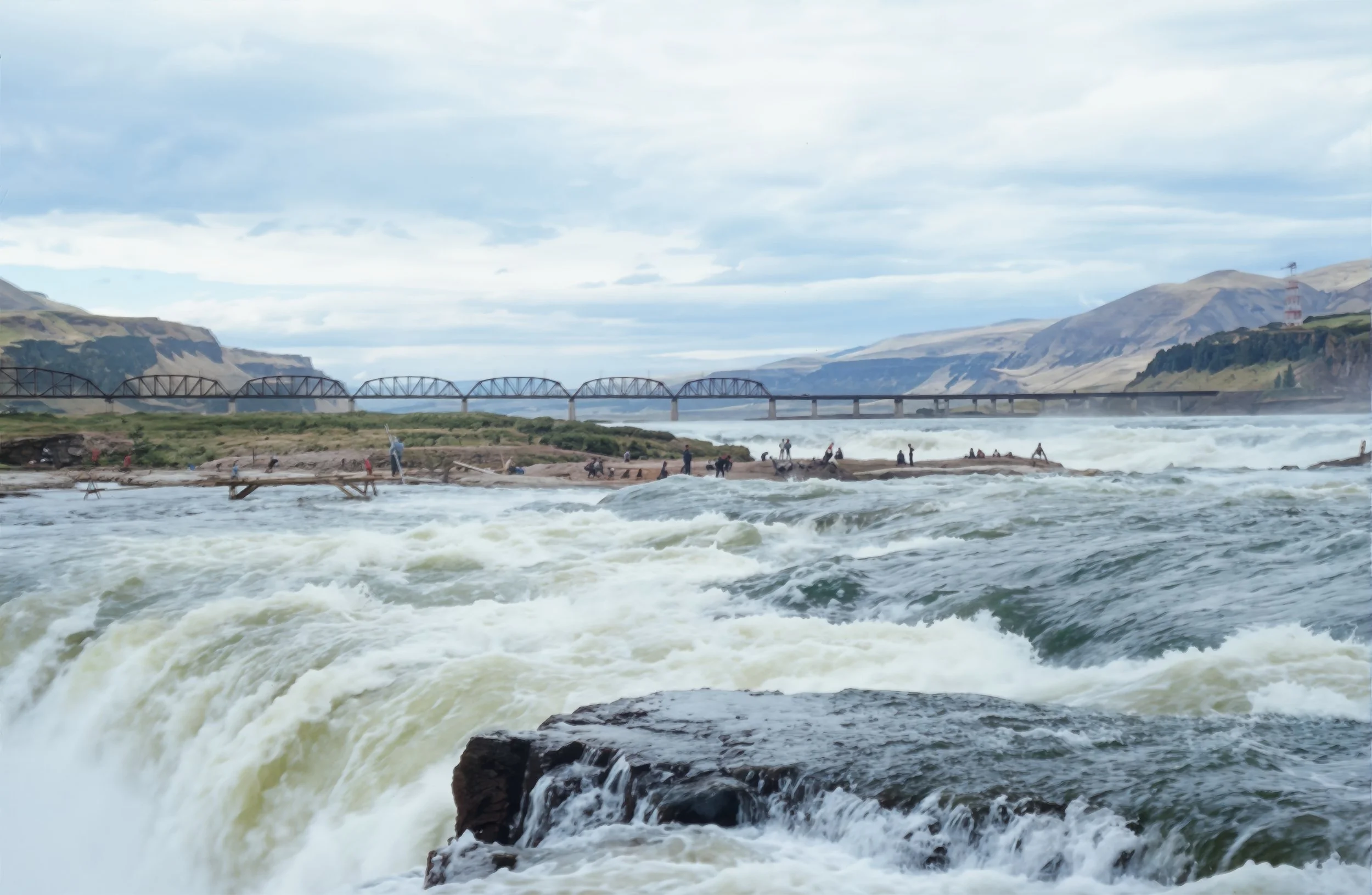
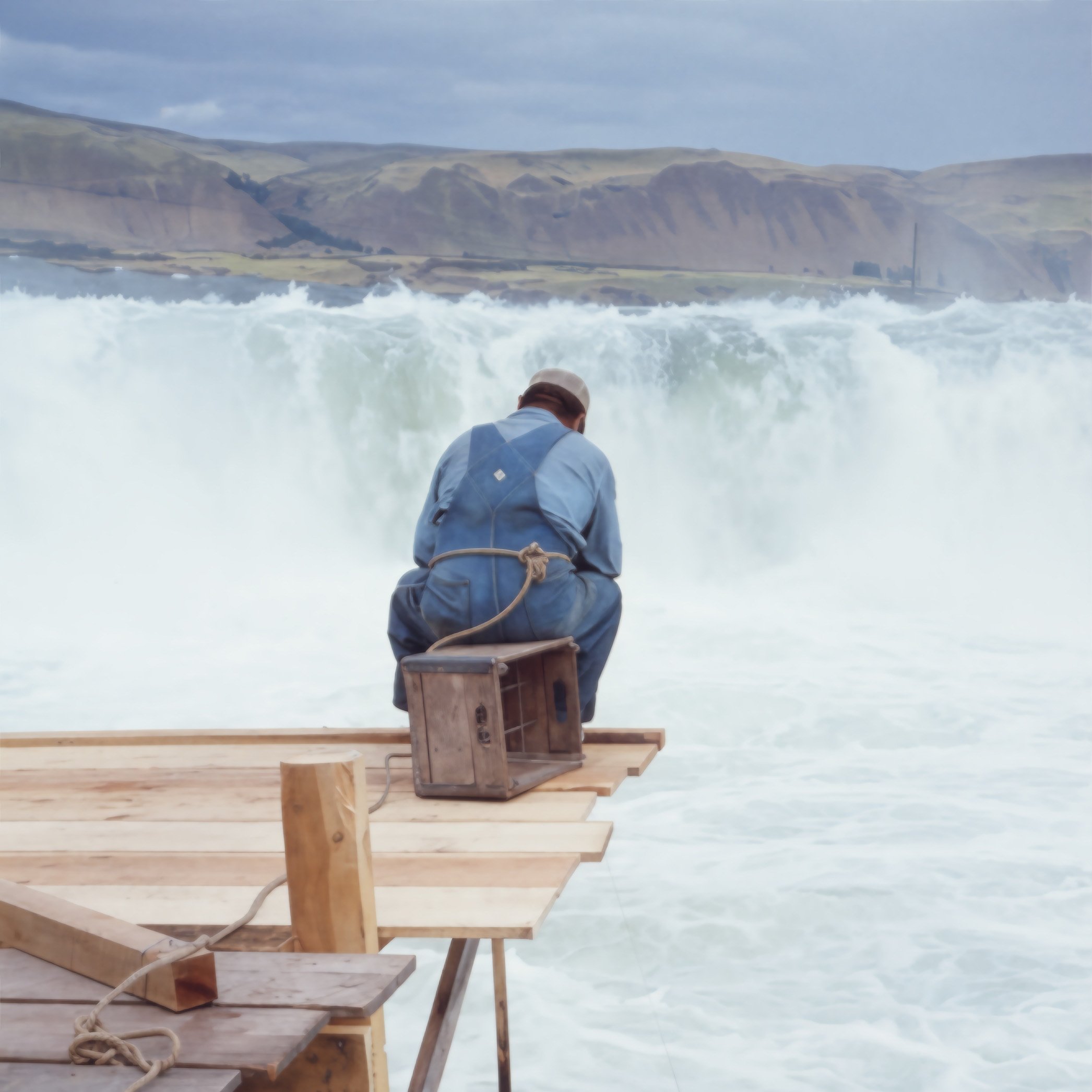
At the wooden fishing platforms suspended over it.
At fishermen working above the water.
At people waiting.
At children and young men.
At people dressed for gatherings.
At the immense landscape surrounding them.
And, increasingly, at faces.
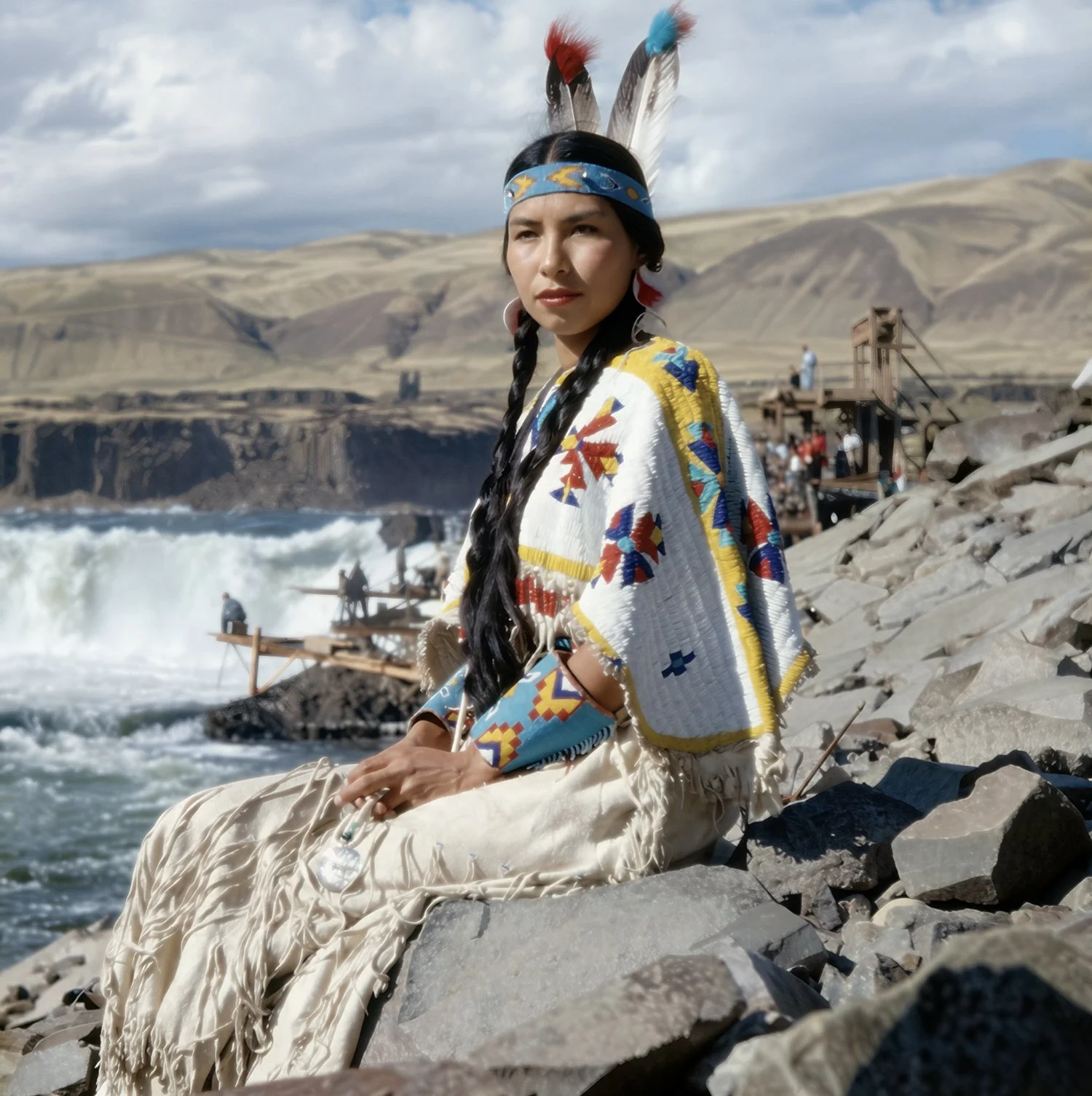
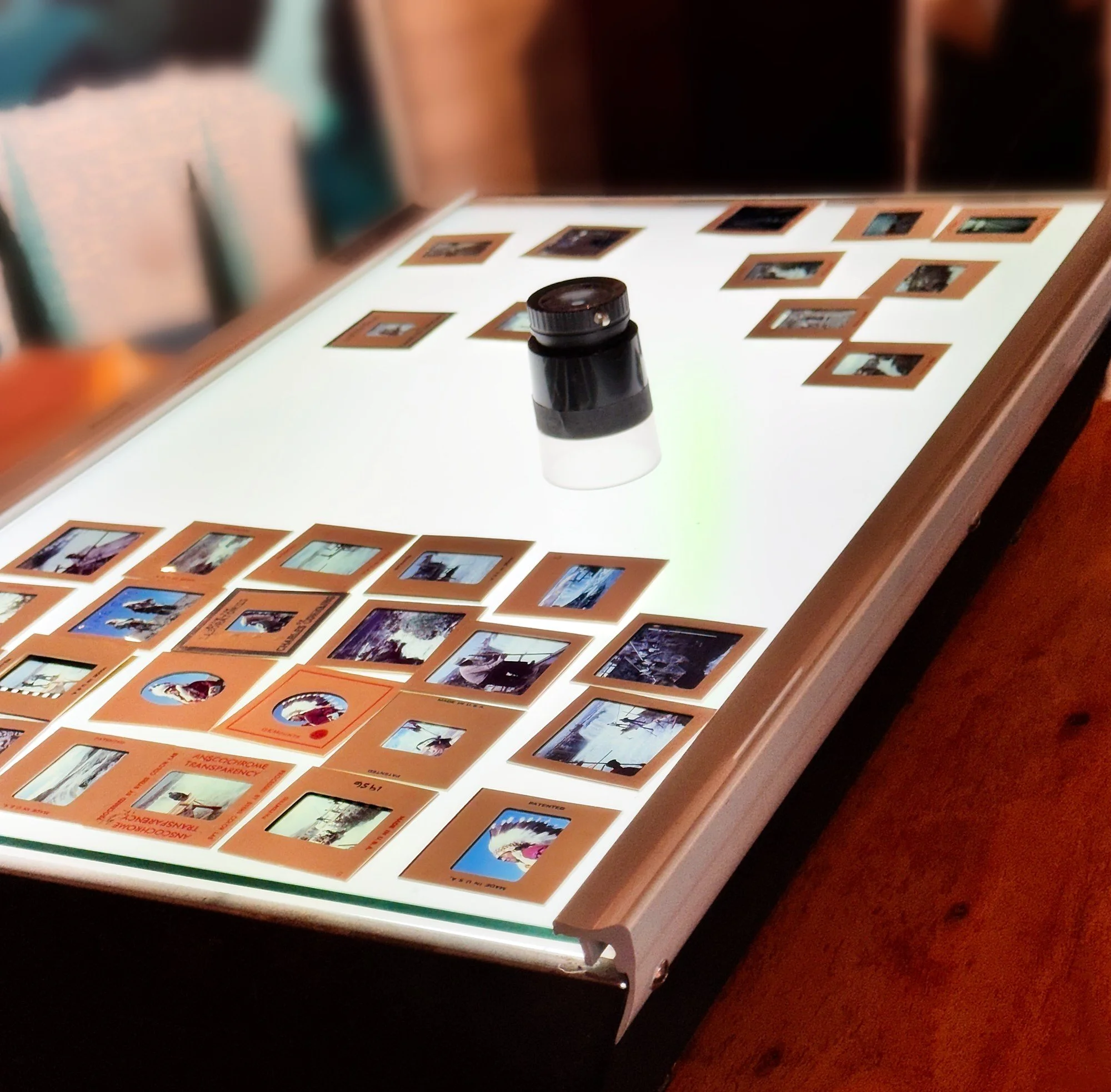
Twenty-three surviving color negatives remain from that visit.
Seen together seventy years later, they reveal something that Richard himself could not possibly have understood.
They show us a photographer becoming a photographer.
The People
This may be the most revealing part of the Celilo archive.
Richard certainly photographed the falls.
How could he not?
The Columbia dominates many of the images. Water surges through nearly every part of the landscape. Wooden scaffolds seem almost impossibly small against its force.
But Richard keeps moving closer to people.
A fisherman crouches above the river.
Another pauses with his hands resting on a long pole.
Young men wait among fishing nets.
A woman sits on the rocks with the river behind her.
A young person wearing regalia is photographed against an enormous blue sky.
Richard looks at faces.
Again and again, he looks at faces.
And suddenly, knowing what came afterward, something becomes visible.
Not destiny.
We should be careful about imposing that on a twenty-three-year-old.
But perhaps an instinct.
Richard was already interested in the space between a person and the camera.
He was already waiting for something more than appearance.
What He Would Become
Six years later, Richard made a consequential decision.
He left the family lumber business and became manager of Hausen Photography in Woodburn.
In 1967, he purchased the studio.
Stefani Photography was born.
Portraiture became central to his professional life.
Over the decades that followed, Richard photographed presidents, political figures, professional athletes, business leaders, families, children, and people whose names would never appear in history books.
His subjects changed.
His cameras changed.
His technical mastery deepened enormously.
In 1972, Professional Photographers of America awarded him the Master of Photography degree. His work would earn six Gold Medals in PPA's International Photographic Competition, and he would eventually judge photographic competitions himself.
The Oregon Historical Society now includes Richard Stefani in its authority records.
A life eventually becomes reducible to sentences like these.
But careers are not lived backward.
Richard could not see any of that from 1956.
Before Anyone Knew His Name
That is why I keep returning to the photograph from January.
Richard is laughing.
He isn't performing the role of an important photographer because there is no role to perform.
He hasn't become one yet.
And perhaps there is something here for anyone who makes things.
We tend to recognize a life's direction only after enough of it has been lived.
At the beginning, there may be no institution.
No audience.
No reputation.
No certainty that the thing that keeps drawing your attention will ever become anything more than something you love.
There is simply the work.
And the decision to keep doing it.
Richard kept making photographs.
He kept learning.
He kept looking.
Then, one day in the fall of 1956, he carried two cameras and two rolls of color film to a place along the Columbia River.
He could not have known that he was arriving during one of Celilo Falls' final fishing seasons before the completion of The Dalles Dam transformed the river.
He could not have known that the negatives would survive him.
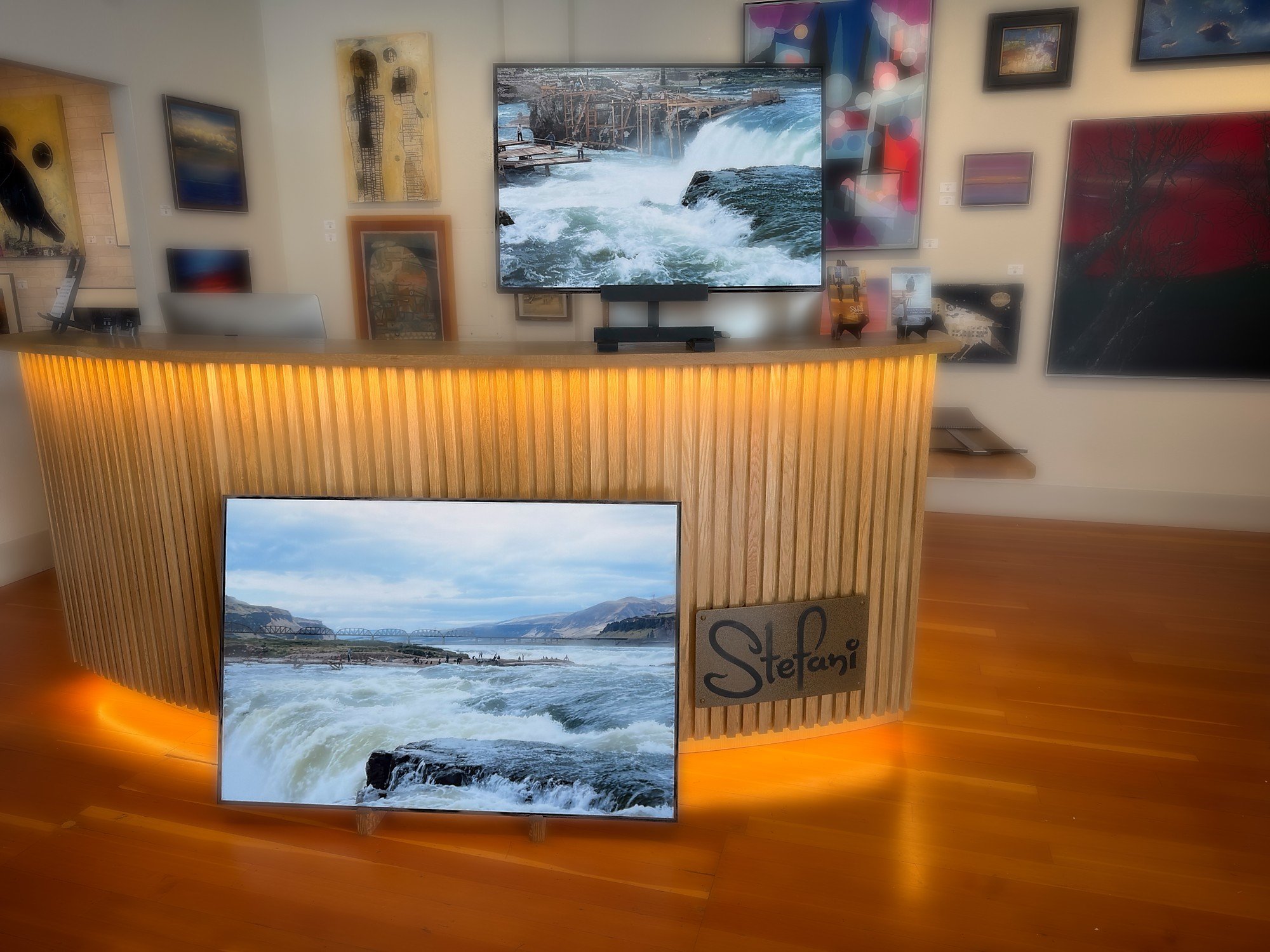
And he certainly could not have known that seventy years later, people would gather in a gallery bearing his name to look at them.
The Photographer Was Already There
There is a temptation, when looking at early work by an accomplished artist, to search for evidence of the master they would become.
Sometimes that is fair.
Sometimes it is wishful thinking.
With Richard's Celilo photographs, I think the truth is subtler.
The technical sophistication of his mature career was still ahead of him.
But something more fundamental was already present.
Attention.
He noticed people.
He allowed the world around them to remain.
He did not separate a fisherman from the river that defined his work, or a person from the landscape in which he encountered them.
He moved between the enormous and the intimate.
Water.
Landscape.
Labor.
Faces.
Presence.
Those instincts would remain with him for the rest of his life.
Perhaps mastery begins much earlier than we recognize.
Not with recognition.
Not with credentials.
Not even with certainty.
Perhaps it begins when someone discovers what they cannot stop paying attention to.
Richard Stefani was twenty-three years old when he photographed Celilo Falls.
His professional career had not begun.
His reputation did not exist.
His greatest photographs were still ahead of him.
But the photographer was already there.
He was learning to see.
And he was paying attention.
Editor's Note
This essay is part of The Before the Water Rose Journal, an ongoing series exploring Celilo Falls, Richard Stefani's 1956 photographs, the people and places they preserve, and the process of bringing this remarkable archive forward with care. The series will continue through the presentation of Before the Water Rose: Celilo Falls, 1956, and beyond, as research and new understanding of the photographs continue to emerge.