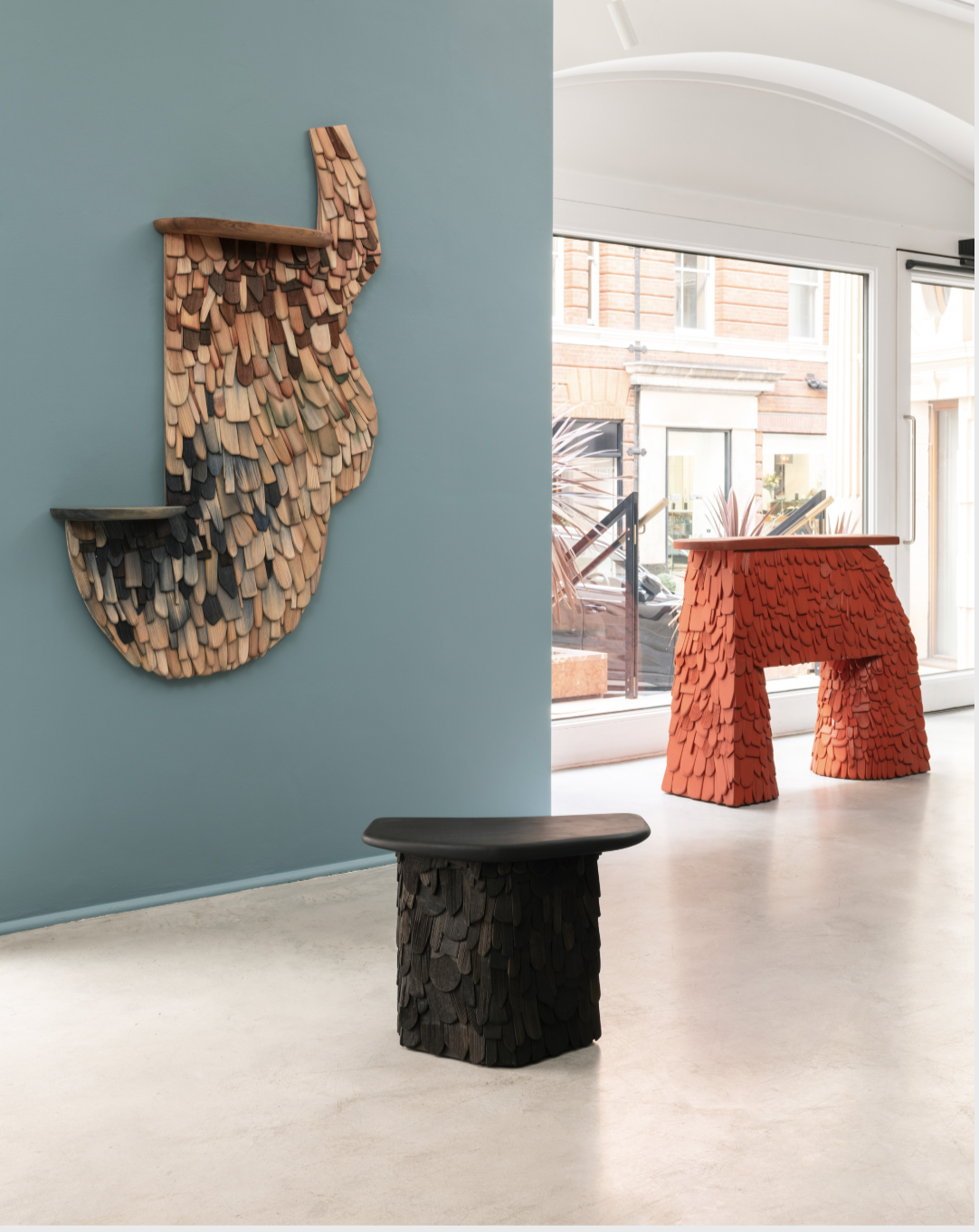
Curated by Christina Stefani for House of Stefani
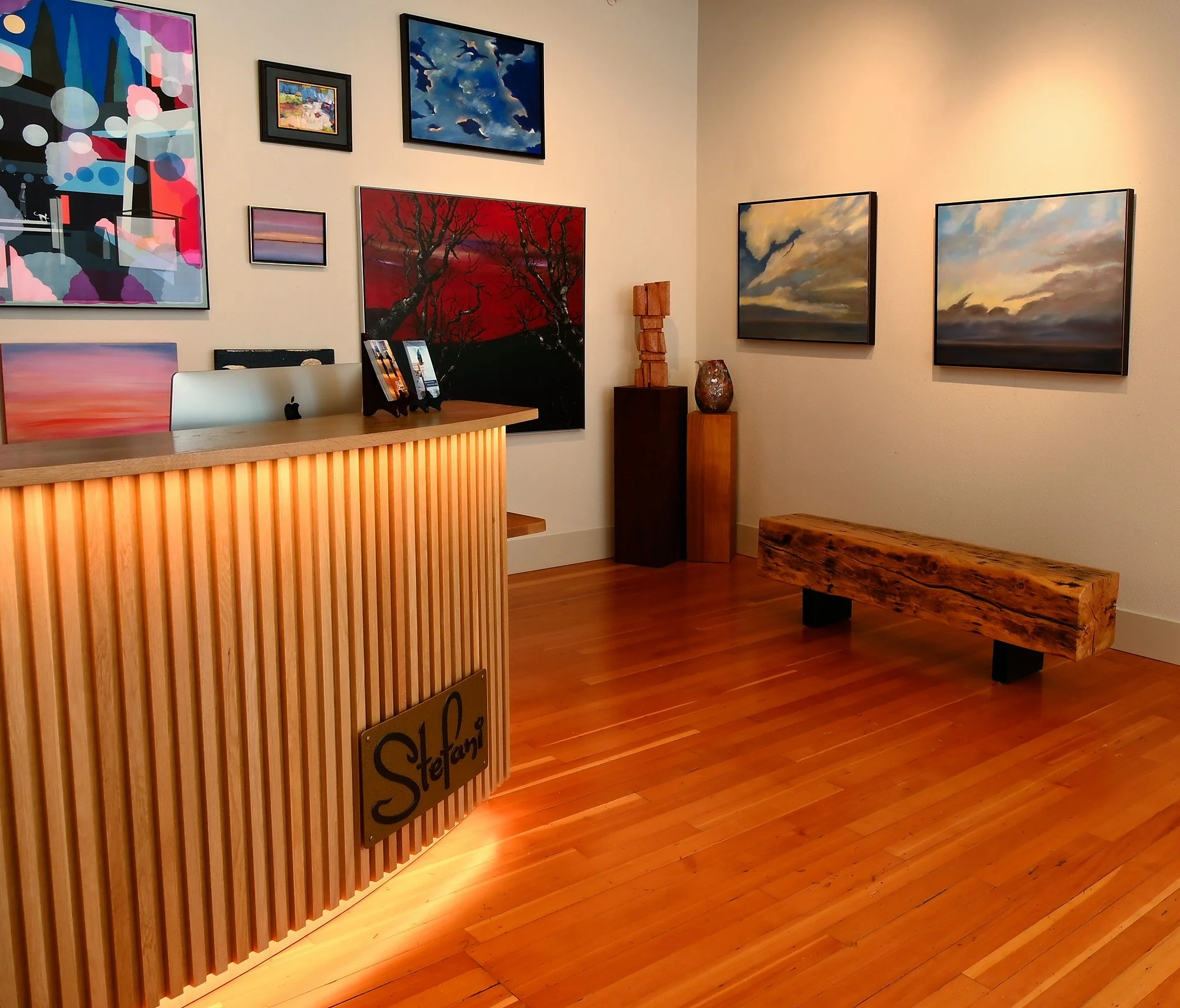
Inside Stefani Art Gallery on August 28, 2026
Some things reveal themselves only through repetition.
This week, a young girl sat quietly on one of the reclaimed-wood benches in the gallery and watched me paint.
Those benches have become part of the character of the space: warm, substantial, handmade, and meant to be used. She simply watched the brush move across the canvas, the colors change, a mark appear and then disappear beneath another one.
She did not seem impatient for anything to happen.
I have been thinking about that moment ever since.
There is something increasingly unusual about watching something take time.
I also finished a triptych this week. By the end, I had spent enough time with the paintings that I no longer felt as though I were imposing my intentions upon them. I knew them well enough to recognize what belonged and what did not.
That kind of knowing is difficult to hurry.
Perhaps this is true of more things than painting.
A cook knows the weight of a particular knife. A gardener begins to recognize the first signs that a plant needs water. A musician knows an instrument through touch. A painter reaches automatically for the brush that will make a certain mark.
We return to something, and return again.
Eventually familiarity becomes knowledge.
The Beauty of Use
That thought led me this week to mingei, the Japanese folk craft movement that emerged in the early twentieth century around philosopher Sōetsu Yanagi and potters Shōji Hamada and Kanjirō Kawai.
Mingei directs attention toward ordinary, useful things made by human hands: ceramics, textiles, baskets, furniture, tools. Objects intended not merely to be admired, but to participate in daily life.
Its history is more specific and nuanced than the contemporary idea that we should simply own fewer, better things. But the two thoughts share something important.
Use creates a relationship.
A bowl held hundreds of times is different from one never touched. A wooden spoon develops a patina. Linen softens. A favorite brush begins to fit the hand in a particular way.
Time leaves evidence.
There is a tendency in contemporary life to believe that newness improves things. Sometimes it does.
But craftsmanship proposes another possibility: that some things become better when we keep them.
And perhaps we become better at using them, too.
A particularly timely exploration of mingei appeared recently in Wallpaper, looking at the movement roughly a century after the term was coined and considering why handmade, useful objects continue to resonate in an increasingly technological world.
There is also a wonderful Oregon connection coming this fall.
Beginning September 19, the Portland Art Museum will present the work of Japanese printmaker Watanabe Sadao, whose distinctive stencil-printing process grew from traditional Japanese textile-dyeing techniques. Watanabe was closely aligned with the mingei movement and used those methods to create his own remarkably recognizable body of work.
From the Studio
The week was not all painting.
Recently in the Journal, I shared the recipe for Soli's Orange Blossom, one of my favorites. I made it again this week.
There is a small pleasure in moving from appreciating something to understanding how it is made. Reading a recipe is one kind of knowledge. Standing at the counter, measuring, tasting, and adjusting is another.
This is one of the reasons I remain interested in the space between art, craft, food, and design.
Making changes the way we see.
Once you have painted, you look at paintings differently.
Once you have grown something, cooked something, printed something, sewn something, or built something, you begin noticing decisions that were previously invisible.
Perhaps that is part of what craftsmanship teaches us.
Not simply how to make things.
How to see them.

Self Portrait with Headband (detail), about 1932, by Lee Miller.
Cultural Calendar
Salem | September 4
First Friday + Indigenous Northwest Biennial
September begins with an especially good evening for art in Salem.
At Stefani Art Gallery, First Friday returns from 5–8 pm, where I will debut three new paintings from the studio. Just a few minutes away, Salem Art Association opens its Indigenous Northwest Biennial, curated by Steph LittleBird and bringing together artists working across traditional and contemporary media.
The two galleries are roughly two miles apart, making it easy to experience both in one evening.
Indigenous Northwest continues through October 25 at the A.N. Bush Gallery.
Portland | September 5
The Stars We Do Not See: Australian Indigenous Art
Portland Art Museum
More than 200 works by over 130 artists, drawn from the National Gallery of Victoria in Melbourne, introduce North American audiences to the extraordinary diversity of Indigenous Australian visual culture. Australia encompasses more than 250 distinct Indigenous nations, making the breadth of this exhibition particularly significant. On view through January 3, 2027.
Chicago | August 29
Lee Miller: Fearless
Art Institute of Chicago
Opening this weekend, this major survey brings renewed attention to Lee Miller's extraordinary photographic career, from Surrealist experimentation and portraiture to her work as an accredited correspondent during World War II. Rather than reducing Miller to the famous personalities surrounding her, the exhibition considers the breadth of her own work across several decades. On view through December 7.
Portland | September 19
Watanabe Sadao
Portland Art Museum
Working with a stencil-printing technique derived from traditional Japanese textile dyeing, Watanabe created distinctive prints frequently depicting Biblical subjects. The exhibition traces his methods and his relationship to the twentieth-century mingei movement. On view through September 26, 2027.
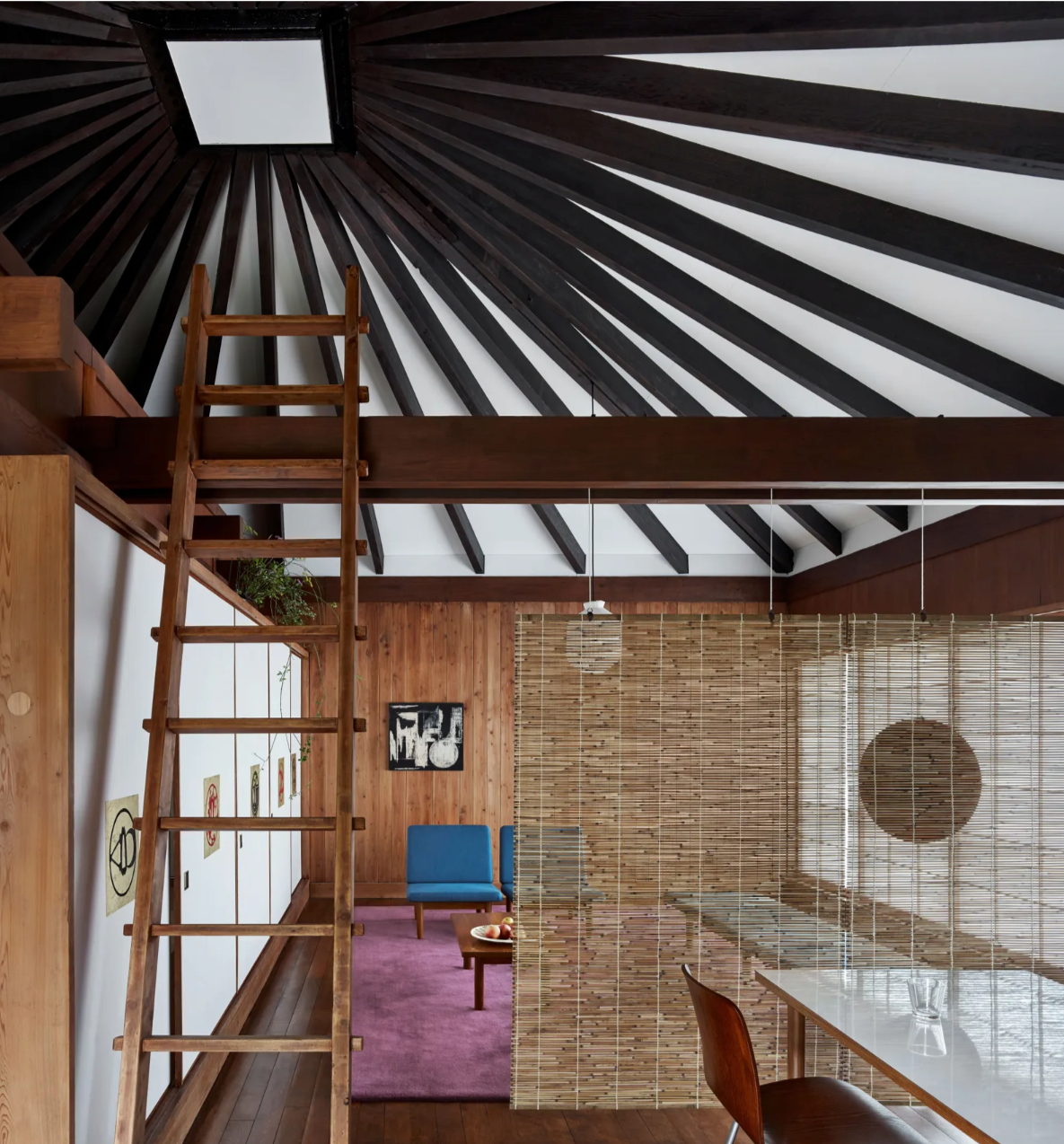
Japanese architect Kazuo Shinohara’s Umbrella House. Photo by Damian Poffet.
Further Afield
An architectural second life
Kazuo Shinohara's remarkable Umbrella House, designed in Tokyo in 1961, could easily have disappeared. Instead, the tiny timber house was carefully documented, dismantled, repaired and reconstructed at the Vitra Campus in Germany.
A recent profile of Swiss architecture practice Dehli Grolimund examines the extraordinary preservation project and the scholarship required to move a work of architecture without severing it from its original ideas.
It is preservation understood not simply as keeping something old, but as knowing it well enough to carry it forward.
Which seems an appropriate place to end this week.
The things we know best are rarely the things we have encountered only once.
We know them because we return.
The canvas.
The garden.
The recipe.
The landscape.
The work.
Again and again.
Until looking becomes seeing, familiarity becomes knowledge, and repetition becomes something else entirely:
a way of knowing.
See you next Saturday.
Warmly,
–Christina Stefani | House of Stefani Journal
About the Author: Christina Stefani is an artist, gallerist, writer, and founder of House of Stefani, exploring art, design, and culture.