The People Richard Photographed
by Christina Stefani for House of Stefani
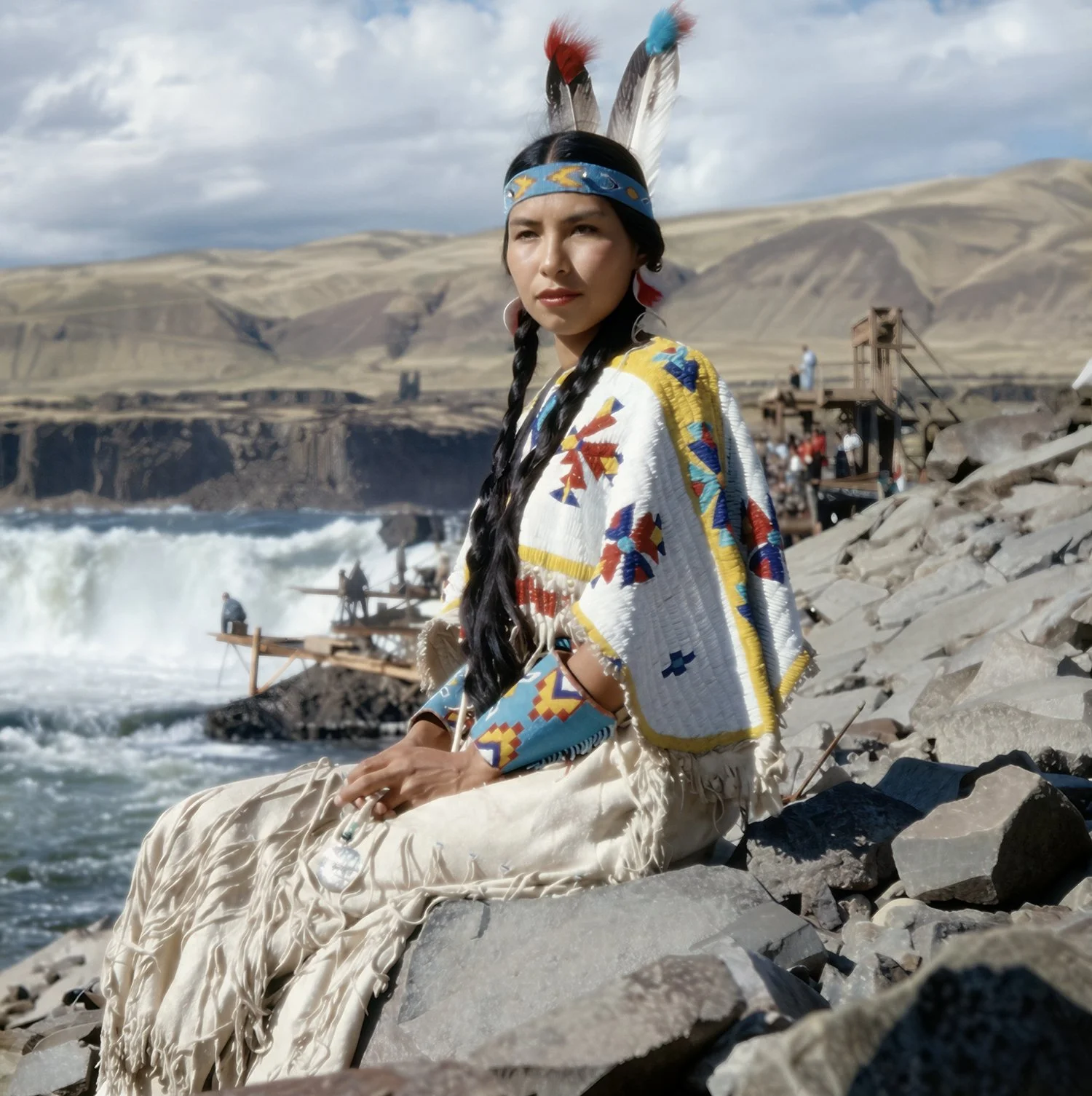
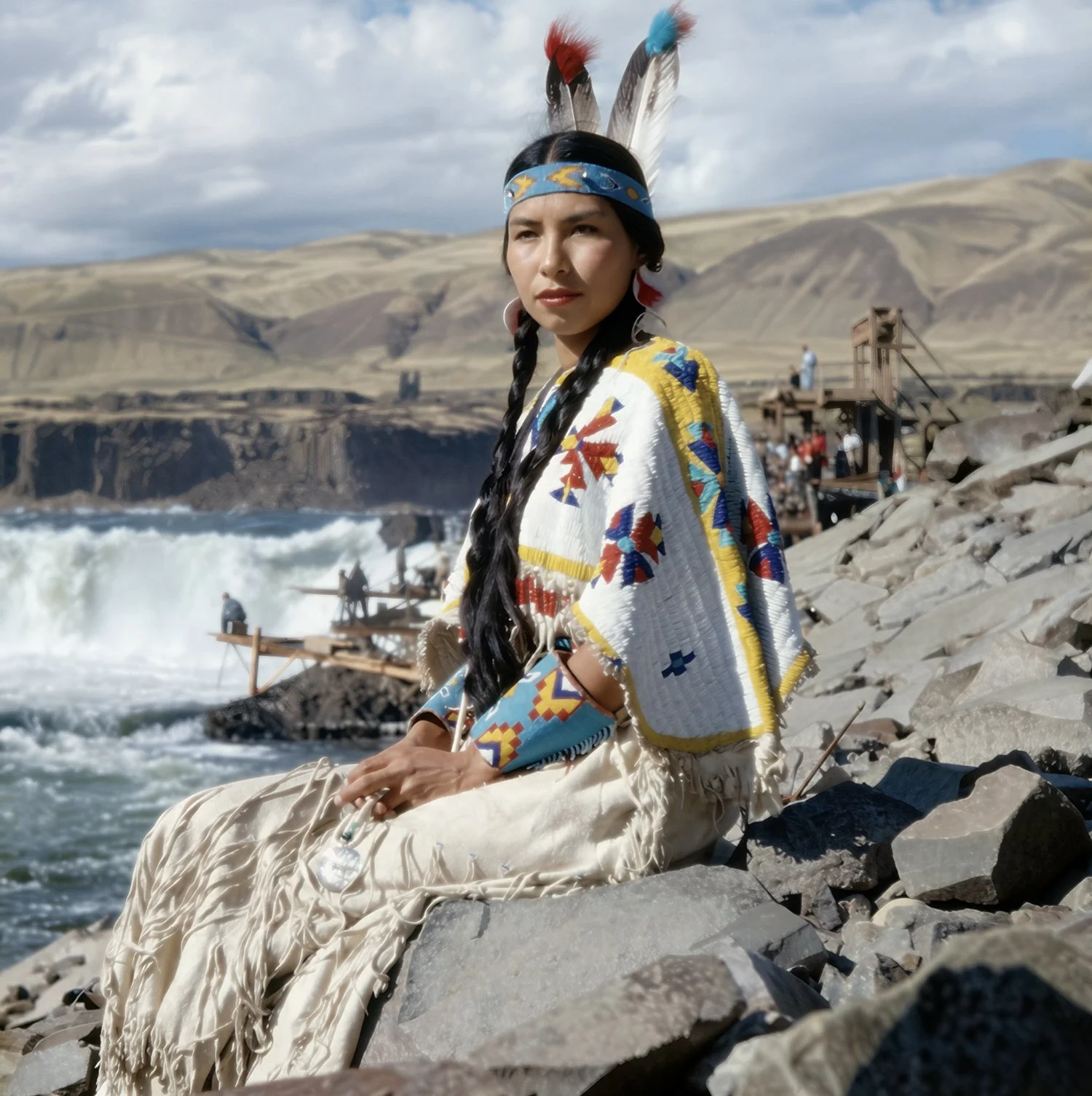
An unidentified young woman at Celilo Falls, 1956. Photograph by Richard Stefani. ©Richard Stefani Estate
Twenty-three photographs. A community beside the river. And the responsibility of remembering that every face belonged to a life.
There is a moment in working with an old photograph when the person in it stops being part of history and becomes simply a person.
I have experienced that moment again and again while preparing Richard Stefani's photographs of Celilo Falls.
At first, there is the extraordinary place.
The Columbia River.
The falls.
The wooden fishing platforms extending over the water.
The enormous dip nets.
The basalt cliffs and dry hills rising beyond the river.
It would have been easy for a twenty-three-year-old photographer to be overwhelmed by the spectacle of Celilo.
Richard wasn't.
Again and again, he turned his camera toward people.
The Landscape Was Never Empty
We often encounter historic landscapes without the people who gave them meaning.
A photograph of a mountain.
A river.
A building.
A waterfall.
Over time, the landscape can become separated from the lives that unfolded within it. We begin looking at scenery where someone else would have understood home, work, family, knowledge, ceremony, memory.
Celilo makes that distinction especially important.
For thousands of years, people gathered along this stretch of the Columbia to fish, trade, visit, celebrate, and maintain relationships. Fishing places were not interchangeable positions beside a river. Knowledge of the currents, salmon, platforms, nets, and particular fishing locations passed between generations.
When we look at Richard's photographs, then, the people are not incidental figures included to give scale to an impressive waterfall.
They are central to understanding what the place was.
And is.
Richard Looked at Faces
Something becomes apparent when the twenty-three surviving photographs are considered together.
Richard moved closer.
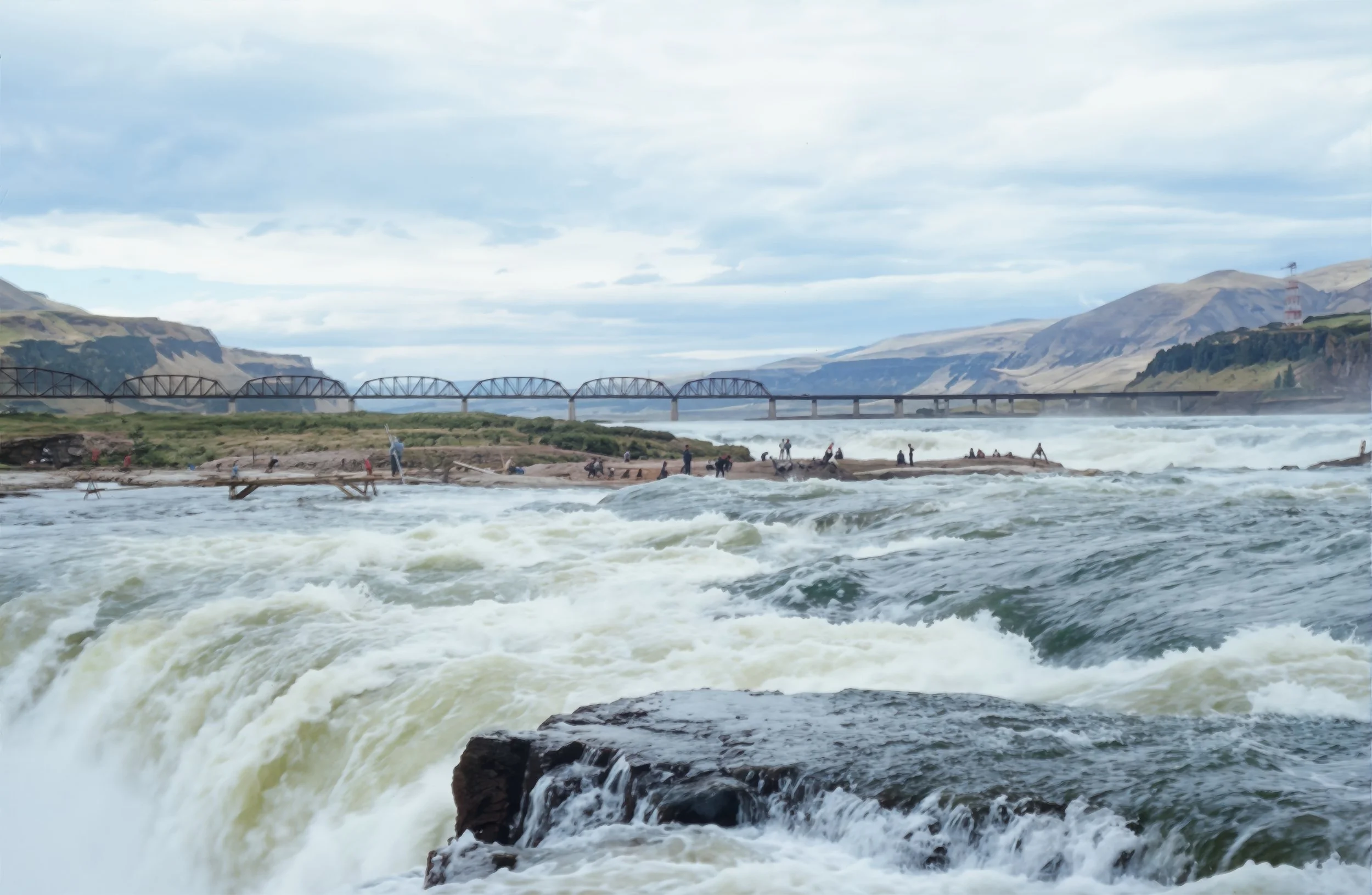
There are broad views in the archive. Some show the immense physical presence of the falls. Others show fishing platforms crowded along the river, people working above the rushing water, bridges crossing the Columbia in the distance.
But then Richard turns toward individuals.
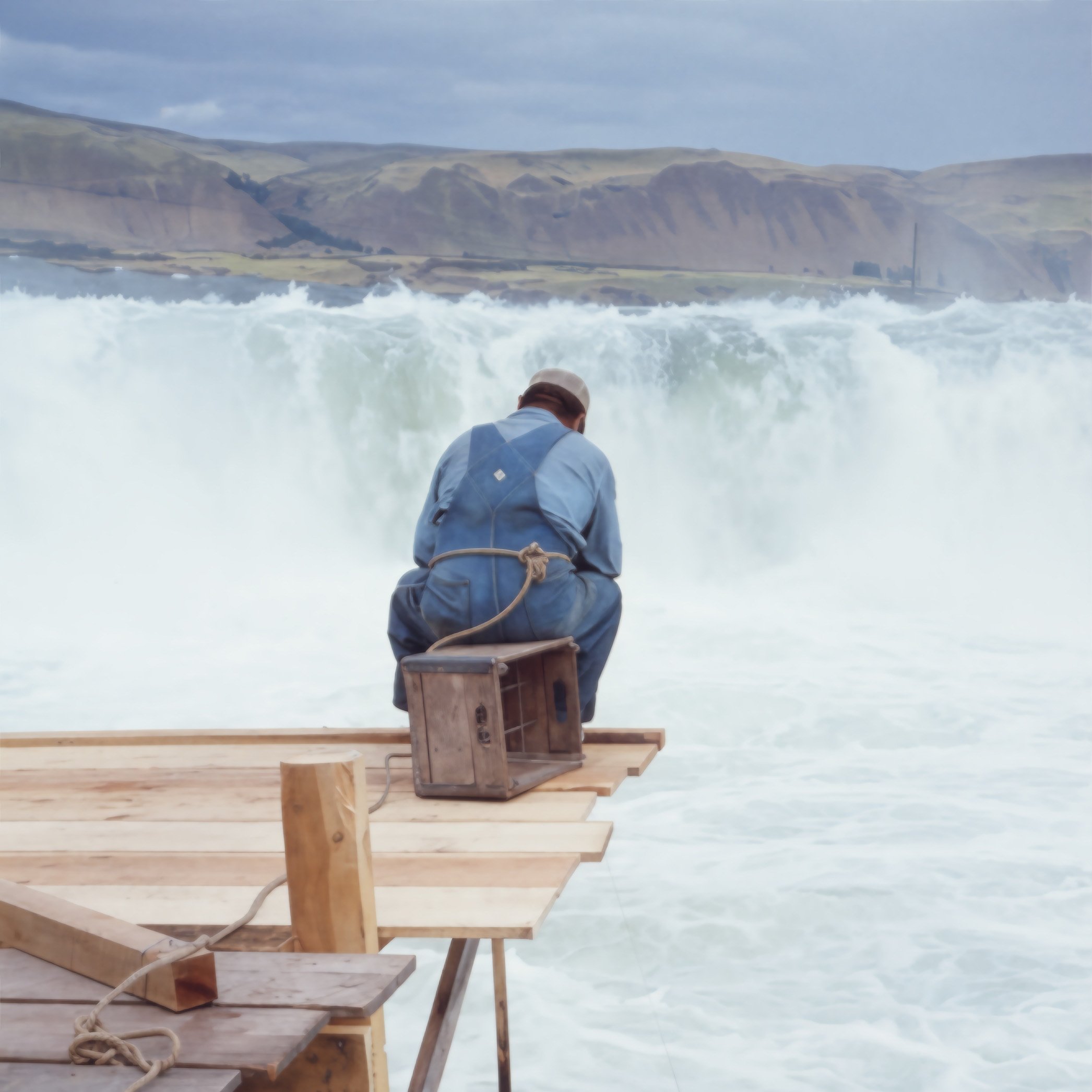
A fisherman sits quietly above the water.
A man holds a long pole and watches the river.
Young people stand among nets and rocks.
A woman sits beside the Columbia and looks directly toward Richard's camera.
A young person wears a feathered headdress beneath the open sky.
An older man stands formally before Richard.
Another face fills almost the entire frame.
These are not simply records of activity.
They are portraits.
That distinction means something to me because I know what came afterward.
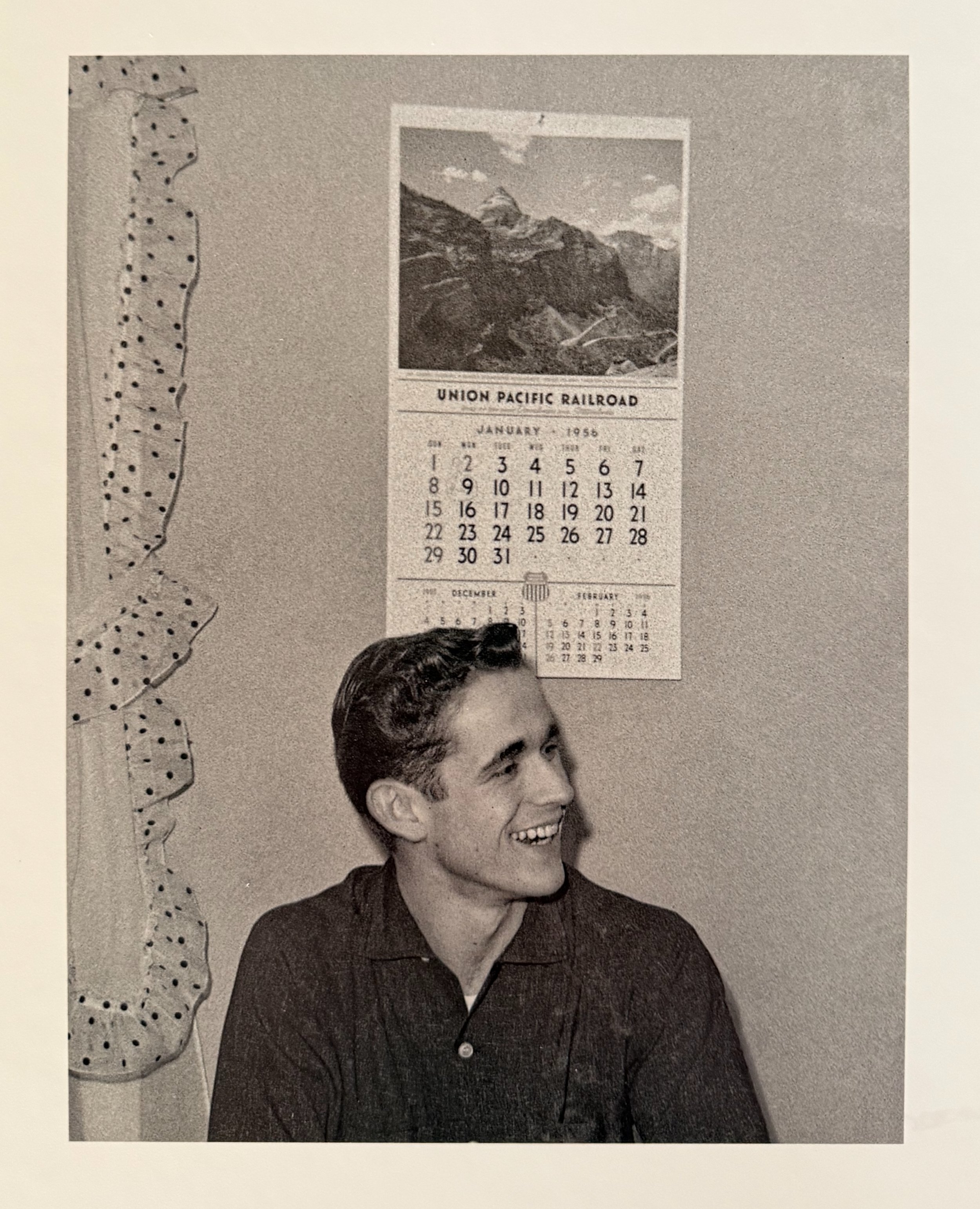
Richard would eventually become known as a master portrait photographer. For decades, people trusted him to make photographs of them. He developed an extraordinary ability to recognize the moment when expression, posture, light, and personality came together.
But at Celilo he was twenty-three.
He had not yet become the Richard Stefani I knew.
And still, there it is.
The interest in faces.
The willingness to move closer.
The recognition that a place is also its people.
We Do Not Know Their Names
This is where the photographs become more difficult for me.
Most of the people Richard photographed at Celilo are unidentified.
I want to know who they were.
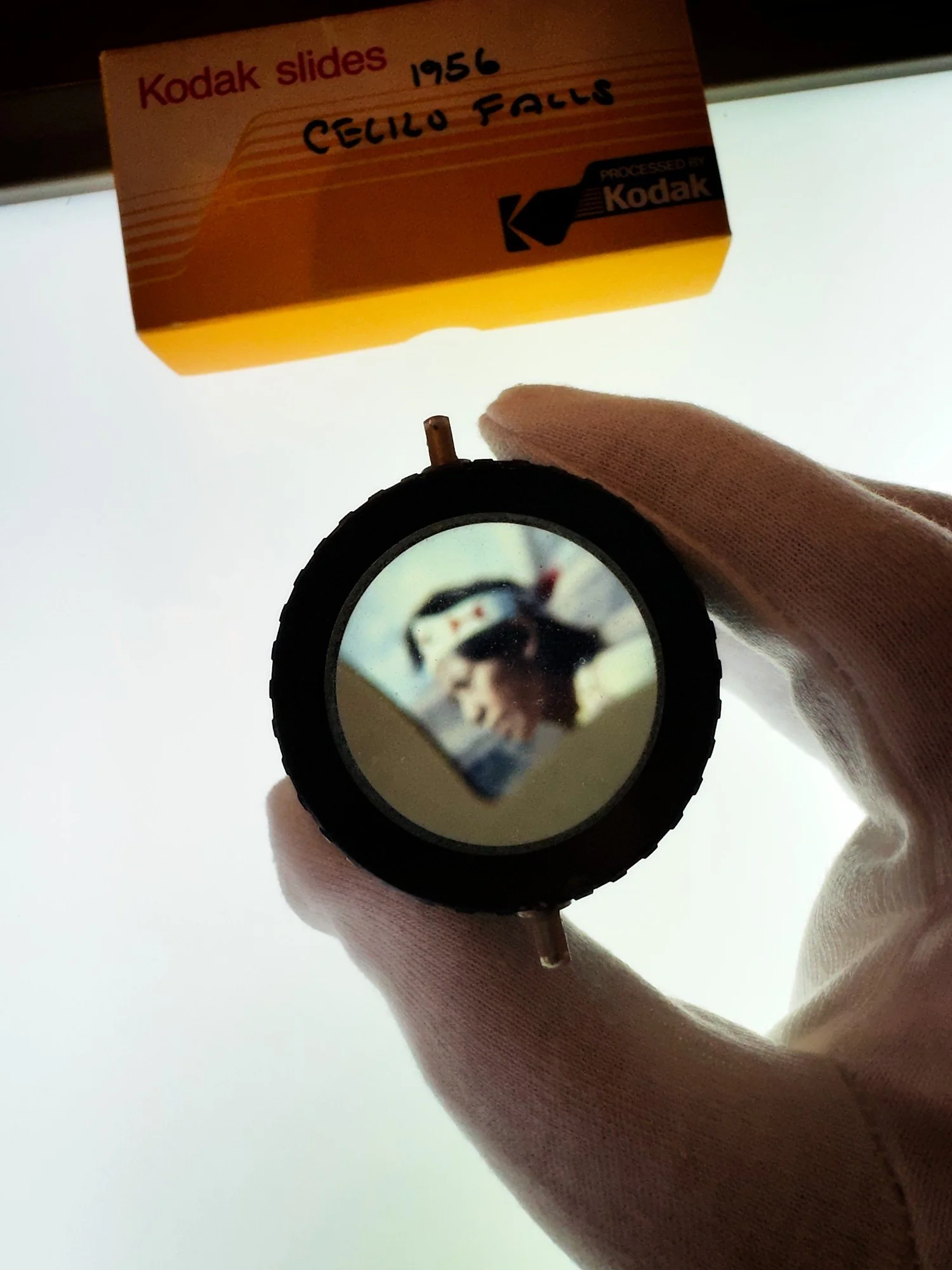
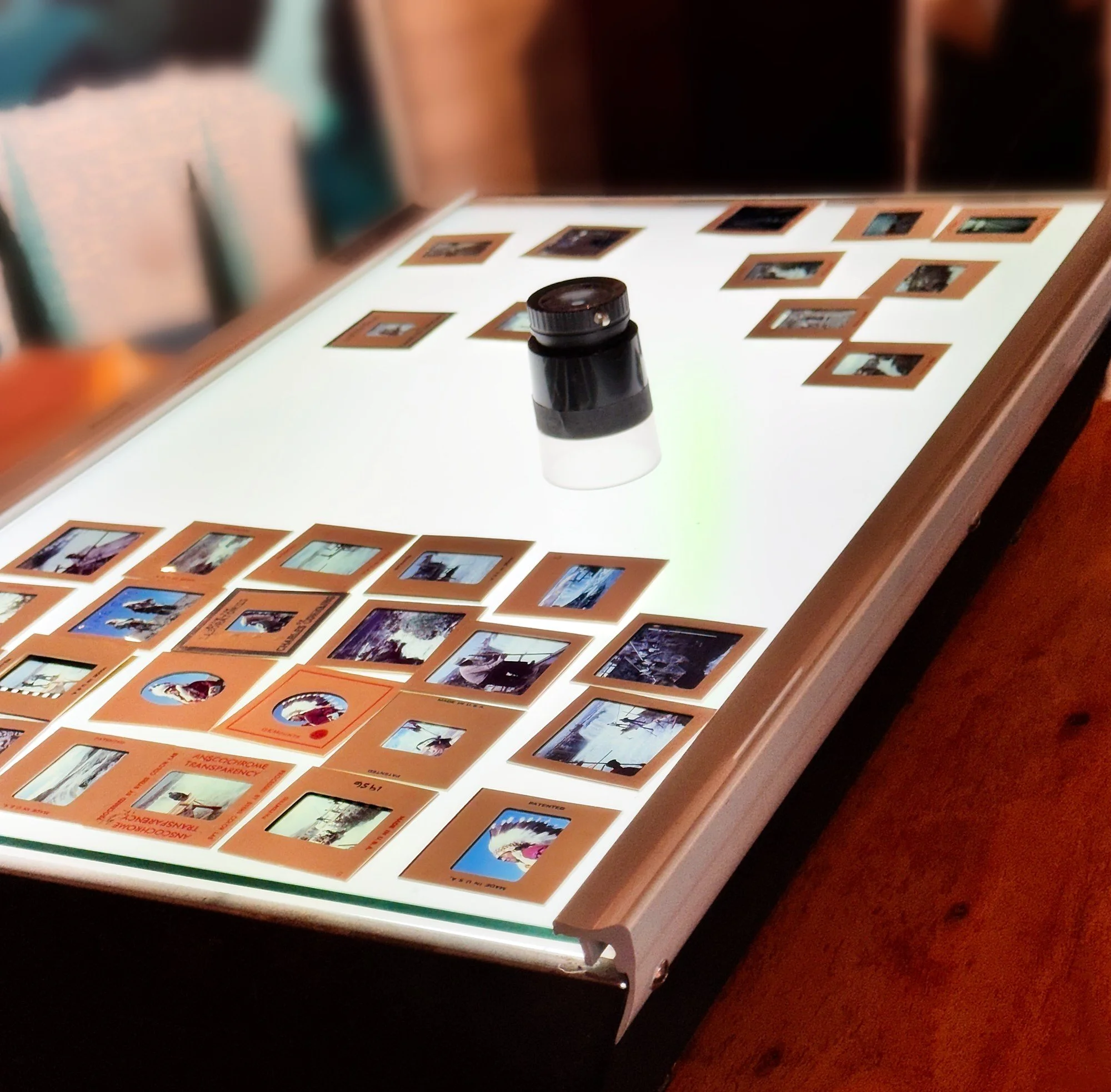
That desire becomes surprisingly strong when you spend enough time with the negatives.
Who was the fisherman sitting above the falls?
Who was the woman Richard photographed beside the river?
Who were the young men gathered with the nets?
Who was the young person standing so proudly beneath the blue sky?
Who were their parents?
Their children?
Where did they live?
What did Celilo mean to them?
Some of those answers may still exist.
Others may have been lost.
And so, for now, we are careful.
We do not assign names because they seem plausible.
We do not assign tribal affiliations from appearance or clothing.
We do not turn people into representative characters in a story we want the photographs to tell.
If we know something, we say what we know.
If we have a credible possibility, we describe it as such.
And when we do not know, we say:
We do not know yet.
One Possible Name
One identification has followed the archive for some time.
We were told that one of the men Richard photographed was Chief Tommy Thompson.
Tommy Thompson was a significant leader associated with the Celilo fishery. Historical sources document him late in his life, including at the Feast of the First Salmon shortly after the falls were inundated in 1957.
But we have not yet been able to verify that the man in Richard's photograph is Thompson.
So the photograph remains unidentified.
That may seem like a small curatorial distinction.
It isn't.
A name changes the way a photograph enters history.
Once attached to an image, it may be repeated in a caption, a catalog, a website, an article, another archive.
Eventually the uncertainty disappears.
The statement becomes fact simply because it has been repeated often enough.
We do not want to do that.
The person Richard photographed deserves better than our best guess.
Lives Beyond the Frame
A photograph creates a peculiar illusion.
It makes a moment feel complete.
Four edges surround the image. Everything inside them appears to belong to the photograph, while everything outside disappears.
But the lives in Richard's photographs did not begin when he raised his camera.
And they did not end when he lowered it.
The fisherman went somewhere afterward.
The young people grew older.
The woman beside the river had people who knew her voice.
The men working above the falls possessed knowledge Richard's camera could record only from the outside.
Some may have returned to Celilo after the falls were submerged.
Some may have continued fishing elsewhere along the Columbia.
Some may have watched children and grandchildren grow up beside a river transformed by dams but still central to Native life.
The descendants of families who fished at Celilo continue fishing on the Columbia and maintaining traditions connected to salmon today. Celilo did not simply end when the falls were inundated.
That continuity matters.
These are not photographs of a vanished people.
They are photographs of people at a particular moment in a continuing history.
Perhaps Someone Will Know Them
There is another reason we are bringing these photographs into public view.
Someone may recognize a face.
Perhaps a family has another photograph.
Perhaps an elder remembers a name.
Perhaps a historian or tribal archive holds information we have not yet encountered.
Other photographic archives from Celilo have preserved exactly this kind of knowledge. Raymond Matheny, who photographed the fishery several years before Richard arrived, recorded names, tribal affiliations, locations, and activities with many of his photographs. His family eventually entrusted more than 250 slides to the Columbia River Inter-Tribal Fish Commission.
Richard did not leave us that kind of documentation.
But the absence of a name today does not necessarily mean the name is gone.
It may simply mean we haven't found it yet.
And perhaps someone else has.
An Archive Can Remain Open
I have begun to think differently about what it means to complete this exhibition.
At first, completion seemed fairly straightforward.
Find the negatives.
Research the history.
Scan the film.
Restore what time had altered without changing what Richard photographed.
Make the prints.
Document the archive.
Hang the exhibition.
Open the doors.
But perhaps an archive like this should never become entirely closed.
A visitor may know something we don't.
A family member may recognize someone.
New historical material may emerge.
A tribal historian may correct our understanding.
A photograph we thought we understood may acquire an entirely different significance when someone who knows more looks at it.
If that happens, the archive should change.
Not the photographs.
Our understanding of them.
That isn't a weakness in the scholarship.
It is part of the stewardship.
Look at the People
When Before the Water Rose opens on September 26, visitors will finally see Richard's surviving Celilo photographs together.
The river will command attention.
It is almost impossible for it not to.
Even in a photograph, Celilo seems loud.
The water moves with tremendous force. Platforms extend over currents that appear nearly unimaginable to stand above. Nets disappear into white water. The surrounding landscape makes clear just how enormous the Columbia is.
Look at all of that.
But then I hope you will move closer.
Look at the people.
Look at their faces.
Notice who is working and who is watching.
Notice the hands holding poles and nets.
Notice clothing.
Posture.
Expression.
The distance between one person and another.
The moments when someone notices Richard.
And the moments when they do not.
Remember that each person had a life extending far beyond the fraction of a second Richard preserved.
Some of their names are known to history.
Others are not yet known to us.
Perhaps someone who sees these photographs will recognize a face.
We hope so.
Because nearly seventy years after a young photographer stood beside the Columbia and decided that these people were worth looking at, the photographs have come back into the light.
Now it is our turn to look.
And, perhaps, to learn who was there.
Editor's Note
This essay is part of The Before the Water Rose Journal, an ongoing series exploring Celilo Falls, Richard Stefani's 1956 photographs, the people and places they preserve, and the process of bringing this remarkable archive forward with care. The series will continue through the presentation of Before the Water Rose: Celilo Falls, 1956, and beyond, as research and new understanding of the photographs continue to emerge.
Do you recognize someone in Richard Stefani's Celilo photographs?
House of Stefani welcomes information from families, tribal historians, researchers, and others who may be able to help identify individuals or add context to the archive.