Two Cameras, Two Rolls of Color Film
by Christina Stefani for House of Stefani
In this digital age, we photograph a scene, check it, adjust it, photograph it again, make variations, change positions, and keep working until we are satisfied. Richard had no such luxury. ©Richard Stefani Estate
In the fall of 1956, Richard Stefani went to Celilo Falls with very little film and no way of knowing what his photographs would become.
Photography was different when every frame mattered.
There was no screen on the back of the camera.
No immediate confirmation that the exposure was right.
No memory card capable of holding thousands of images.
No second chance created by simply pressing the shutter again and again.
A photographer carried film.
And when the film was gone, the photographs were over.
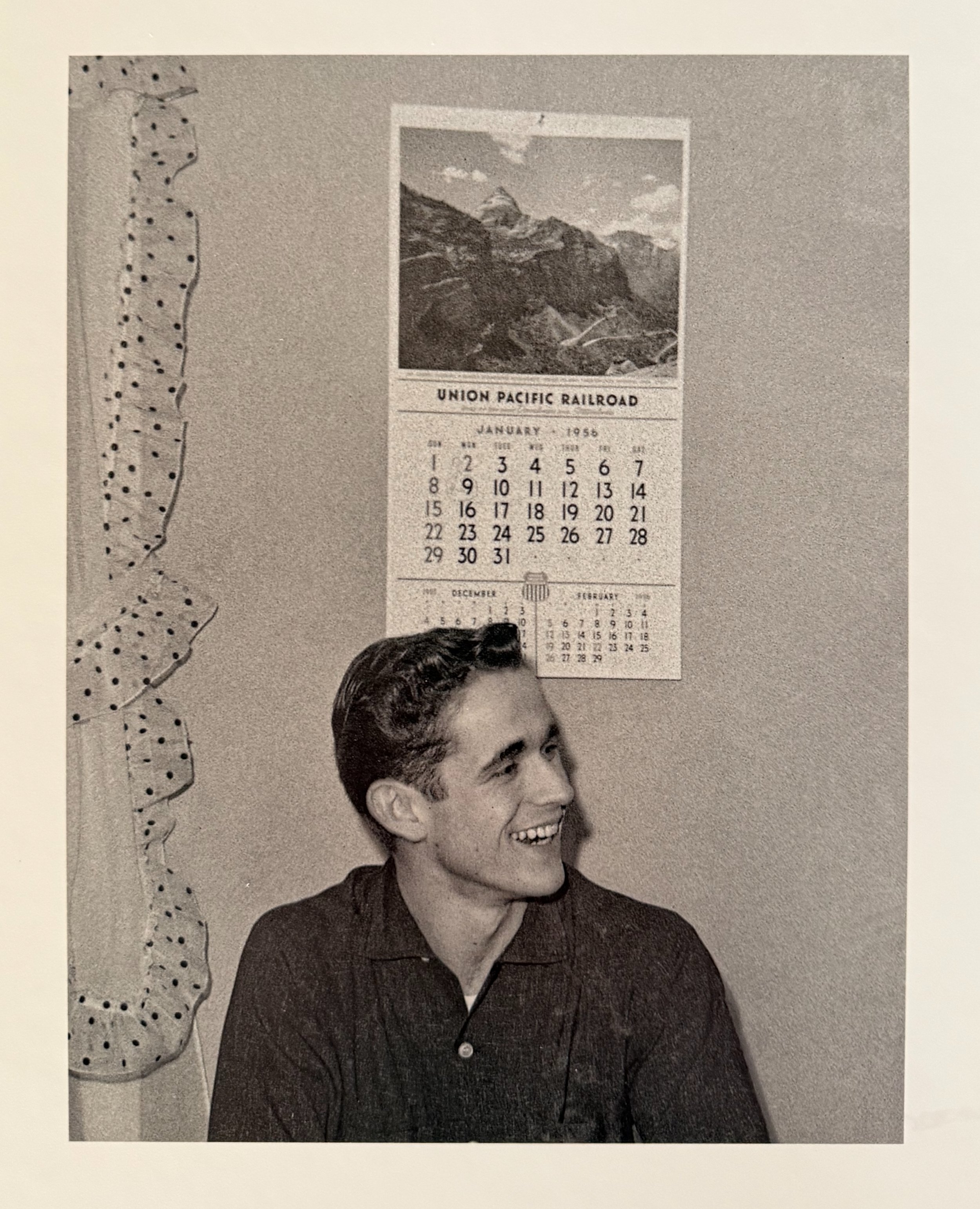
In the fall of 1956, twenty-three-year-old Richard Stefani arrived at Celilo Falls carrying two cameras.
Between them, he had two rolls of color film.
That was all.
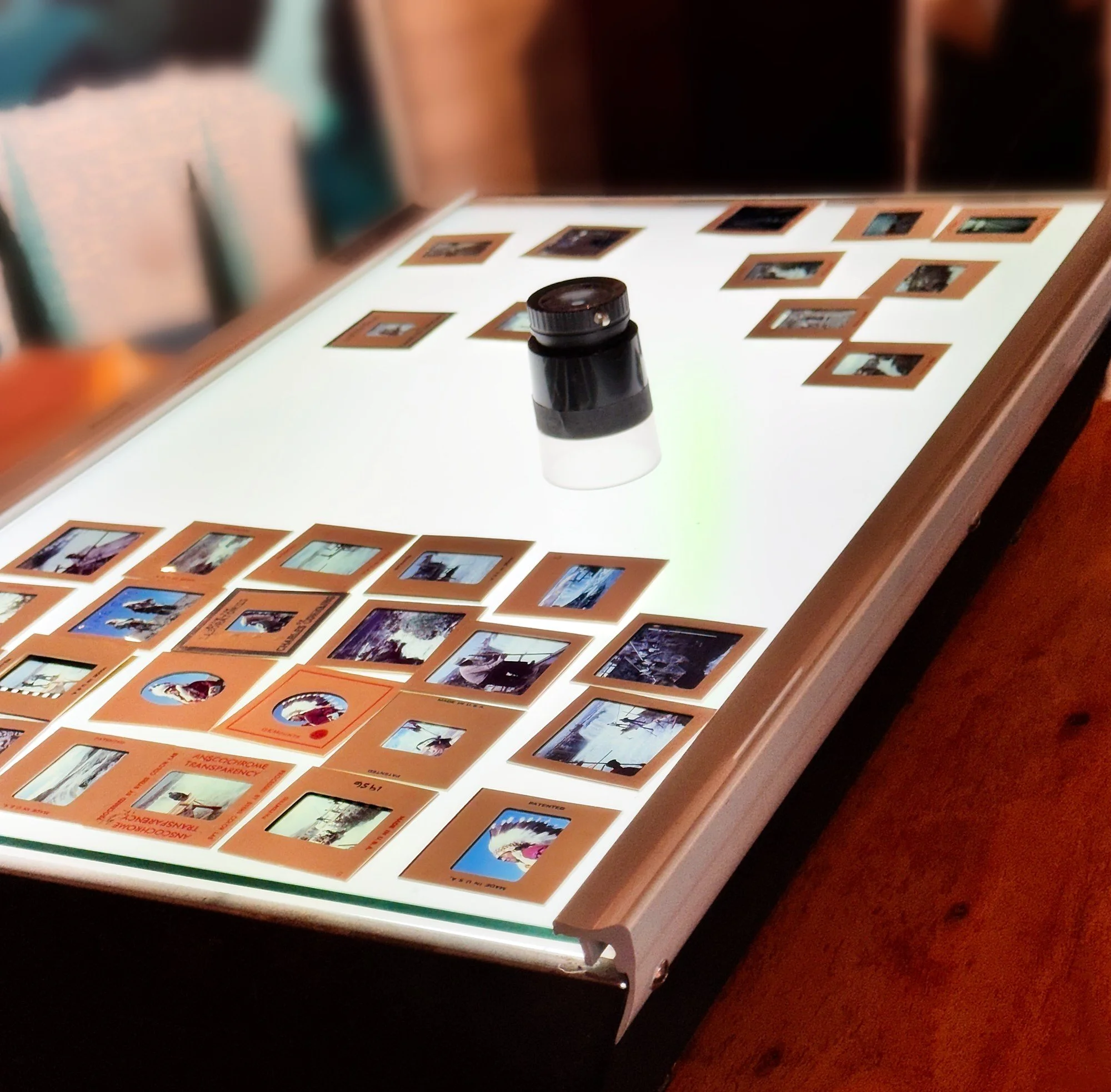
Seventy years later, twenty-three surviving color negatives remain from that visit.
It is tempting to begin with what Richard captured.
Perhaps we should begin instead with what he had to choose not to photograph.
A Finite Number of Frames
We live in a photographic culture of abundance.
A single afternoon can produce hundreds of images. We photograph a scene, check it, adjust, photograph it again, make variations, change positions, and keep working until we are satisfied.
Richard had no such luxury.
Film imposed a discipline that digital photography has largely removed.
Every exposure spent something.
Film.
Time.
Money.
Opportunity.
Making one photograph meant having one fewer frame available for whatever appeared next.
And Richard could not know what would appear next.
That matters when we look at the Celilo photographs today.
Because the archive is not simply a record of what stood in front of his cameras.
It is a record of decisions.
What Was Worth a Frame?
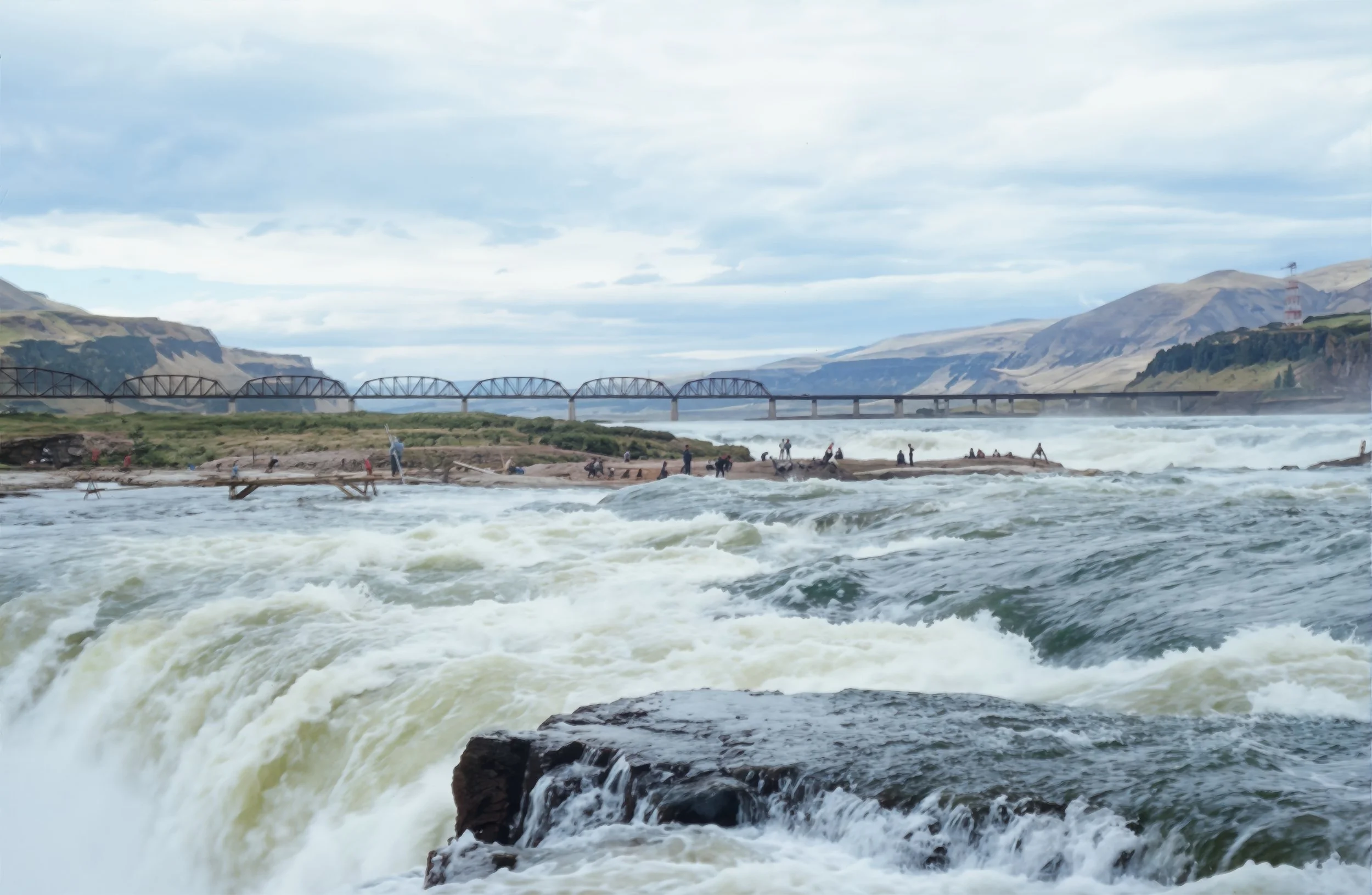
Richard photographed the falls.
Of course he did.
The Columbia River was immense and violent there, rushing through basalt channels and plunging past wooden fishing platforms in great expanses of white water.
He photographed that scale.
But then he spent precious frames on people.
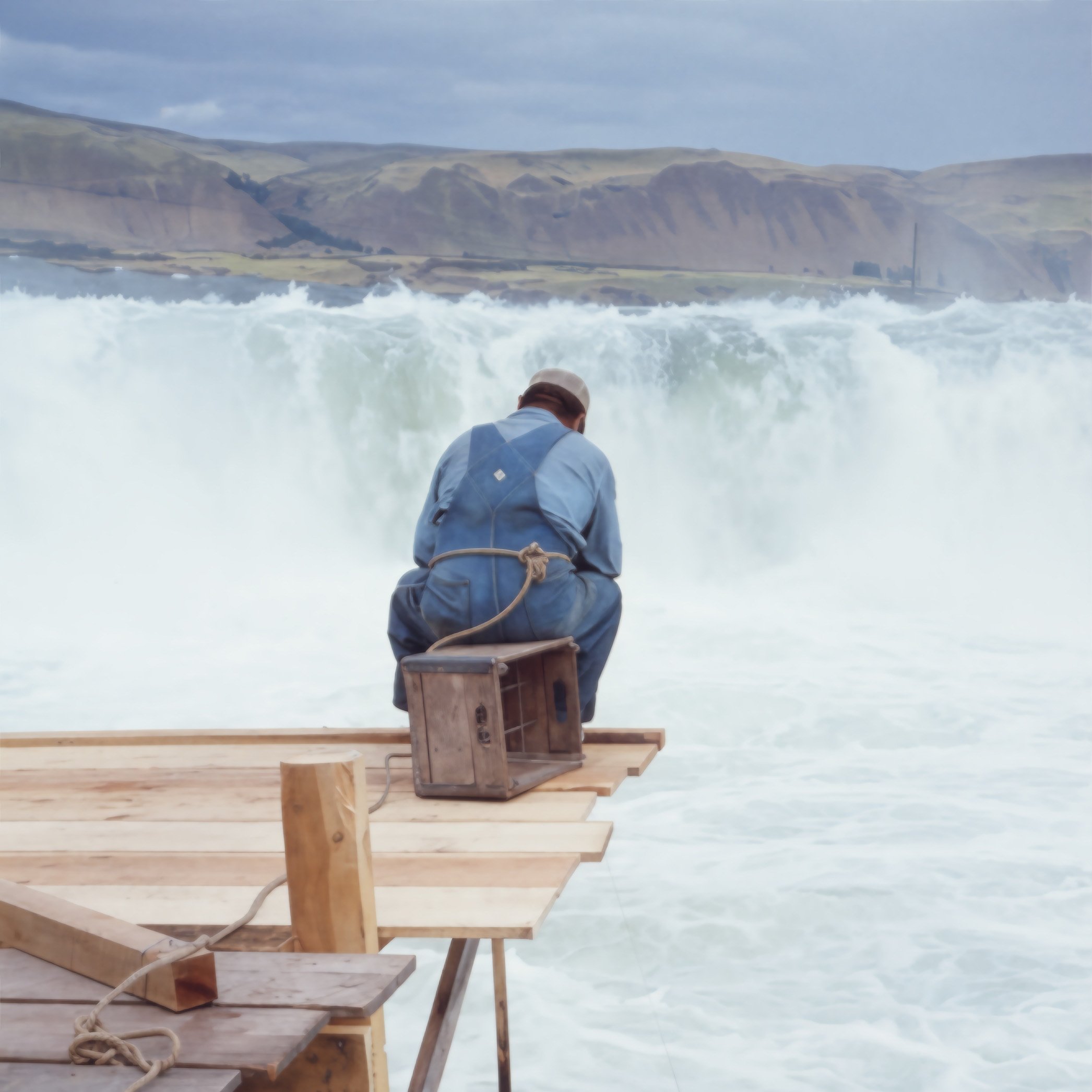
A fisherman sitting quietly above the river.
Two men working together with a dip net.
Young people gathered among the rocks.
A man resting his hands on a long pole.
A woman seated beside the water.
People in regalia.
Faces.
Again and again, faces.
Every one of those photographs represented a choice.
With only two rolls of film, Richard looked at another human being and decided:
this is worth a frame.
Knowing the photographer he would eventually become, it is difficult not to notice.
Before the Photograph Existed
There is another difference between Richard's experience and ours.
He couldn't see the photographs we are looking at now.
Not yet.
When Richard released the shutter, the image existed only latently on the film.
He had to trust himself.
Exposure.
Focus.
Composition.
Timing.
And then move on.
Imagine standing where he stood.
The roar of Celilo surrounding you.
Mist rising from the river.
People moving across fishing platforms.
Salmon being pulled from the water.
Light changing.
Everything happening at once.
Richard lifts the camera.
Looks.
Waits.
Makes an exposure.
Then lowers it.
There is no photograph to inspect.
Only the world still happening in front of him.
Color
There is another reason these photographs affect us so strongly.
They are in color.
Historical memory often becomes monochromatic.
We encounter the middle of the twentieth century through black-and-white newspapers, documentary photographs, archives, and television footage. Gradually, without realizing it, we begin imagining the past itself that way.
Richard's photographs interrupt that illusion.
The Columbia is blue-green.
The hills beyond the falls are ochre and brown.
A shirt is red.
Another is turquoise.
Beadwork carries blue, yellow, white, and scarlet.
Skin is warmed by sunlight.
The wooden platforms are wet brown against white water.
The sky is startlingly blue.
Celilo does not appear as an abstraction called history.
It looks like a place someone could walk into.
Other photographers were also making color images at Celilo during this period. The Oregon Historical Society, for example, preserves nineteen color slides made there by Robert S. Cline in 1956. Richard's photographs belong to that important visual record of the falls during their final year.
But Richard's archive has its own character.
Landscape gives way to labor.
Labor gives way to people.
People give way to portraits.
The closer he looks, the more intimate the photographs become.
Twenty-Three Negatives
From Richard's two rolls of film, twenty-three color negatives from Celilo survive in the archive today.
Twenty-three.
That number is important.
Not because twenty-three photographs can tell us everything about Celilo. They cannot.
They represent a brief encounter with a place whose history reaches across thousands of years.
They cannot tell us the names of every person Richard photographed.
They cannot tell us exactly what conversations took place.
They cannot tell us everything Richard understood about what he was seeing.
And we should never ask them to.
An archive becomes more trustworthy when we are willing to acknowledge its limits.
What these negatives can tell us is what Richard saw.
And what he chose to preserve.
He Did Not Know
This is the fact that changes everything.
Richard knew a dam was being built on the Columbia.
But we should be cautious about assigning him knowledge or intentions for which we have no evidence.
We do not know precisely what he understood about the timetable for inundating Celilo Falls.
We do not know what he thought would become of these photographs.
We have no evidence that he imagined himself creating an important historical archive.
So we will not invent that story for him.
What we know is simpler.
Richard went to Celilo.
He carried two cameras.
He carried two rolls of color film.
And he paid attention.
Months later, on March 10, 1957, the reservoir behind The Dalles Dam rose over Celilo Falls.
The physical landscape Richard photographed was transformed.
His film remained.
Seventy Years Later
Film is a remarkably vulnerable thing.
It can be scratched.
Faded.
Lost.
Discarded.
Damaged by heat or moisture.
Separated from whatever information once accompanied it.
And sometimes it simply disappears because no one realizes what it contains.
Richard's negatives did not.
They remained with his photographic archive.
Decades passed.
Richard built the professional career that was still ahead of him when he stood at Celilo. He founded Stefani Photography in 1967 and eventually became known especially for portraiture, earning the Master of Photography degree from Professional Photographers of America in 1972.
The Celilo negatives remained.
Then Richard died in 2022.
The negatives remained.
And eventually they were looked at again.
Carefully.
Returning to the Film
Preparing Before the Water Rose has required going back to the beginning.
Not to old reproductions.
Not to photographs of photographs.
To Richard's original negatives.
They have been rescanned at high resolution and examined individually.
Color has been considered carefully.
Dust and physical imperfections introduced by the passage of time must be distinguished from information actually present on the film.
The objective is not to make seventy-year-old photographs look contemporary.
It is certainly not to reinvent them.
It is to allow as much information as possible from Richard's negatives to come forward while preserving the character of the photographs he actually made.
That distinction matters.
Because restoration can easily become alteration.
Our responsibility is different.
Stewardship asks us to bring the photograph forward without pretending we were there when it was made.
Two Rolls
There is something almost impossibly small about the physical beginning of this archive.
Two rolls of film.
They could have fit in Richard's pockets.
There was nothing monumental about them.
Nothing about those little containers announced:
Keep these.
They will matter.
Seventy years from now, people will want to see what is inside.
Richard simply exposed one frame after another.
A river.
A fisherman.
A platform.
A face.
A child.
Water.
Another face.
Twenty-three surviving moments.
And then the film was finished.
What Remains
We often imagine archives as large things.
Rooms.
Shelves.
Boxes.
Institutions.
But an archive can begin very quietly.
Sometimes it begins when someone decides that something in front of them deserves to be remembered.
A twenty-three-year-old photographer stood beside the Columbia River in 1956 with two cameras and two rolls of color film.
He had a finite number of frames.
So he had to choose.
Seventy years later, those choices are still here.
And now our responsibility is to look at them as carefully as he did.
Editor's Note
This essay is part of The Before the Water Rose Journal, an ongoing series exploring Celilo Falls, Richard Stefani's 1956 photographs, the people and places they preserve, and the process of bringing this remarkable archive forward with care. The series will continue through the presentation of Before the Water Rose: Celilo Falls, 1956, and beyond, as research and new understanding of the photographs continue to emerge.