This Week in Art, Design, and Culture: The Shape of Peace
Curated by Christina Stefani for House of Stefani
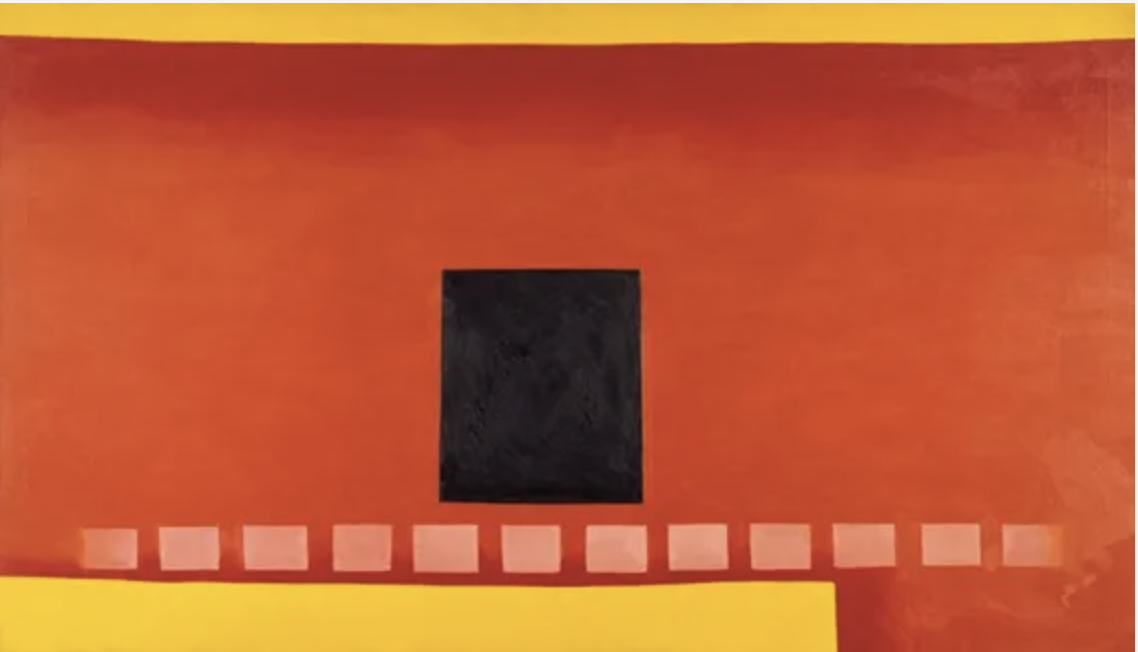
Black Door with Red, 1954, Georgia O’Keeffe. ©The Georgia O’Keeffe Foundation/Artist Rights Society (ARS), New York
I have been thinking about peace.
Not the absence of feeling.
Not quiet for its own sake.
Something deeper.
Perhaps peace is what happens when we understand where we are, what matters, and what is ours to care for.
I have felt that while preparing Before the Water Rose: Celilo Falls, 1956, the exhibition of Richard Stefani’s photographs opening later this month.
The work has required research, restoration, writing, editing, and many decisions about how the photographs should be seen and understood.
But beneath all of that is something quieter.
Stewardship.
Caring for something another person made well enough that it can continue speaking after they are gone.
People have been sharing their memories of Richard with me as the exhibition approaches. They remember the photographer, certainly. But they also remember the man: his warmth, his humor, his kindness.
There is a particular kind of peace in discovering that someone you loved has been carried forward in other people’s memories too.
At the same time, I started four new paintings.
Before beginning, I mapped the colors, strategy, and glazing passes by hand on notebook paper, as I usually do.
It grounds me.
A plan does not remove uncertainty from painting. Nor would I want it to.
It simply gives me somewhere to begin.
Perhaps peace is not always found by doing less.
Sometimes it comes from knowing where to begin.
The Places That Shape an Artist
A new exhibition at the Detroit Institute of Arts looks at a side of Georgia O’Keeffe that is surprisingly easy to overlook.
Georgia O’Keeffe: Architecture brings together approximately 35 paintings exploring the built environments she observed throughout her life, from Manhattan skyscrapers and rural barns to the adobe structures of New Mexico. It is the first exhibition to examine the full breadth of O’Keeffe’s architectural paintings.
We know O’Keeffe through flowers, bones, and expansive desert landscapes.
But she looked closely at buildings too.
The exhibition follows several decades of that interest and reveals architecture not simply as background, but as another way O’Keeffe studied line, geometry, color, and place.
I am particularly interested in the idea that the places surrounding an artist inevitably become part of the work.
A studio.
A house.
A city.
A landscape.
The spaces we inhabit teach us what to notice.
And perhaps, over enough time, they begin shaping the way we see.
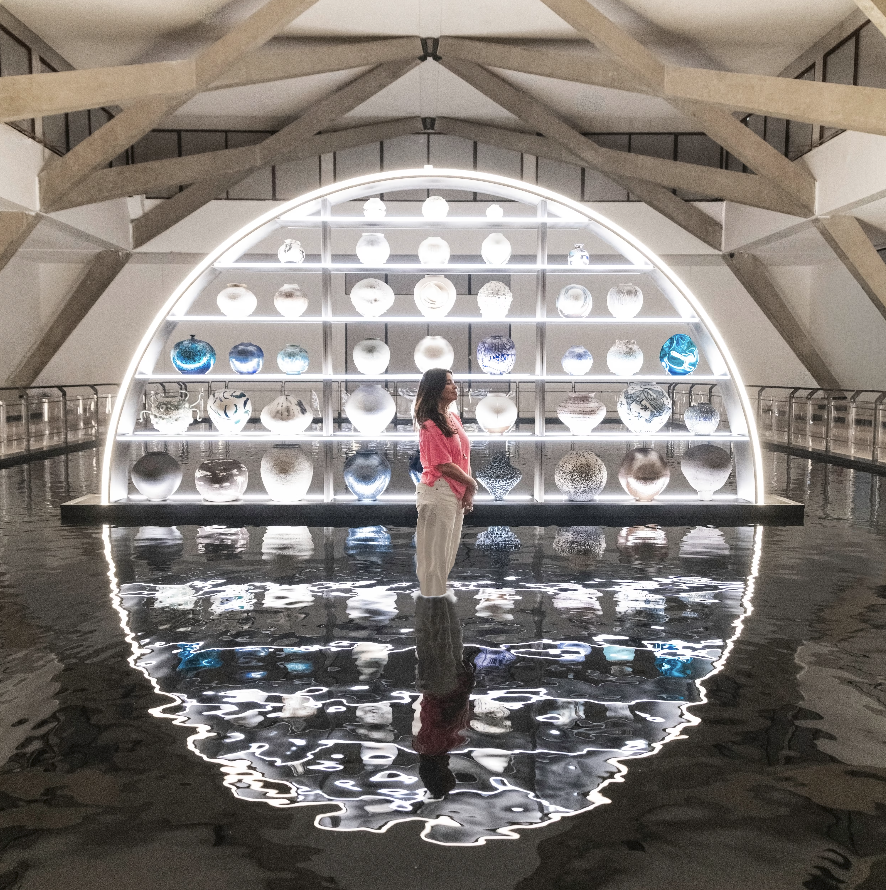
British artist and designer ES Devlin, 2026 Homo Faber artistic director. Courtesy Homo Faber.
An Island of Light
In Venice, another exhibition is considering what happens when skill passes through the human hand.
Homo Faber 2026: An Island of Light is underway at the Fondazione Giorgio Cini through September 30.
More than 500 artisans from over 70 countries are represented through approximately 700 handcrafted objects, arranged across 15 installations under the artistic direction of Es Devlin. At the center of the exhibition is the relationship between light, materials, and the hands that shape them.
But what interests me most is that the making itself has not been hidden.
Visitors can watch craftspeople at work, from ebony carving and leather marquetry to natural-fiber weaving and traditional Japanese techniques.
There is something profoundly reassuring about mastery.
Not perfection.
Mastery.
The quiet confidence that comes from knowing a material deeply enough to work with it rather than against it.
Wood.
Glass.
Clay.
Textile.
Paper.
Paint.
The material always has something to say.
Good craftsmanship begins by listening.
A Life in Stewardship
Closer to home, a remarkable chapter in Oregon’s cultural life recently came to an end.
John Olbrantz retired after 28 years as director of the Hallie Ford Museum of Art at Willamette University, concluding exactly 50 years in museum leadership on the West Coast. During his tenure, the museum’s permanent collection grew to more than 12,500 objects, its endowment reached $10 million, and its exhibition and publishing programs became significant contributors to Northwest art scholarship.
Institutions do not become important simply because someone declares them so.
They become important because people care for them over time.
They build collections.
Support scholarship.
Develop relationships.
Make difficult decisions.
Create standards.
Invite people in.
And then, eventually, they entrust what they have built to someone else.
That, too, is stewardship.
Congratulations, John, on an extraordinary career.

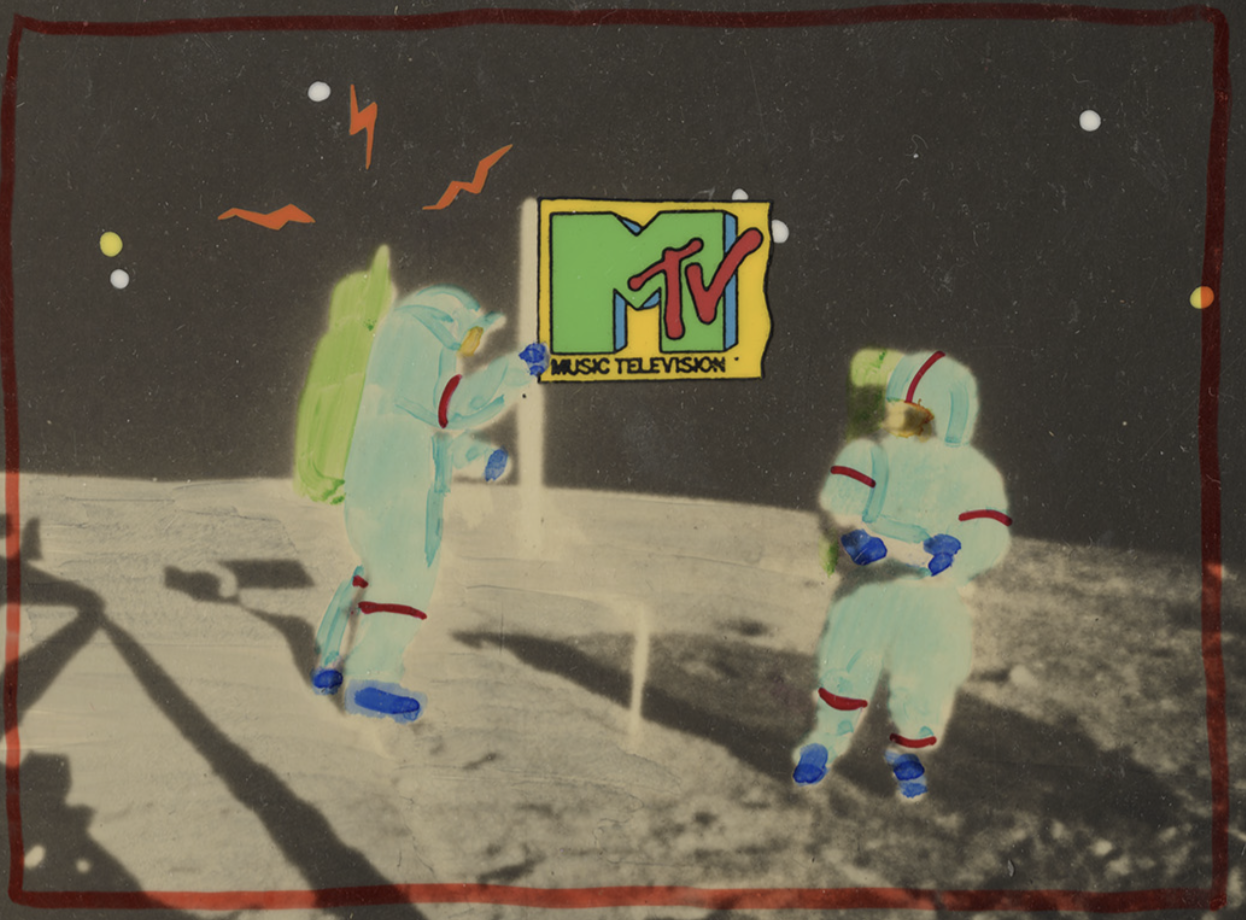
Bellagio Hotel Mural Still Life With Reclining Nude (study), Roy Lichtenstein, 1997. Courtesy Whitney Museum of American Art
Still Becoming
At the Whitney Museum in New York, a small exhibition offers another perspective on a long creative life.
Roy Lichtenstein: 1997 focuses entirely on the final year of the artist’s career and includes prints, photographs, sculptural maquettes, drawings, collages, and studies for works he never completed. The exhibition opened September 5, ahead of the Whitney’s larger Lichtenstein retrospective this fall.
What interests me is that the work is not simply a repetition of the visual language that made him famous decades earlier.
He was still experimenting.
Still responding to change.
Still making.
I find that deeply encouraging.
There is a temptation to imagine mastery as arrival.
Perhaps it is nothing of the kind.
Perhaps an artist can know what they are doing and still remain curious.
Still alter a palette.
Still try a different surface.
Still begin again.
Experience does not have to close possibility.
It can give us the confidence to enter it.
From the Studio
The four paintings I began are smaller than the recent series, each 28 by 22 inches.
Their titles came before they were finished:
Held by the Sky
Pouring the Ocean to Earth
The Edge of Heaven
Your Word on My Heart
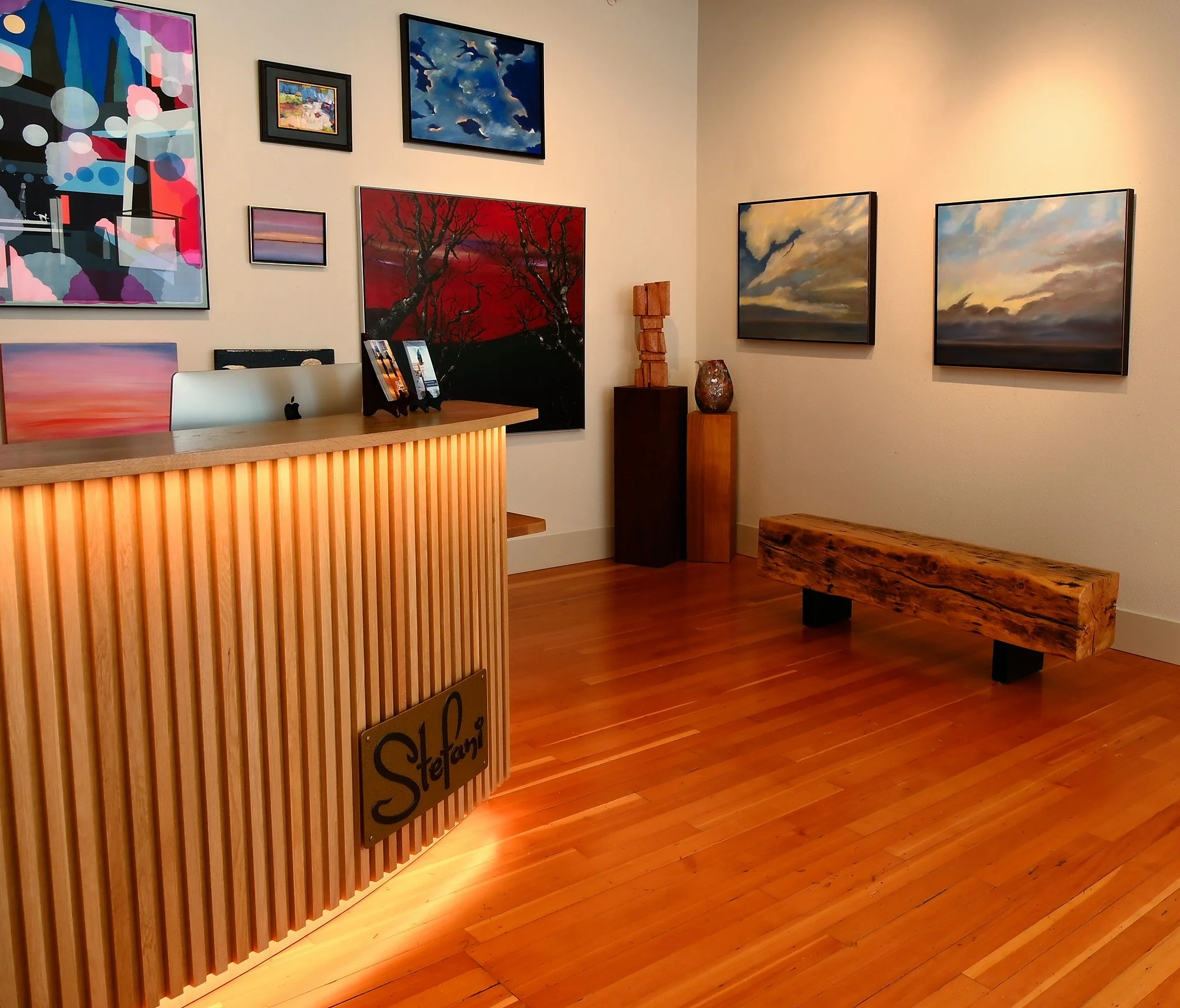
I will be painting them in the gallery during open hours.
There is something I like about that.
A gallery usually presents the resolved object.
The painting has been finished, varnished, framed, titled, hung.
But making is far less orderly.
Things appear.
Disappear.
Move.
Fail.
Resolve.
A visitor may see a painting one afternoon and return days later to find that what they remembered is gone beneath another layer.
I think there is value in seeing that too.
Beauty is not always immediate.
Sometimes it is constructed slowly.
Pass after pass.
Decision after decision.
Until the work becomes itself.
From the Gallery
Later this month, we will open Before the Water Rose: Celilo Falls, 1956, presenting Richard Stefani’s photographs of Celilo Falls made only months before the falls were submerged beneath the reservoir created by The Dalles Dam.
Richard was twenty-three years old when he made them.
Nearly seventy years later, I have the privilege of caring for them.
The exhibition opens Saturday, September 26, from 6–8 pm at Stefani Art Gallery in Salem.
If you are nearby, I would be honored to have you join us.
What I’m Carrying With Me
Peace is not emptiness.
Perhaps it is not even stillness.
Georgia O’Keeffe kept looking at the places around her.
Hundreds of artisans in Venice are keeping knowledge alive through their hands.
John Olbrantz spent decades caring for an institution before placing it into another person’s care.
Roy Lichtenstein was still experimenting in the final year of his life.
Richard’s photographs are being seen again.
And four blank canvases in my studio are becoming something they were not a week ago.
None of this feels still.
Yet somehow, all of it feels peaceful.
Perhaps peace does not require life to stop moving.
Perhaps it is simply the quiet assurance that some things are worth tending.
A work.
A place.
A craft.
A memory.
A life.
And then, when the time comes,
the courage to continue.
See you next Saturday.
Warmly,
–Christina Stefani | House of Stefani Journal
About the Author: Christina Stefani is an artist, gallerist, writer, and founder of House of Stefani, exploring art, design, and culture.