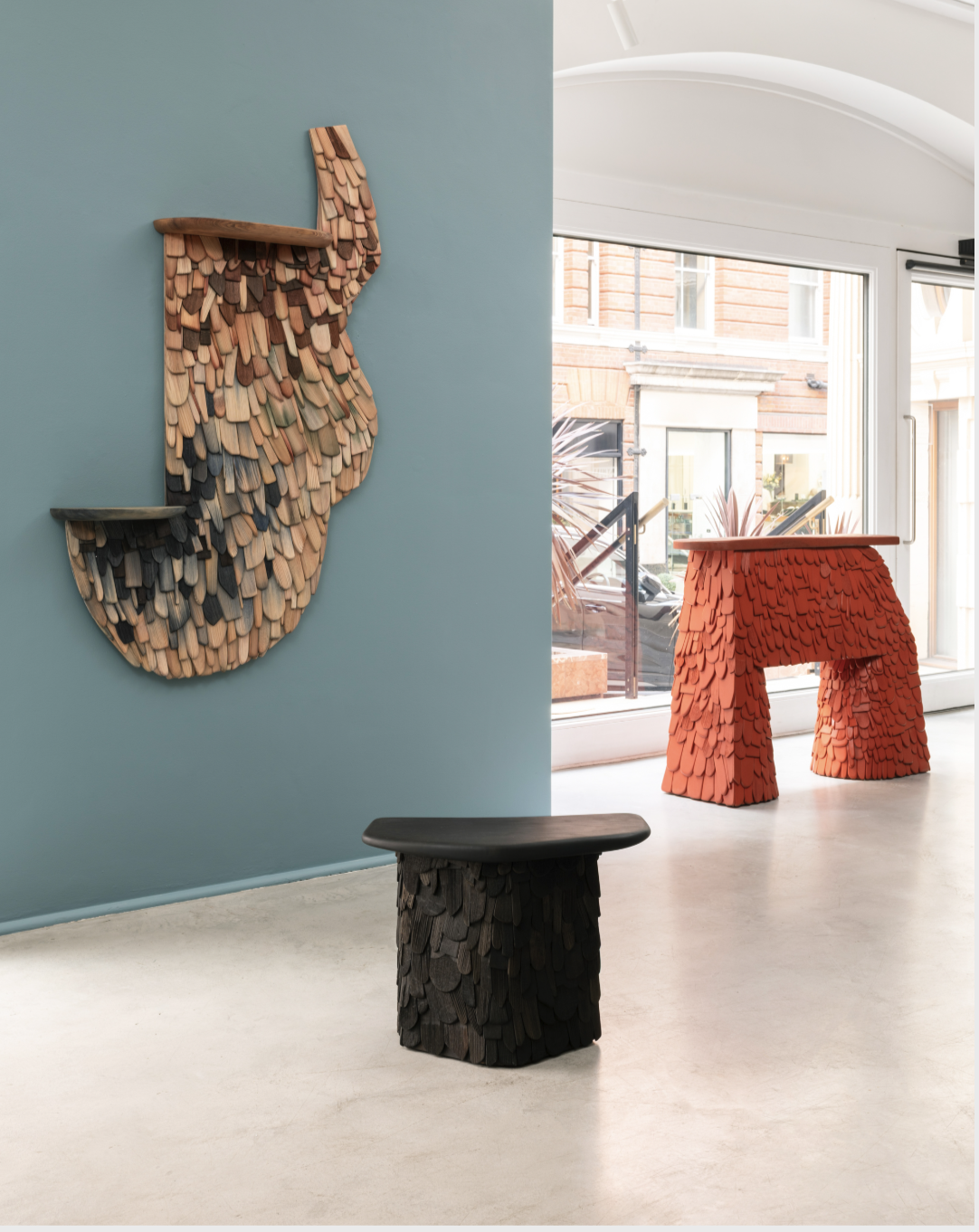
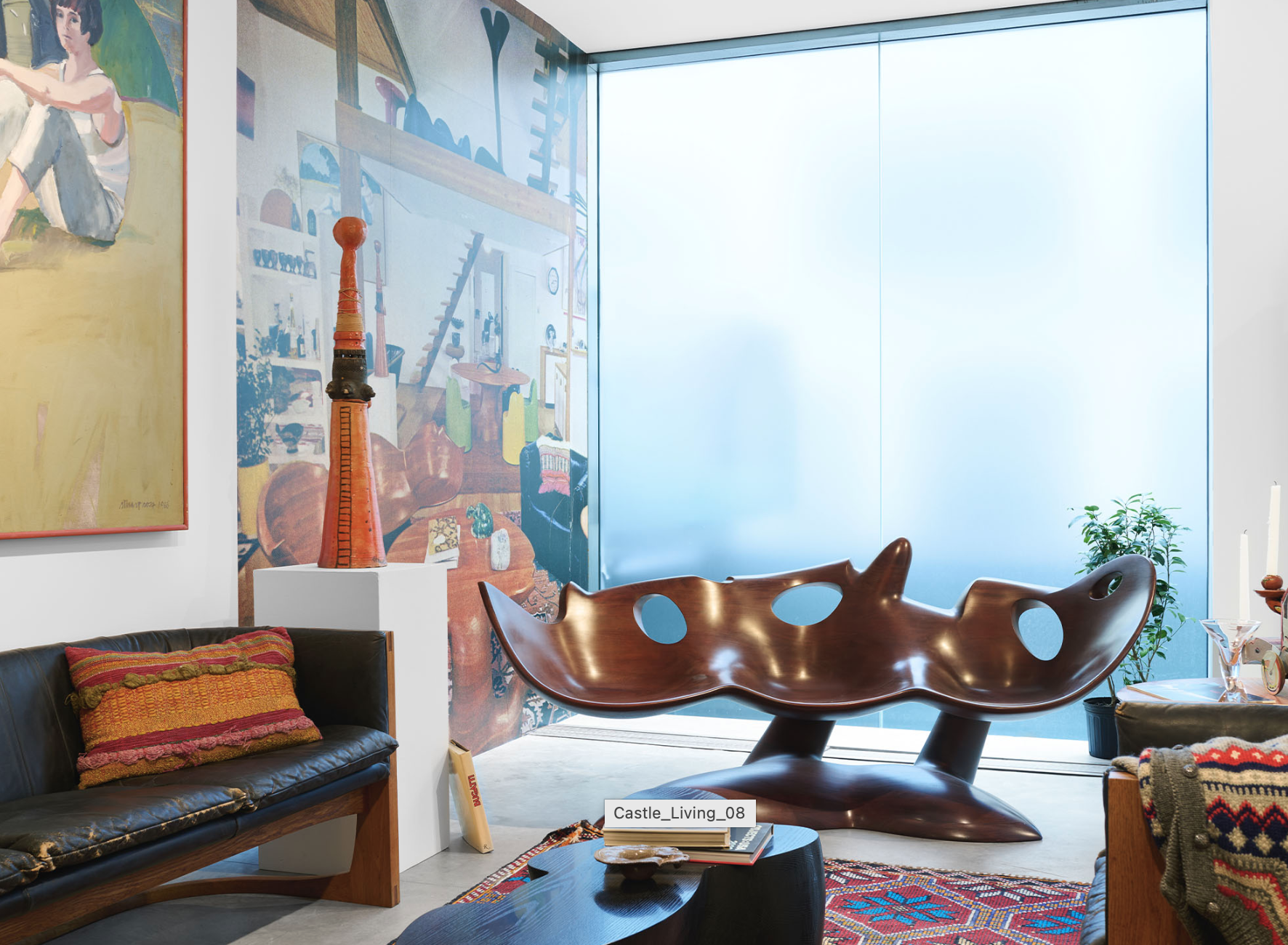
Curated by Christina Stefani for House of Stefani

Microscopic view of an inkjet printer depositing ink onto paper. Slow-motion/Image Stacking, 20X (Objective Lens Magnification), by Ole Bielfeldt. 1st Place, Nikon 2026 Photomicrography Competition
A reflection on trust, materials, experience, and the quiet confidence that allows us to keep going before we can see the finished result.
I have been thinking about trust.
Not blind trust. Not optimism. And not the familiar advice to simply “trust the process.”
I mean something more specific.
The kind of trust that is earned through experience.
I think about this often when I paint.
Much of my work is built through layers of oil glazing. One transparent layer changes the one beneath it. Then another changes both. Color deepens. Light shifts. Forms emerge, disappear, and sometimes return in a different way.
And somewhere in the middle, a painting can look terrible.
The early structure is no longer quite visible, but the later layers have not yet done their work. It would be very easy, at that stage, to assume something has gone wrong.
Years of painting have taught me otherwise.
I do not necessarily know exactly what the finished painting will look like.
But I know enough about the materials.
Enough about light and color.
Enough about the way I work.
Enough to make the next decision.
Perhaps that is one form of trust.
Not certainty about the outcome.
Just enough confidence to continue.
Five Colors, a Lifetime of Painting
A major exhibition of L. S. Lowry opened October 24 at MK Gallery in England, marking fifty years since the British painter’s death.
Lowry is best known for his industrial landscapes of northern England, but L. S. Lowry: The Theatre of Life presents a much broader view of his career, including portraits, seascapes, drawings, pastels, and later works that move into more enigmatic territory.
One detail particularly caught my attention.
Lowry famously worked with only five colors of undiluted oil paint: ivory black, vermilion, Prussian blue, yellow ochre, and flake white. After a teacher told him his paintings were too dark, he began working against a white ground, developing the visual language that eventually became unmistakably his own.
Five colors.
Not because other colors were unavailable.
Because he learned what those colors could do.
There is something compelling about that kind of familiarity with a material.
Painters spend years learning that a tube of color is never simply a color. Pigments behave differently. Some are transparent. Some are opaque. Some dominate a mixture with almost no encouragement. Others seem to disappear.
Eventually, knowledge becomes instinct.
You reach for something because experience has taught you what it is likely to do.
That is not limitation.
It is fluency.
And perhaps mastery is partly the point at which we no longer need every possible choice because we understand our own choices well enough.
L. S. Lowry: The Theatre of Life is on view at MK Gallery from October 24, 2026 through February 28, 2027.
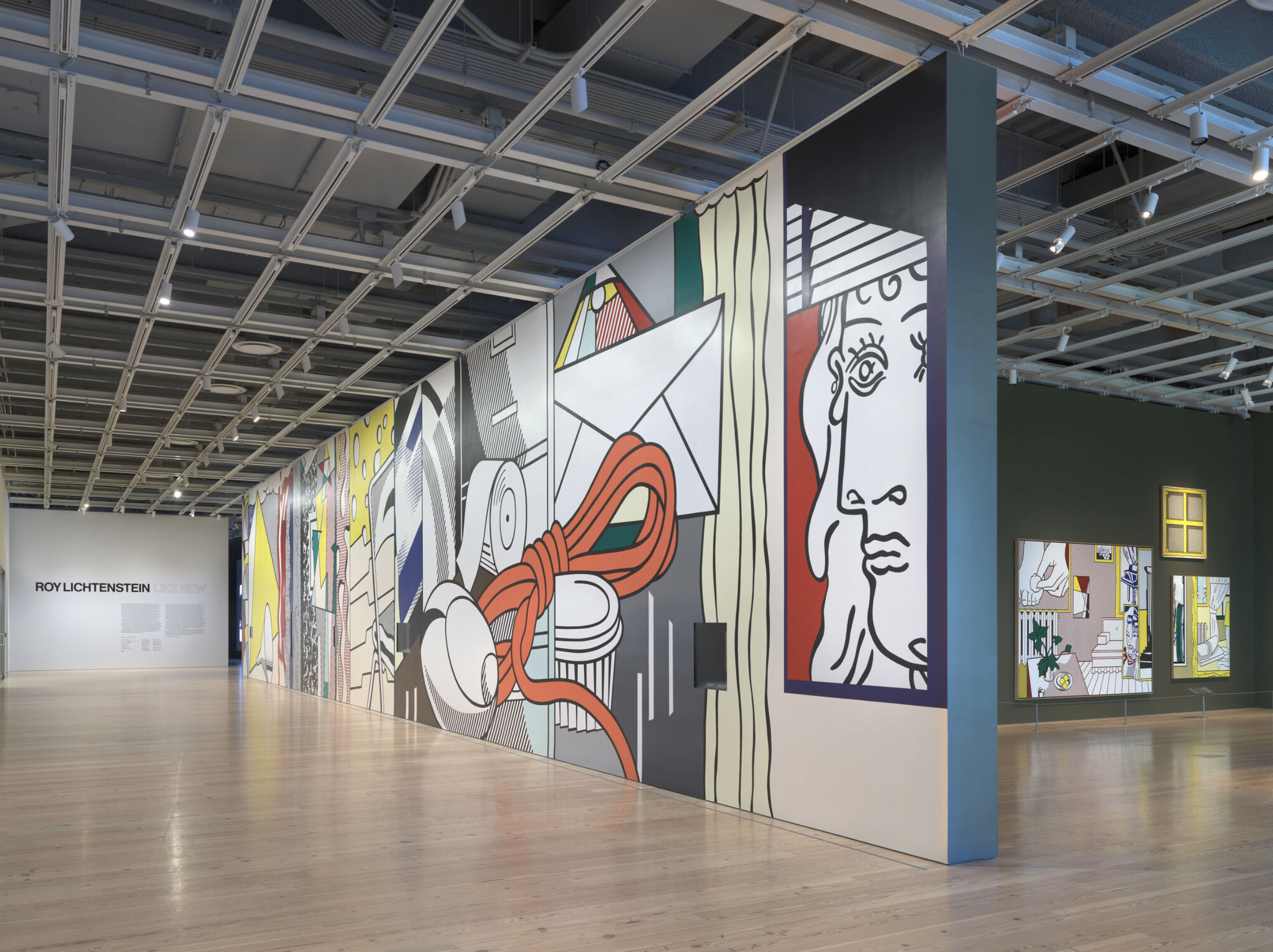
Installation view of Roy Lichtenstein: Like New, Whitney Museum of American Art, New York. Photograph by Ron Amstutz. Artwork © Estate of Roy Lichtenstein/DACS 2026
When the Handmade Looks Mechanical
At the Whitney Museum of American Art in New York, Roy Lichtenstein: Like New offers a very different question about trust.
Lichtenstein’s paintings look mechanical.
That, of course, is part of their point.
Beginning in the 1960s, he borrowed imagery from comic books, advertisements, and newspapers, enlarging the visual language of commercial printing into paintings built from bold outlines, flat areas of color, and his famous fields of Ben-Day dots.

Roy Lichtenstein, Little Big Painting, 1965. Oil and acrylic on canvas, 68 × 80 inches. Whitney Museum of American Art, New York. © Estate of Roy Lichtenstein
But what appears mechanically reproduced was painstakingly made by hand.
The Whitney describes the work as “cool, crisp, and mechanical-looking yet decidedly handmade.” The exhibition also includes preparatory drawings and source materials that reveal how extensively Lichtenstein altered and refined the images he borrowed before transferring them to canvas.
I find that distinction particularly interesting now.
We live in a visual culture in which appearance increasingly tells us very little about how something was made.
A handmade object can mimic a machine.
A machine can mimic the handmade.
A photograph can be altered until its relationship to the original moment becomes difficult to determine.
An image can appear photographic without a camera ever having been involved.
That does not automatically make any of these things good or bad.
But it does make context matter.
Materials matter.
Process matters.
And increasingly, transparency matters.
Perhaps trust begins not with assuming that what we see tells us everything, but with remaining curious about what lies behind the surface.
Roy Lichtenstein: Like New on view at the Whitney through May 10, 2027.

The Frankfurt Kitchen by Margarethe Schutte-Lihotzky is largely considered the first fitted kitchen and the progenitor to nearly every contemporary cook space. © Vindice/Alamy
A Kitchen That Earned a Century of Trust
One of the most fascinating design stories I encountered this week concerns something considerably more ordinary.
A kitchen.
In 1926, Austrian architect Margarete Schütte-Lihotzky designed what became known as the Frankfurt Kitchen for a large public housing project in Germany.
At just over six feet by eleven feet, virtually every inch had a purpose.
Built-in cabinetry, continuous work surfaces, labeled aluminum storage containers, an electric stove, carefully positioned lighting, and even a fold-down ironing board were arranged to reduce unnecessary movement and make domestic work more efficient.
At least 10,000 were installed.
A century later, almost every modern fitted kitchen carries some of its DNA.
Very few original Frankfurt Kitchens survive.
Now conservators, historians, and volunteers are racing to preserve them before apartment renovations erase the remaining examples.
Some are documented and carefully dismantled for museums. Others are being restored in place, with modern appliances sensitively incorporated so that the kitchens can continue functioning in the homes for which they were designed.
One conservator made a distinction I love.
Preserving a kitchen in place rather than reconstructing one in a museum is, she said, rather like the difference between a musical instrument still being played and one displayed behind glass. Both have value. But they are different kinds of survival.
That idea has stayed with me.
There is something remarkable about a design that has proven itself through use.
A chair that remains comfortable after decades.
A tool that feels right in the hand.
A kitchen whose fundamental logic still makes sense one hundred years later.
We trust some things because they have demonstrated, repeatedly and quietly, that they work.
And yet I also find myself thinking about what the Frankfurt Kitchen could not measure.
The pleasure of cooking.
The smell of bread.
A bottle of wine opened while dinner is underway.
The meal that takes longer than necessary because making it is part of the pleasure.
I make pizza from scratch. The dough, the shaping, the toppings, all of it.
Recently I made one with figs, potatoes, and herbs from the garden, with a Willamette Valley Vineyards Chardonnay alongside it.
None of that was particularly efficient.
That was rather the point.
Good design can remove unnecessary effort.
But a good life still needs room for the things we choose to do slowly.
Read about the preservation of the Frankfurt Kitchen
Look More Closely
There is one final image I wanted to include simply because it is wonderful. It’s our hero image at the top.
The winner of Nikon’s 2026 Small World Photomicrography Competition is a photograph of an inkjet printer depositing ink onto paper.
That sentence does not begin to describe the image.
Under magnification, something utterly ordinary becomes an extraordinary landscape of suspended droplets, color, motion, and light.
The competition, now in its fifty-second year, celebrates photography made through the light microscope. This year’s winning photograph was created by Ole Bielfeldt using a microscope objective and a deconstructed printer to reveal a process most of us have encountered thousands of times without ever actually seeing.
I love that.
Not everything worth discovering is distant or rare.
Sometimes the extraordinary is happening directly in front of us at a scale we simply have not learned to see.
Photography has always had that power.
It can show us something we have never encountered.
Or it can return something familiar to us in a way that makes it unfamiliar again.
And perhaps that requires another form of trust.
Trust that looking more carefully is worth the effort.
Explore the 2026 Nikon Small World winners
Enough to Continue
The more I think about trust, the less I think it has much to do with certainty.
Certainty asks for guarantees.
Trust seems quieter than that.
A painter learns what pigments will do because she has mixed them thousands of times.
A designer creates something that remains useful for a century.
A relationship becomes dependable because someone has done what they said they would do, again and again.
A business earns trust the same way.
Not through one grand statement.
Through hundreds of small experiences that gradually become evidence.
That distinction matters enormously to me.
My businesses are built on relationships. Artists trust us with their work. Collectors trust us with their questions, their homes, and sometimes significant decisions. Clients trust us to understand what they are trying to build. Friends trust us with parts of themselves that deserve care.
None of that confidence appears instantly.
It accumulates.
Perhaps that is why I keep returning to the image of a painting being built through transparent layers.
Each layer changes what came before it.
Some are barely visible in the finished work.
Some stages are uncomfortable.
Some decisions must be made before their consequences can be fully known.
And still, we continue.
Not because we know exactly where everything will lead.
Because experience has given us enough.
Enough knowledge.
Enough evidence.
Enough confidence.
Enough to make the next mark.
Enough to continue.
–Christina Stefani | House of Stefani Journal
About the Author: Christina Stefani is an artist, gallerist, writer, and founder of House of Stefani, exploring art, design, and culture.