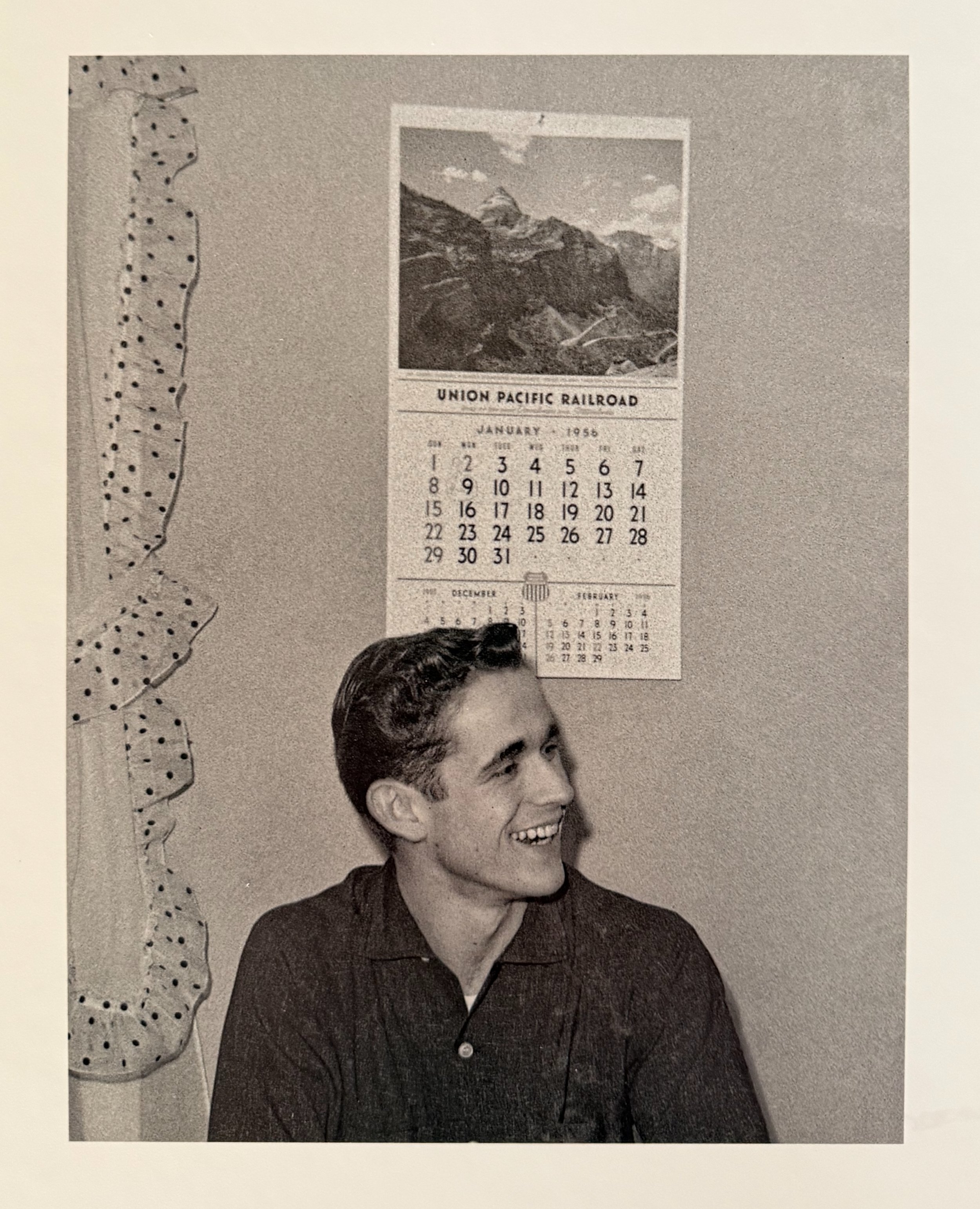
by Christina Stefani for House of Stefani
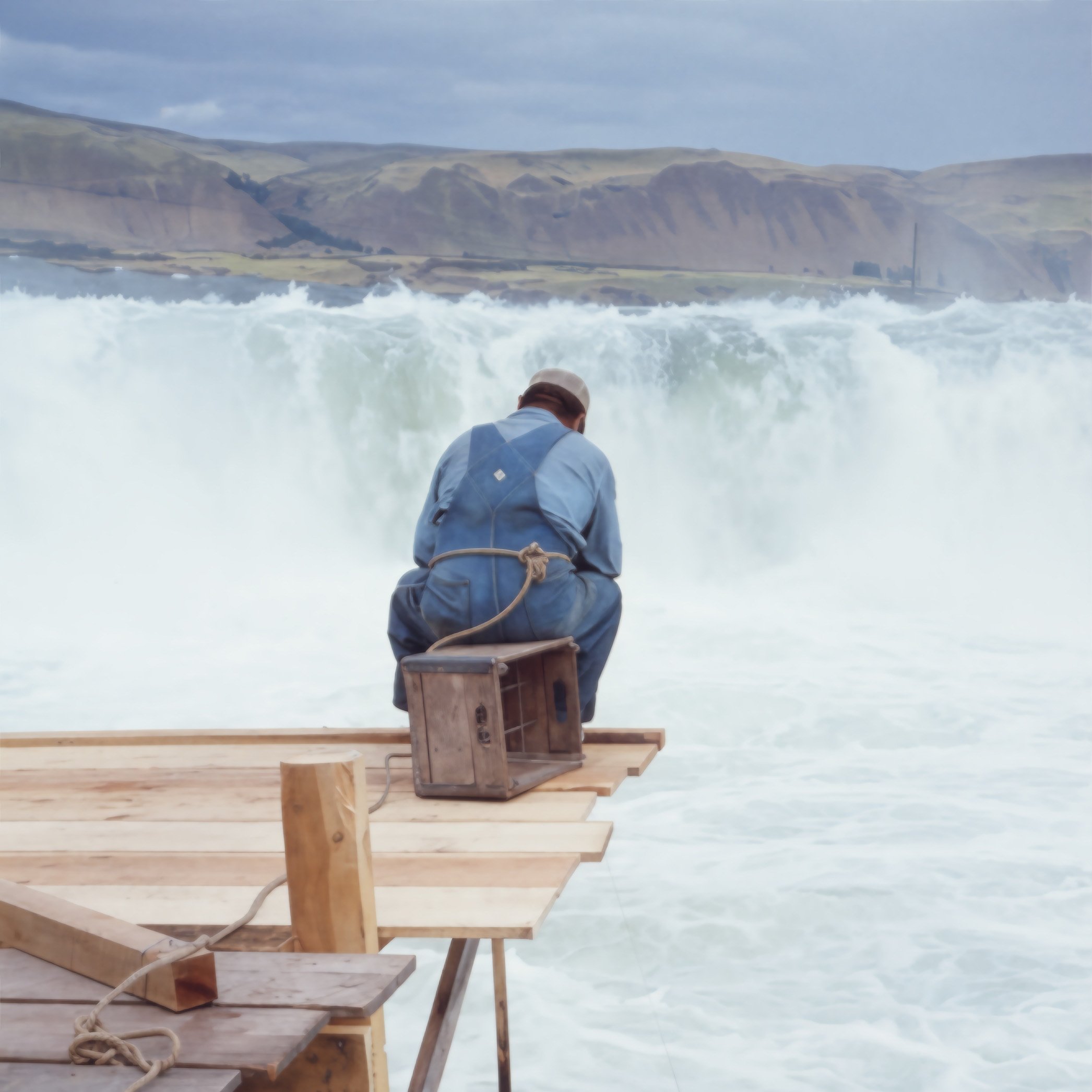
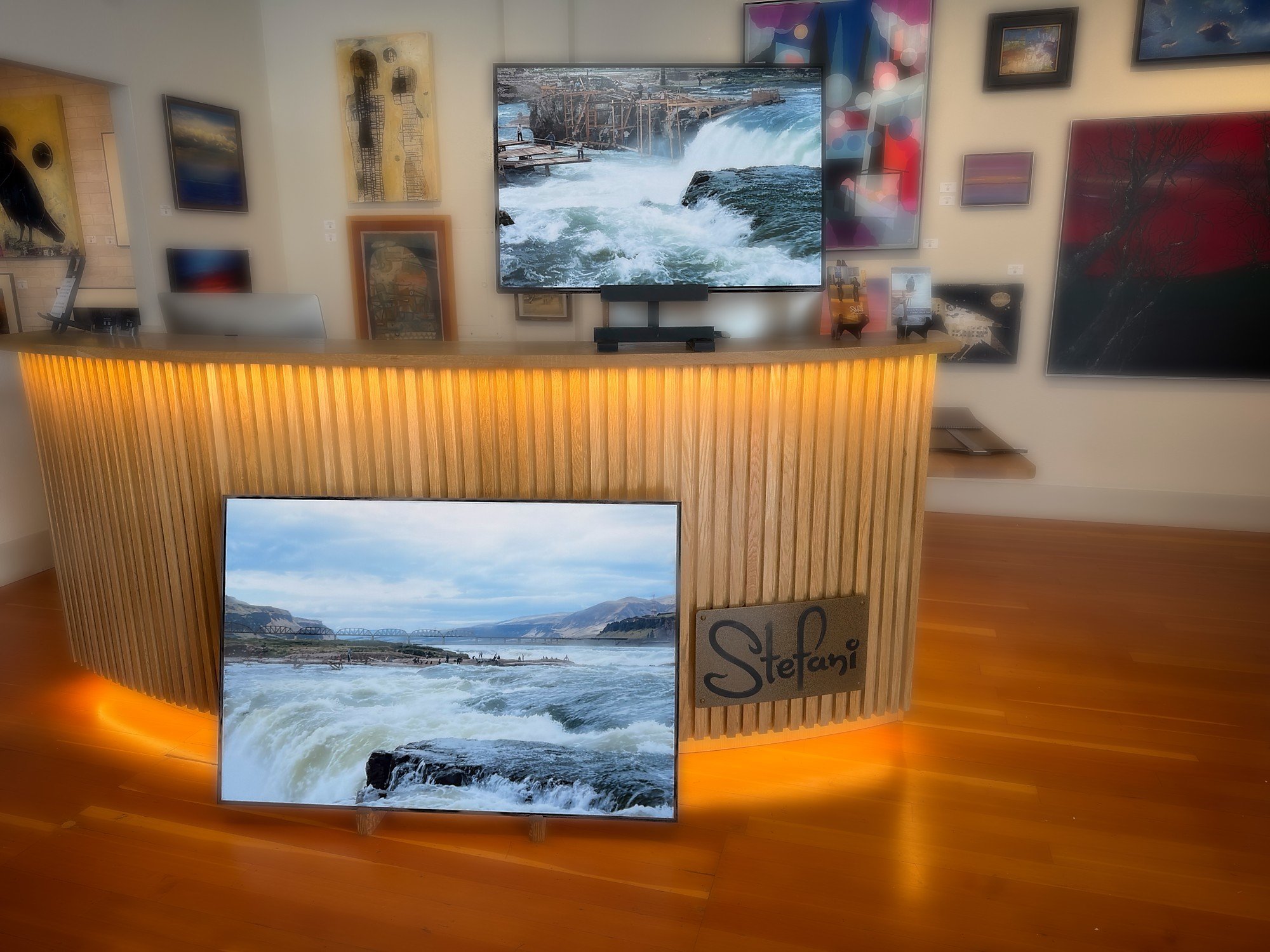
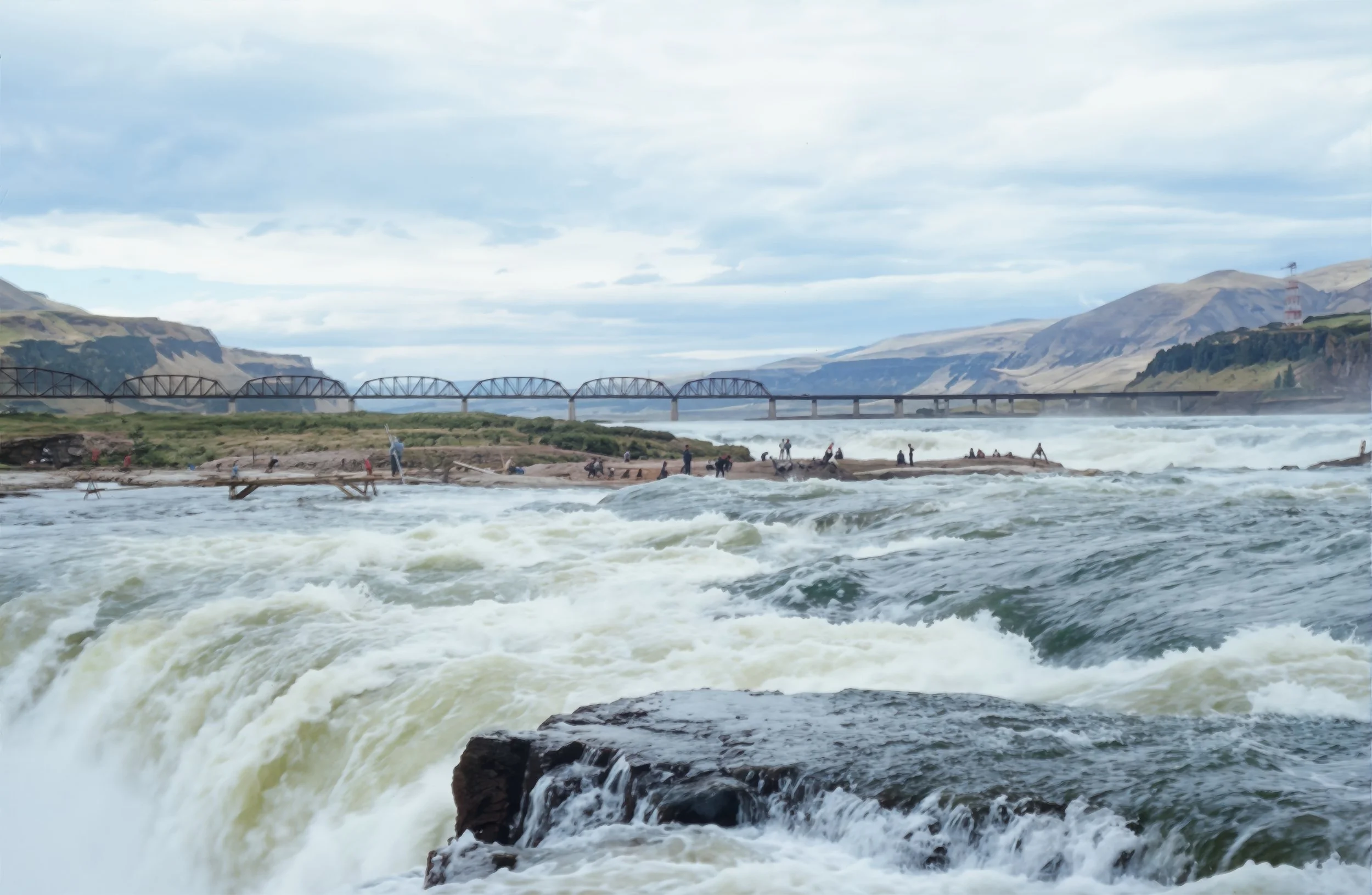
A fisherman sits quietly on a wooden fishing platform above the rushing waters of Celilo Falls during the fall of 1956. ©Richard Stefani Estate
Photographs by Richard Stefani
There are places we know mostly through what happened to them.
Celilo Falls is often remembered that way.
We know the date: March 10, 1957.
We know that when the gates of The Dalles Dam closed, the rising reservoir covered the falls and transformed a stretch of the Columbia River that had been a center of fishing, trade, community, and ceremony for thousands of years. Archaeological evidence places human occupation along the falls at least 11,000 years ago.
We know what came after.
But Richard Stefani's photographs show us something different.
They show us before.
Fall, 1956
A few months before the falls were submerged, Richard Stefani traveled to Celilo.
He was twenty-three years old.
He carried two cameras and two rolls of color film.
One was 127 film, probably exposed in a Ricohflex. The other was 35mm film exposed in a Konica camera. We are still researching the precise equipment, and that uncertainty is part of the archive too.
There are only twenty-three surviving images in the group we are preparing for exhibition.
Twenty-three glimpses of a place still in motion.
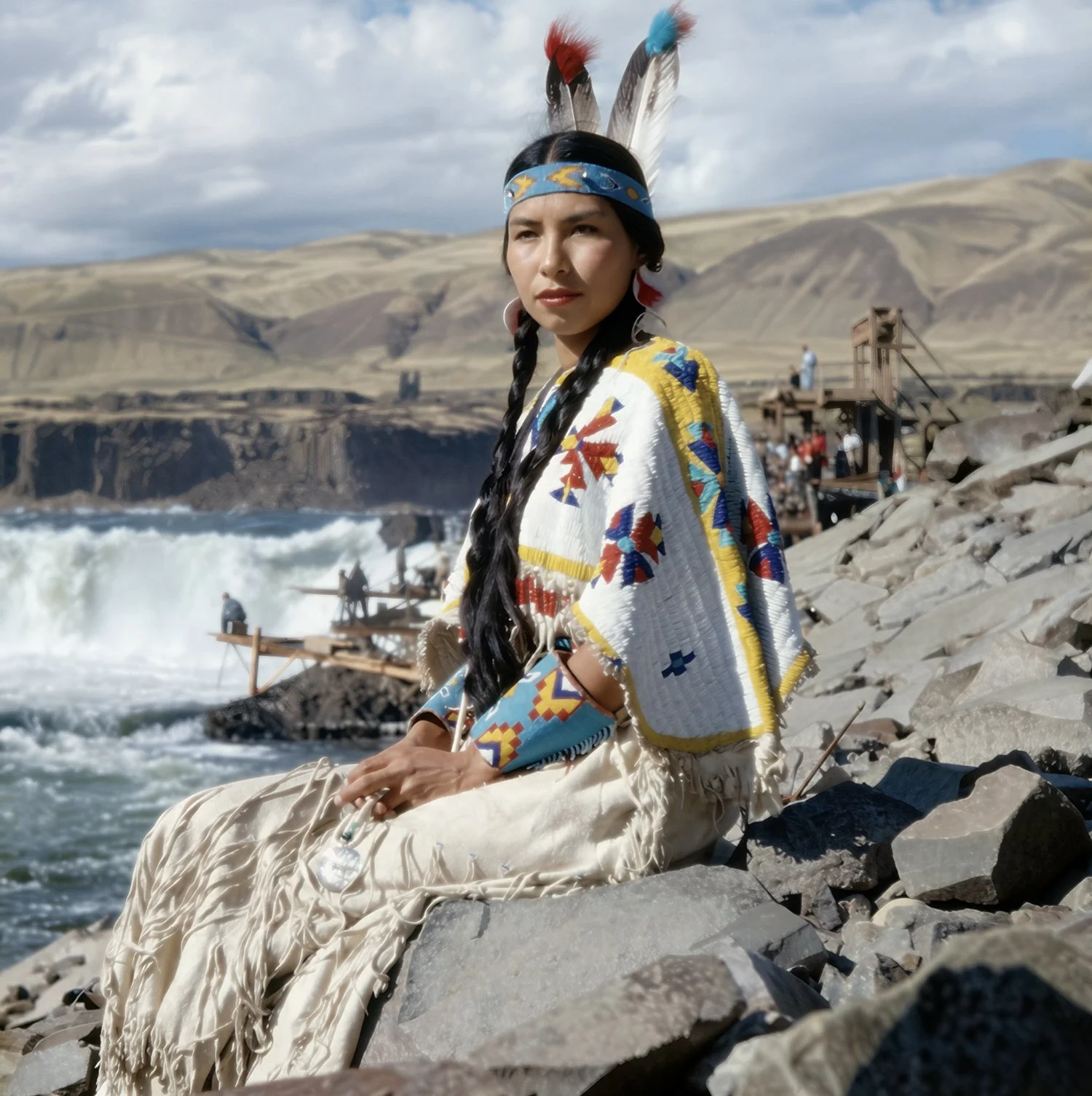
Richard photographed fishermen standing on wooden platforms above the Columbia. He photographed enormous dip nets and the structures built among the rocks. He photographed young people gathered beside the river. He stepped back to show the scale of the falls and moved close enough to make portraits in which almost everything else disappeared.
What is striking, looking at the photographs nearly seventy years later, is what they do not contain.
There is no sense of an ending.
The people in Richard's photographs are not standing inside our knowledge of what happened next.
They are simply there.
Working.
Waiting.
Talking.
Fishing.
Looking toward something outside the frame.
Living within the present tense of their own lives.
That may be the most important thing these photographs have preserved.
A Place Still Alive
Celilo was far more than a waterfall.
For millennia, the falls and the surrounding stretch of the Columbia were an important Indigenous fishery and gathering place. People traveled there to fish, trade, gather, and maintain relationships that extended across a vast region. The geography of the river created extraordinarily productive fishing sites, and generations of knowledge were embedded in how people worked within its powerful current.
In Richard's photographs, that history isn't abstract.
You can see the platforms.
You can see the nets.
You can see people standing remarkably close to the water.
And you can see children and young people among them.
This matters because Celilo's story did not end when the physical falls disappeared beneath the reservoir.
Treaty fishing rights remained. Descendants of Native families who fished at Celilo continue to fish along the Columbia and maintain cultural traditions connected to the river.
The falls were submerged.
The people were not erased.
That distinction has become increasingly important to us as we prepare Richard's photographs for public view.
The Photographer He Would Become
There is another story hidden inside these images.
Richard was at the very beginning of his life as a photographer.
He could not have known that he would spend nearly six decades behind a camera, eventually becoming a Master Photographer known particularly for his ability to photograph people.
But now that I have spent so much time with these negatives, I can see something beginning here.
Richard moves constantly between the landscape and the individual.
In one frame, the Columbia overwhelms everything.
In another, a fisherman becomes the center of the world.
Sometimes Richard shows a person surrounded by river, rock, platforms and sky. Then he moves closer. The landscape disappears, and there is simply a face.
I don't want to impose Richard's later career upon photographs he made at twenty-three.
But I do think we can see the instinct.
He was already looking carefully at people.
Not as types.
Not as scenery.
As individuals.
That sensitivity would become one of the defining characteristics of his work.
What We Know, and What We Don't
Preparing these photographs has also required us to become comfortable with uncertainty.
Richard left the negatives.
He did not leave us a complete account of the people he photographed.
We do not yet know the names of many of them.
One man has been identified to us as Chief Tommy Thompson, the longtime Salmon Chief at Celilo, but we have not yet independently verified that identification. Historical sources confirm that Tommy Thompson was a headman and Salmon Chief at Celilo and remained deeply involved in the fishery through this period. Whether the man in Richard's photograph is Thompson is a separate question, and for now we are treating it as exactly that: a question.
There will probably be other questions.
What exactly was happening when a particular photograph was made?
Who is the young man Richard photographed more than once?
Who is the woman sitting above the river?
Who are the boy and older man standing together beneath that enormous blue sky?
We could fill those spaces with plausible stories.
We won't.
One of the principles guiding this project is simple:
We will distinguish between what Richard's photographs show, what historical research establishes, what community knowledge contributes, and what remains unknown.
Perhaps some of those unknowns will change.
Someone may recognize a grandfather.
A historian may identify a structure.
A family may have another photograph from the same gathering.
An archive may contain a name Richard never recorded.
If that happens, the story will grow.
That is what a living archive should be allowed to do.
Returning to the Negatives
For decades, these photographs were rarely seen.
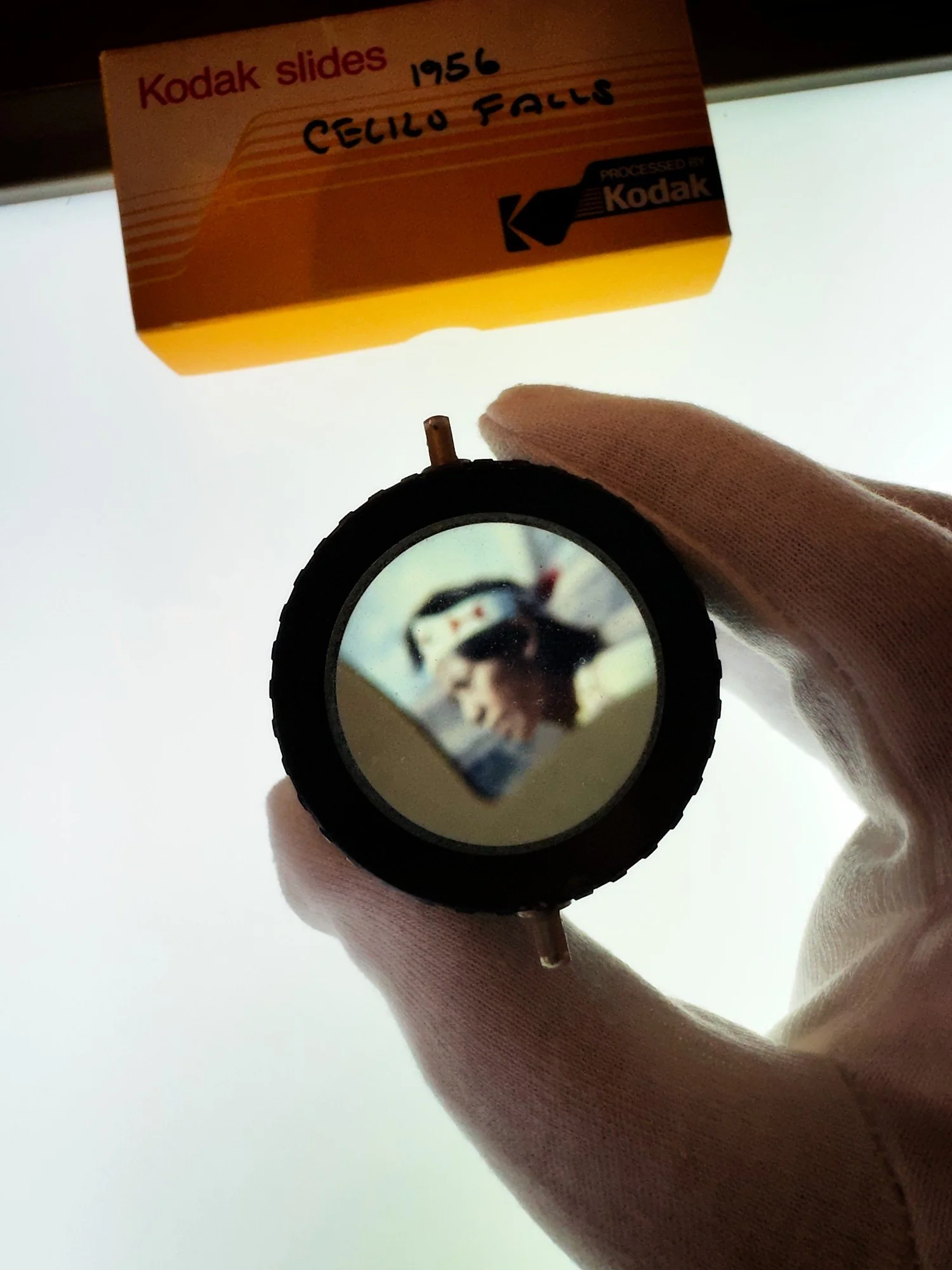
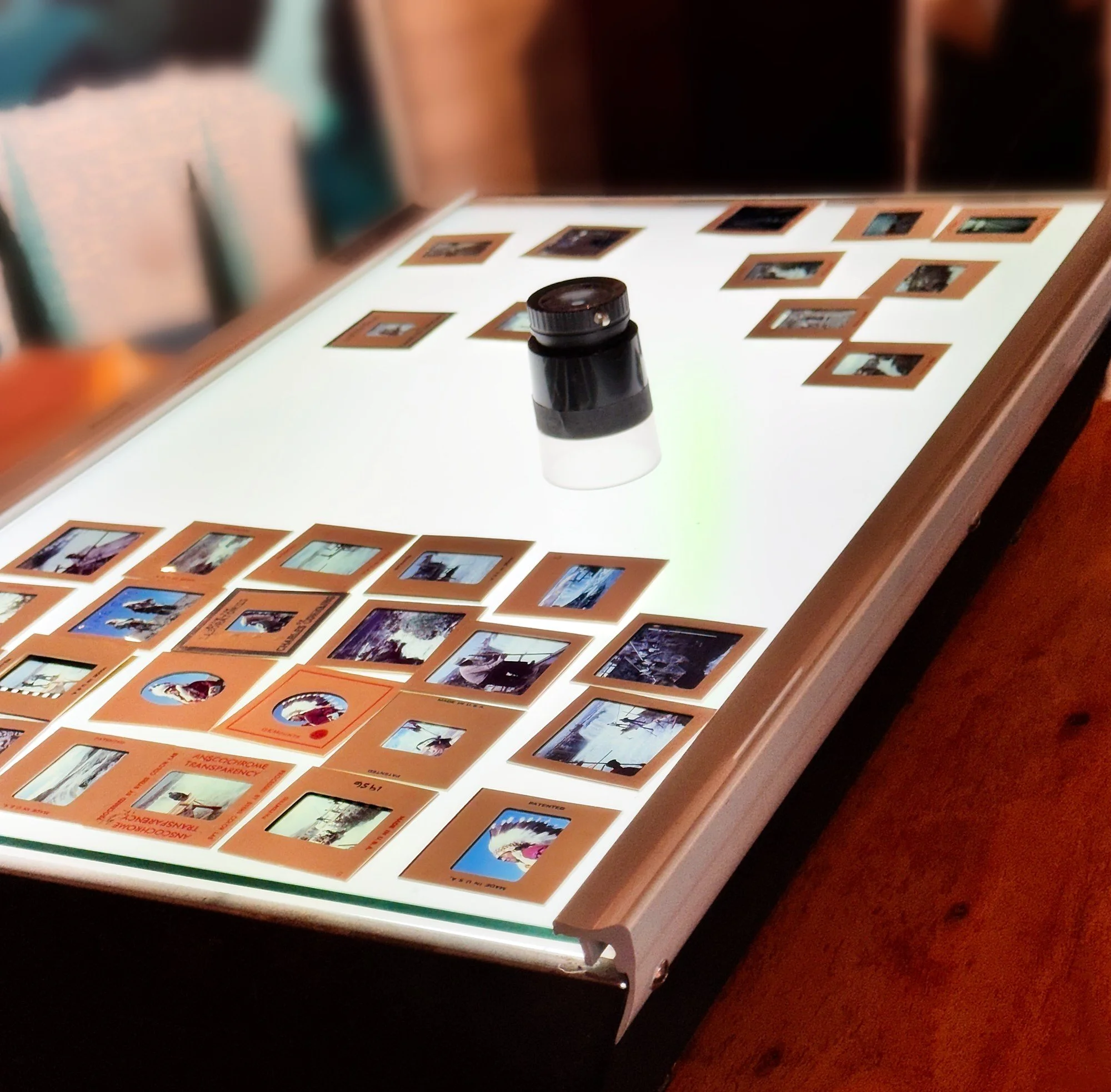
Now I am returning to Richard's original color negatives and rescanning them carefully, one by one.
This process is technical, but it is also deeply personal.
I knew Richard as the accomplished photographer he became. These negatives allow me to encounter him before all of that.
Twenty-three years old.
Two cameras.
Two rolls of film.
Looking.
There is something moving about seeing the beginnings of a person's life's work when you already know where that life eventually led.
The original prints Richard made himself remain in his archive and will not be offered for sale.
For the exhibition, new museum-quality Estate Edition prints are being produced from the original negatives under my direction, working with a master printer in Germany. The goal is not to modernize Richard's photographs or make them into something they were never intended to be.
It is to bring them forward with care.
Before the Water Rose
On September 26, these photographs will be brought together at Stefani Art Gallery in Salem, Oregon, for Before the Water Rose: Celilo Falls, 1956.
It will be the first public presentation of House of Stefani.
I have thought a great deal about whether that places too much meaning on a group of photographs Richard made when he was so young.
I have come to believe the opposite.
House of Stefani is being built around a simple idea: that some things deserve our attention, our care, and our stewardship.
These photographs ask all three of us.
They ask us to look at a river before its physical landscape changed.
They ask us to look at people whose names we may not yet know.
They ask us to resist turning the past into something simpler than it was.
And they remind us that preservation is not only about keeping an object safe.
Sometimes it is about returning to something carefully enough that we can finally see what was there all along.
Richard did that in 1956.
Now it is our turn to look.
Before the Water Rose: Celilo Falls, 1956
Photographs by Richard Stefani (1933–2022)
Opening Presentation
Saturday, September 26, 2026
6–8 p.m.
Stefani Art Gallery
Salem, Oregon
Presented by House of Stefani
By invitation. RSVP requested.
Editor's Note
This essay is part of The Before the Water Rose Journal, an ongoing series exploring Celilo Falls, Richard Stefani's 1956 photographs, the people and places they preserve, and the process of bringing this remarkable archive forward with care. The series will continue through the presentation of Before the Water Rose: Celilo Falls, 1956, and beyond, as research and new understanding of the photographs continue to emerge.