This Week in Art, Design, and Culture: Seeing, Color, Place, and Ritual
Curated by Christina Stefani for House of Stefani
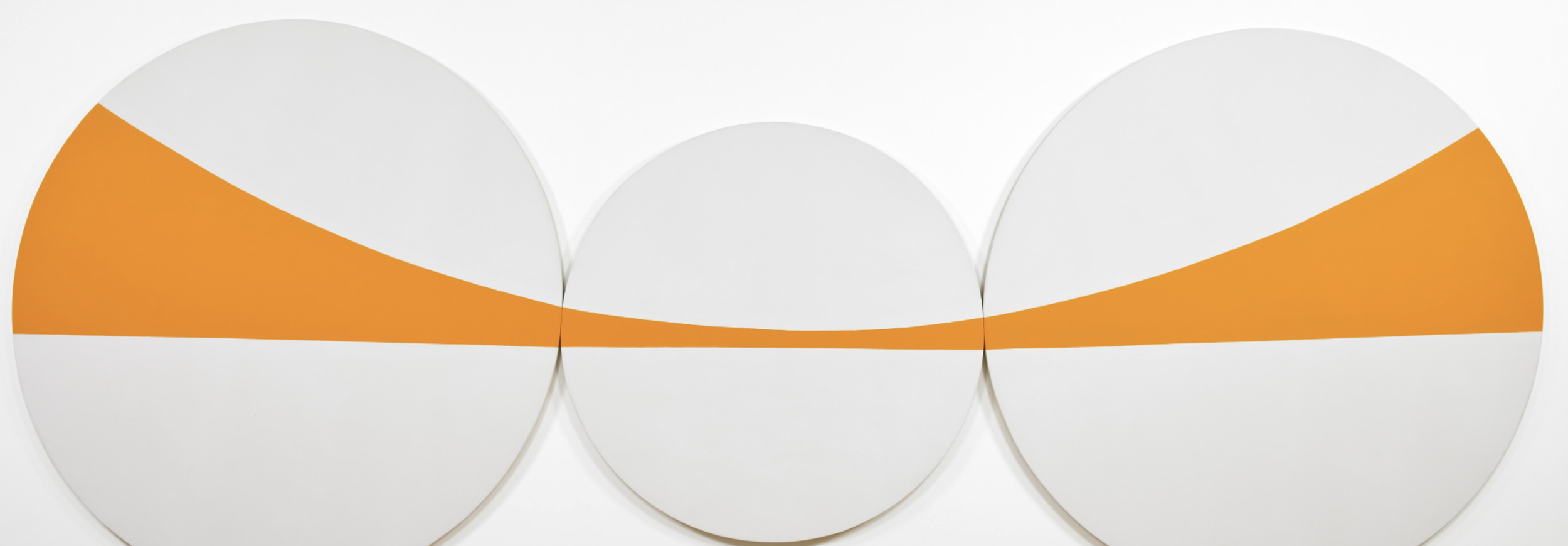
ChromaForm reminds us that color itself can communicate before an image represents anything at all. Courtesy Brandeis University.
There are certain ideas that stay with us after we encounter them.
This week, I found myself thinking about how we see: how technology may be changing the very nature of images, how color can affect us before we consciously understand why, and how architecture can bring art, food, craft, and landscape together into a single experience.
And then there was Siena, Italy, one of my favorite cities in the world, and a centuries-old tradition I somehow had never fully understood.
Perhaps that is what I enjoy most about writing this Journal. There is always something else to notice.
When Images Aren't Made for Us
I've been thinking about images lately.
Last week, I wrote about AI, art, and transparency, and why knowing how an image was made increasingly matters. I keep coming back to the same questions: What exactly are we looking at? Who made it? How was it made? And does knowing the answer change how we experience it?
This week, I came across artist Trevor Paglen's new book, How to See Like a Machine: Images After AI, and it pushed that thought somewhere I hadn't quite considered.
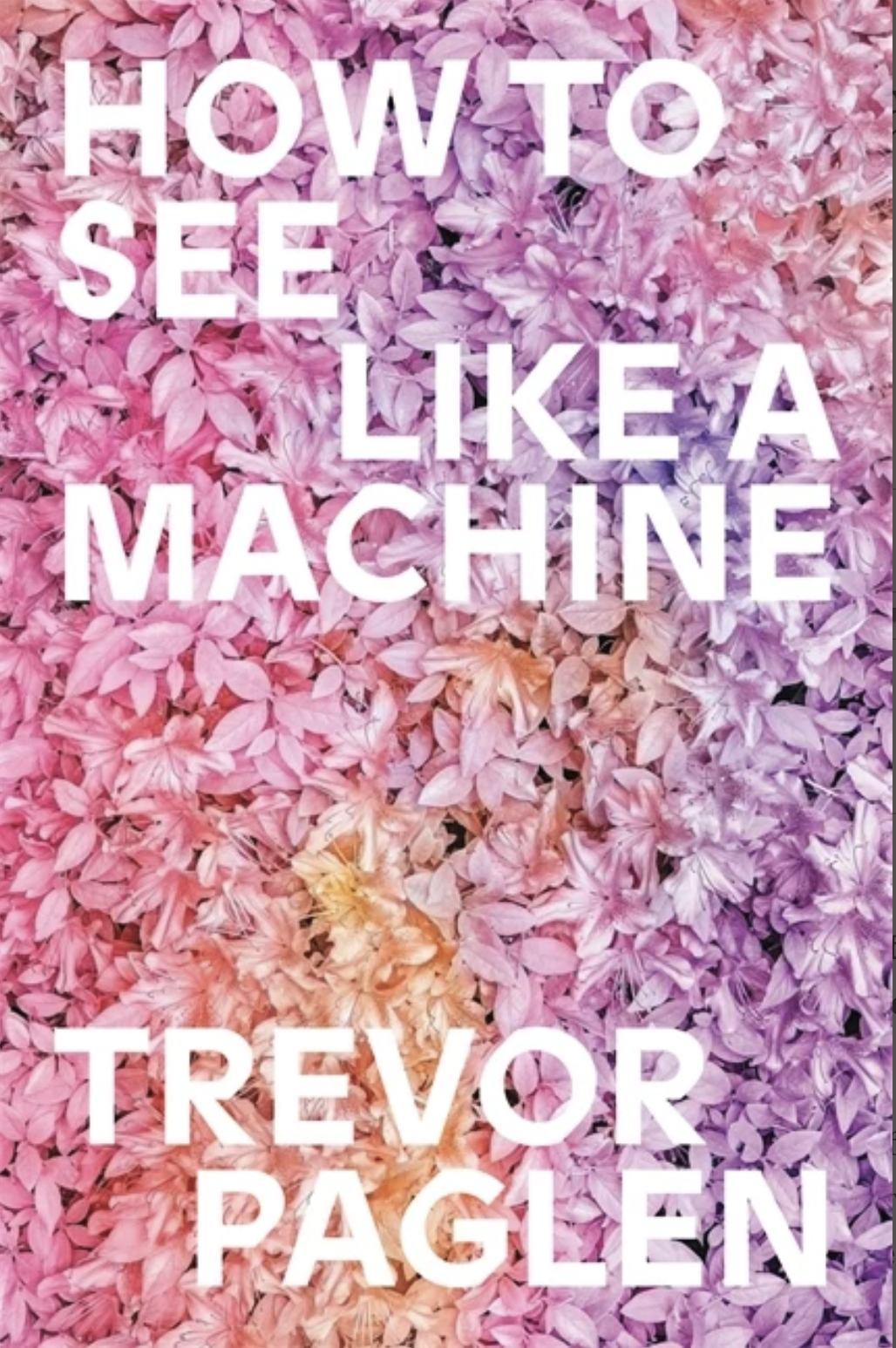
The cover of Trevor Paglen's new book, How to See Like a Machine: Images After AI.
For most of human history, we have thought about images as things made for people to see.
A painting. A photograph. A drawing. A film.
But increasingly, images are also being made, read, classified, and interpreted by machines. Computer vision systems examine faces, streets, objects, behavior, and enormous quantities of visual information that may never be meaningfully viewed by a human being.
Paglen suggests that instead of asking only what these technologies and images say, we should also ask what they do.
I find that distinction fascinating.
An image can now identify, categorize, predict, persuade, surveil, or become information for another machine. It does not necessarily need a human viewer at all.
Perhaps the most interesting question surrounding AI and art, then, isn't simply whether a machine can create a beautiful image.
It may be what happens to visual culture when seeing itself is no longer an exclusively human activity.
I'm still thinking about this one.
Worth reading: Trevor Paglen, How to See Like a Machine: Images After AI
The Meaning of Color
I've also been thinking about color.
Color is one of those things we experience before we necessarily understand it.
A particular blue can quiet a room. Red can feel celebratory, dangerous, romantic, or powerful depending on where and how we encounter it. Certain colors seem inseparable from particular artists. Others belong to places, periods, religions, fashions, or memories.
Opening August 19 at the Rose Art Museum at Brandeis University is ChromaForm, an exhibition exploring a pivotal moment in mid-century abstraction when artists began moving away from the emotional intensity of Abstract Expressionism and toward geometry, perception, and color.
Drawn from the museum's permanent collection, the exhibition includes works by Josef Albers, Richard Anuszkiewicz, Gene Davis, Al Held, Ellsworth Kelly, Sol LeWitt, Kenneth Noland, Leon Polk Smith, and others.
What interests me most is the underlying idea: that color and form can create meaning without needing to depict anything at all.
As an abstract artist, I think about this constantly, even when I don't consciously intend to.
Why does one color feel quiet and another insistent? Why can a particular combination feel harmonious while another creates tension? How much of our response is biological, how much cultural, and how much entirely personal?
And what happens when color moves beyond the canvas into architecture, interiors, fashion, food, gardens, and the objects with which we surround ourselves?
There is much more here.
I suspect I'll return to this.
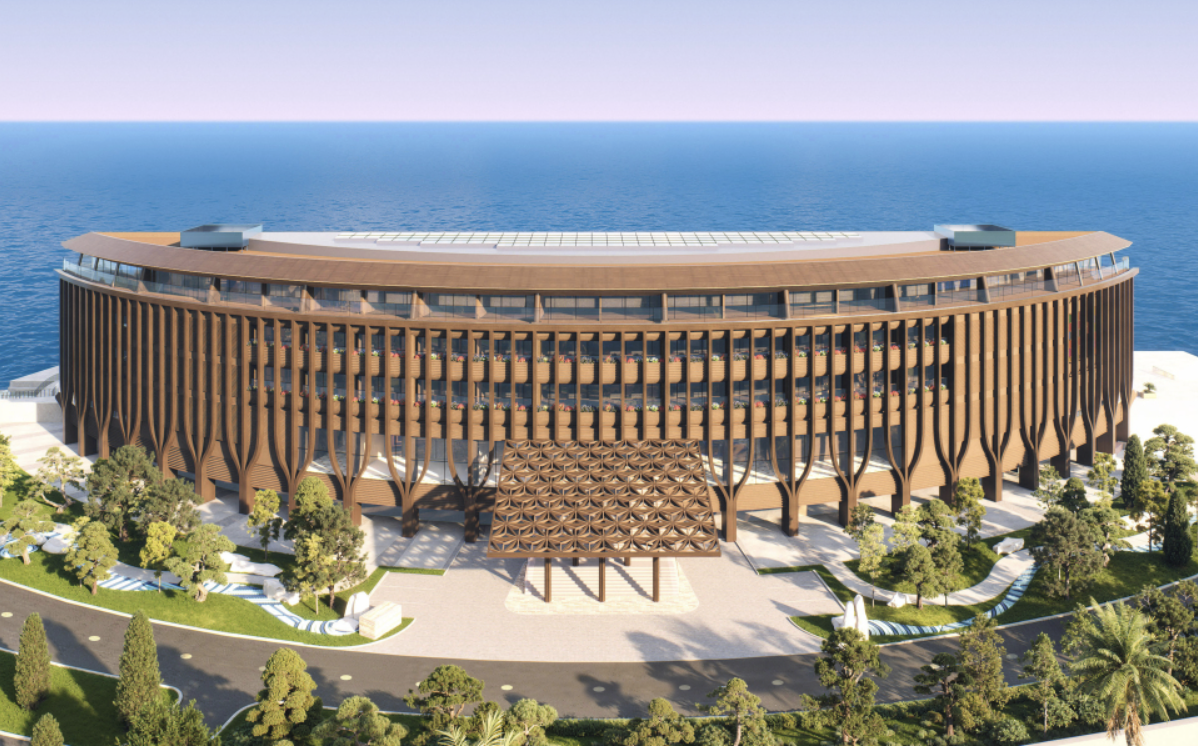
Shigeru Ban's new Pasona Natureverse Retreat on Awaji Island in Japan.
A Place Worth Knowing: Shigeru Ban's Natureverse Retreat
Every once in a while, I see a building that makes me want to understand not just how it looks, but the philosophy behind it.
Shigeru Ban's new Pasona Natureverse Retreat on Awaji Island in Japan is one of those places.
Set between forest and sea, the retreat brings together architecture, landscape, locally sourced food, wellness, art, music, and traditional Japanese craft.
Ban, the Pritzker Prize-winning architect known for both experimental materials and humanitarian architecture, chose not to maximize the extraordinary coastal site with the tallest building or greatest number of rooms possible. Instead, the relatively low structure responds to its surroundings.
That decision alone says something.
Inside, handmade washi, local materials, and the work of Japanese artisans are integrated into the architecture. There are five restaurants, an art gallery, a music hall, wellness spaces, and rooms looking toward either forest or sea.
But what I find most compelling isn't any single amenity.
It is the refusal to separate the experience into categories.
We have a tendency to do that.
Art goes in the gallery. Architecture creates the building. Design furnishes it. Food arrives at the table. Craft becomes an object. Landscape waits outside.
Yet some of the most memorable places I've experienced don't feel that way at all.
The architecture changes the way the food feels. The landscape changes the architecture. The objects reveal something about the people who made them. The meal tells us something about the place. Art becomes part of living rather than something encountered separately from it.
Perhaps beauty is most powerful when we stop dividing it into categories.
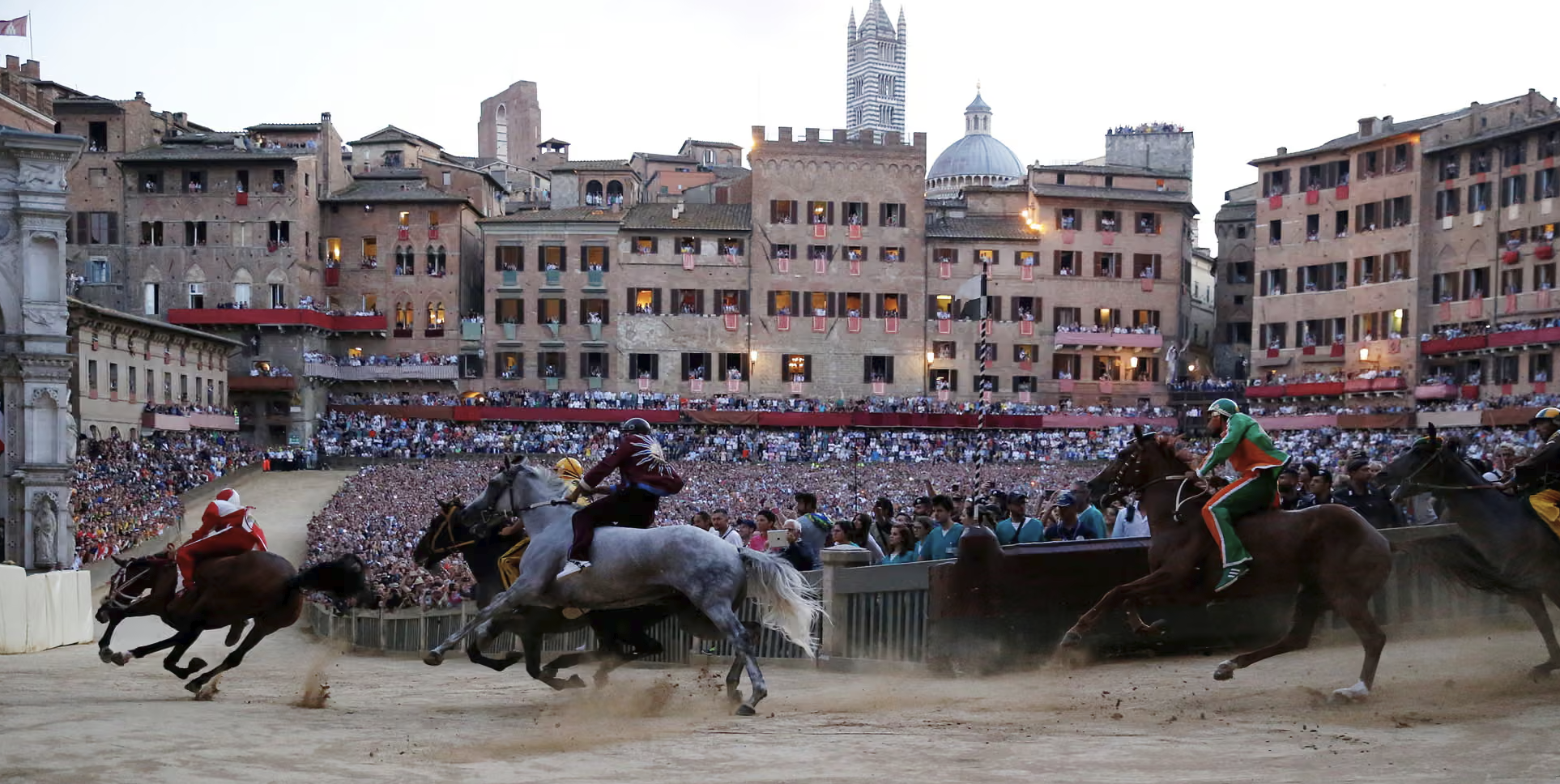
The Palio di Siena is held twice a year, on 2 July and 16 August. Photograph © Stefano Rellandini/Reuters.
Something I Didn't Know: The Art of the Palio
Siena, Italy is one of my favorite cities.
There is something almost impossible to describe about walking into the Piazza del Campo for the first time. The architecture, color, scale, history, and life of the city seem inseparable from one another.
I knew, of course, about the Palio di Siena, the famous horse race that has been part of the city's culture for centuries.
What I didn't fully understand was the role art plays in it.
Each Palio includes a commissioned drappellone, a hand-painted silk banner created by an artist and awarded to the winning contrada, one of Siena's historic districts.
For the Palio taking place August 16, Romanian artist Teodora Axente created the drappellone. Her work is dedicated to the Madonna dell'Assunta and commemorates the 500th anniversary of the Battle of Camollia, drawing upon Siena's religious imagery and painting traditions.
And this is the part I love:
The artwork is not decoration surrounding the ritual.
It is the prize.
After the race, the drappellone will become part of the museum collection of the winning contrada.
Think about that for a moment.
An artist creates a work specifically for a living civic tradition. Thousands gather as ten contrade compete for it. The winning community carries it home. And eventually the painting becomes part of that community's historical record.
Art, competition, faith, place, memory, identity, and tradition, all contained in a painted piece of silk.
I've visited Siena, walked its streets, stood in the Piazza del Campo, and admired the extraordinary visual culture that seems to exist everywhere there.
And yet I had never thought about the Palio quite this way.
There is always something else to learn.
What I'm Carrying With Me This Week
Perhaps there is a connection among all of these things.
Trevor Paglen asks us to reconsider what it means to see.
ChromaForm reminds us that color itself can communicate before an image represents anything at all.
Shigeru Ban's Natureverse suggests that architecture, craft, food, landscape, and art may become richer when experienced together.
And in Siena, a painting isn't simply viewed. It becomes part of a ritual, a community, and eventually a collective memory.
We spend a great deal of time dividing culture into disciplines.
Art. Design. Architecture. Food. Technology. Craft.
But perhaps the most interesting experiences happen at the places where those boundaries disappear.
That's what I'm thinking about this week.
See you next Saturday.
Warmly,
–Christina Stefani | House of Stefani Journal
About the Author: Christina Stefani is an artist, gallerist, writer, and founder of House of Stefani, exploring art, design, and culture.