This Week in Art, Design, and Culture: The Beauty of Attention
Curated by Christina Stefani for House of Stefani

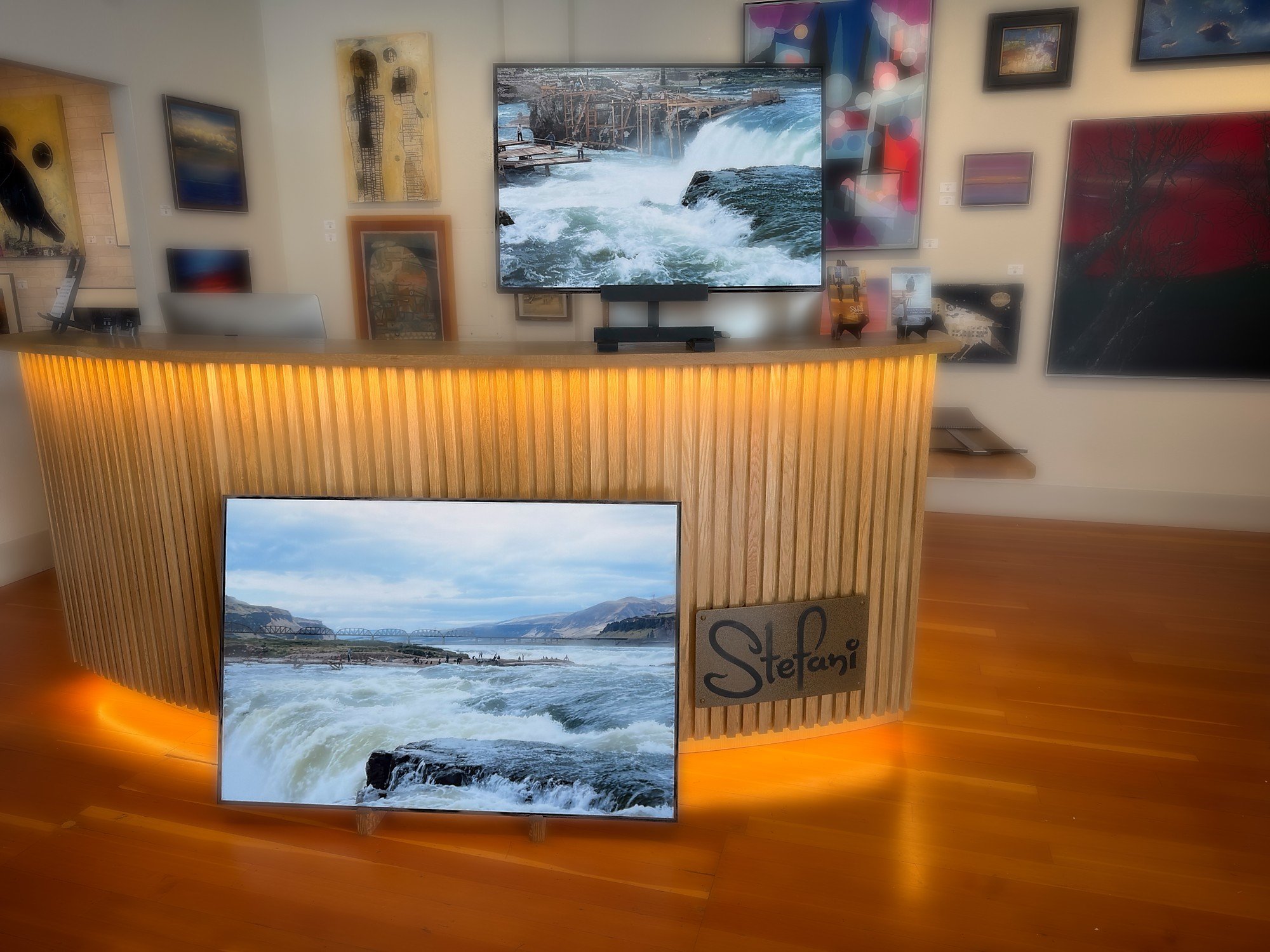
The Quiet Between, view from Lānaʻi to Molokaʻi, photograph by Christina Stefani.
On quiet, color, handmade art, collecting, Ikebana, and the things we notice when we slow down.
I've been thinking about quiet.
Last weekend, I went to the ocean.
The water was calm. Everything seemed slower. I hadn't realized quite how much I needed the rest until I was there.
And somewhere in that quiet, I found myself thinking about my paintings.
This is how I want them to feel for people.
Not necessarily paintings of peaceful things. I don't think peace has to look like a calm ocean or an empty horizon.
I mean paintings that create a little space for peace.
Then another thought occurred to me.
This is how I want people to feel when they walk into the gallery, too.
Not hurried. Not overwhelmed. Not pressured to understand everything immediately.
Just given a little room to breathe, to look, and perhaps to stay awhile.
Are We Becoming Hungry for Quiet Again?
Maybe quiet isn't quite the right word. Perhaps it is peace.
I've also been thinking about Lānaʻi, a place that has stayed with me long after leaving it.
I've been thinking about long meals. Real conversations. The ocean. Beautiful things made carefully. The luxury of having nowhere else you need to be for a little while.
And I've been wondering whether what we're actually seeking is attention.
Time to notice things.
To have a conversation without looking at a phone.
To sit over a beautifully prepared meal.
To look at a painting without immediately needing to interpret it.
To notice the color of the sky.
To be somewhere without wondering where we're supposed to go next.
We often speak about slowing down as though it means doing less.
I'm beginning to wonder if it means something else entirely.
Perhaps slowing down is about experiencing more of what is already there.
I'm still thinking about this one.

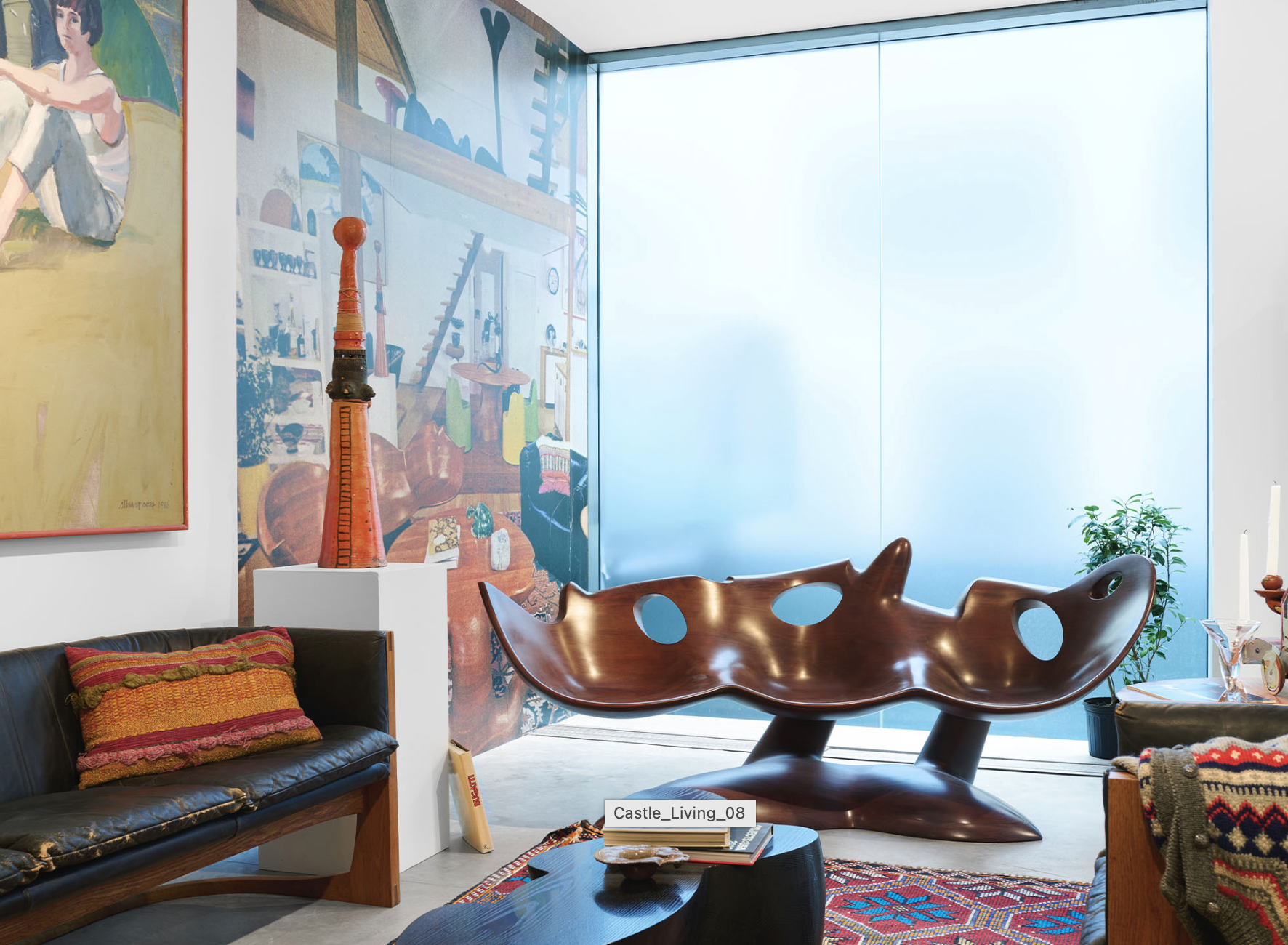
Detail of Jacob Hashimoto’s Giant Arc at the San Francisco Museum of Modern Art. Photo courtesy of SFMOMA.
75,000 Small Acts of Making
A new installation opening at SFMOMA caught my attention this week.
Artist Jacob Hashimoto's Giant Arc is made from nearly 75,000 individual kite-like elements constructed from bamboo and Japanese paper, suspended together to create an enormous floating cloudscape.
It is the largest installation of Hashimoto's career, filling the museum's Roberts Family Gallery from floor to ceiling and wall to wall.
What interests me is the contradiction.
“I want you to feel like you’re sitting on a beach right before a storm watching the waves crashing, and you’re just hanging out . . . It’s like creation myths that we share – that energy of sitting at the edge of the abyss that is very difficult to achieve through the language of sculpture.” – Jacob Hashimoto
The work is enormous, intricate, colorful, and visually complex. Yet Hashimoto describes it as simultaneously chaotic and meditative, something that invites people to spend time rather than simply pass through.
Perhaps quiet doesn't have to look quiet.
And there is something else I love about this work.
Something monumental has been constructed through tens of thousands of small acts of making.
Bamboo. Paper. Hands. Repetition. Patience.
In a culture increasingly accustomed to instantaneous results, there is something reassuring about that.
I've Been Thinking About Blue and Grey
Perhaps the ocean started this, too.
Blue has been on my mind. So has grey.
Deep ocean blue. Cloud grey. Slate. Mist. That almost indistinguishable blue-grey that appears when distant land, water, and sky begin dissolving into one another.
Recently, I returned to a photograph I made from the hills of Lānaʻi, looking across the ocean toward Molokaʻi.
The colors are remarkably simple.
And yet they aren't simple at all.
Why can one blue make us exhale while another feels electric?
Why can grey seem melancholy in one setting and extraordinarily peaceful in another?
Why does the same color change when placed beside another?
As a painter, I work with these questions instinctively. But lately I've wanted to think about them more deliberately.
Color isn't simply something we see.
It changes the experience of a room. A painting. A landscape. A piece of clothing. A meal. Sometimes even a memory.
I'm beginning to wonder whether color creates an emotional architecture of its own.
There is much more here.
I suspect we'll return to this.
What Happens to a Collection After We're Gone?
A very different story caught my attention this week.
The Studio Museum in Harlem has opened Dreams of This Future: The Collection of Peggy Cooper Cafritz.
Cafritz was an educator, activist, arts patron, collector, and cofounder of Washington's Duke Ellington School of the Arts. When she died in 2018, she bequeathed the majority of her collection to the Studio Museum and the school.
The new exhibition presents only a fraction of that extraordinary gift and considers her lifelong advocacy for artists and their work.
It made me think about collecting differently.
A collection is obviously made of objects.
But over time, perhaps it becomes something else.
A record of curiosity.
Relationships.
Convictions.
People someone believed in.
Things someone thought deserved to survive.
At its best, perhaps collecting is another form of care.
Care for artists while they are working. Care for objects. Care for stories. Care for what comes next.
And eventually, a private act of choosing can become part of our shared cultural memory.
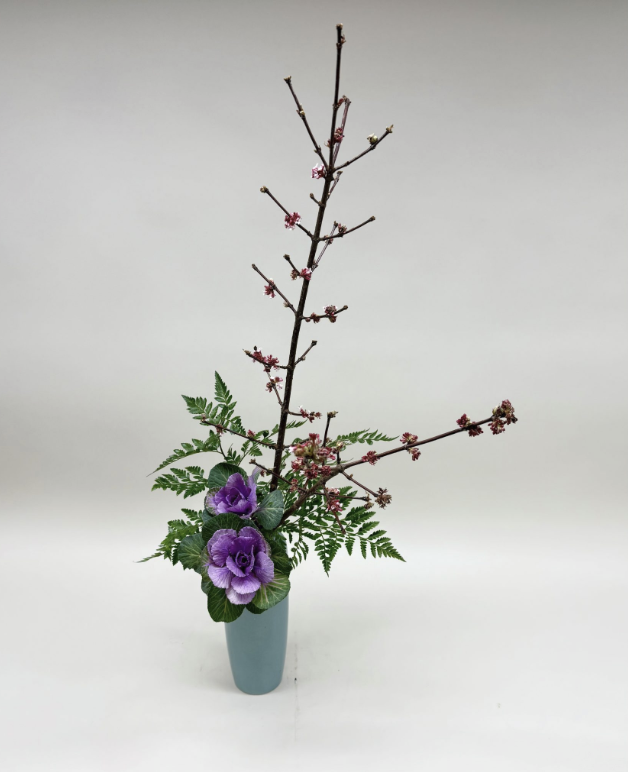
Ikebana by Linda Nishioka
Close to Home: The Art of Ikebana
Next Saturday here in Salem, Linda Nishioka will give a demonstration of Ikebana at the Bush Barn Art Center.
The timing seems almost uncanny.
Ikebana traditionally uses relatively few seasonal flowers, branches, and leaves, with careful consideration given not only to the plant materials but to asymmetry, the vessel, balance, and the empty space surrounding the arrangement.
The Ohara School, in which Linda is a certified instructor, places particular emphasis on observing nature and expressing its seasonal character.
After everything I've been thinking about this week, I keep coming back to the same thing.
A few stems.
A vessel.
Space.
Attention.
Sometimes that is enough.
Cultural Calendar
TO SEE
Jacob Hashimoto: Giant Arc
Opening August 22 | SFMOMA, San Francisco
Nearly 75,000 handmade bamboo-and-paper elements become a vast suspended cloudscape in SFMOMA's admission-free Roberts Family Gallery.
CLOSE TO HOME
Ikebana Demonstration with Linda Nishioka
August 29, 1:00 to 2:30 p.m. | Bush Barn Art Center, Salem
A free demonstration exploring local plant materials and the principles of Ikebana. Registration is required.
TO CONSIDER
Dreams of This Future: The Collection of Peggy Cooper Cafritz
Through February 28, 2027 | Studio Museum in Harlem, New York
A collector's legacy considered through advocacy, patronage, and the transformation of a private collection into part of the public cultural record.
What I'm Carrying With Me This Week
Perhaps all of this comes back to attention.
Attention changes things.
It changes the way we experience a painting.
A color.
A flower.
A meal.
A conversation.
A collection.
Perhaps even a life.
And maybe that's why I've been thinking about the ocean.
It didn't ask anything of me.
It simply gave me enough quiet to notice.
See you next Saturday.
Warmly,
–Christina Stefani | House of Stefani Journal
About the Author: Christina Stefani is an artist, gallerist, writer, and founder of House of Stefani, exploring art, design, and culture.