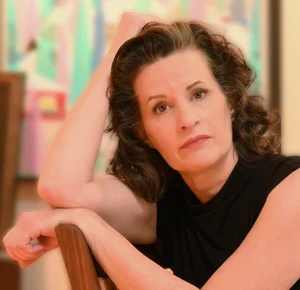
On art, professional integrity, and the knowledge we should share
By Christina Stefani | House of Stefani Magazine
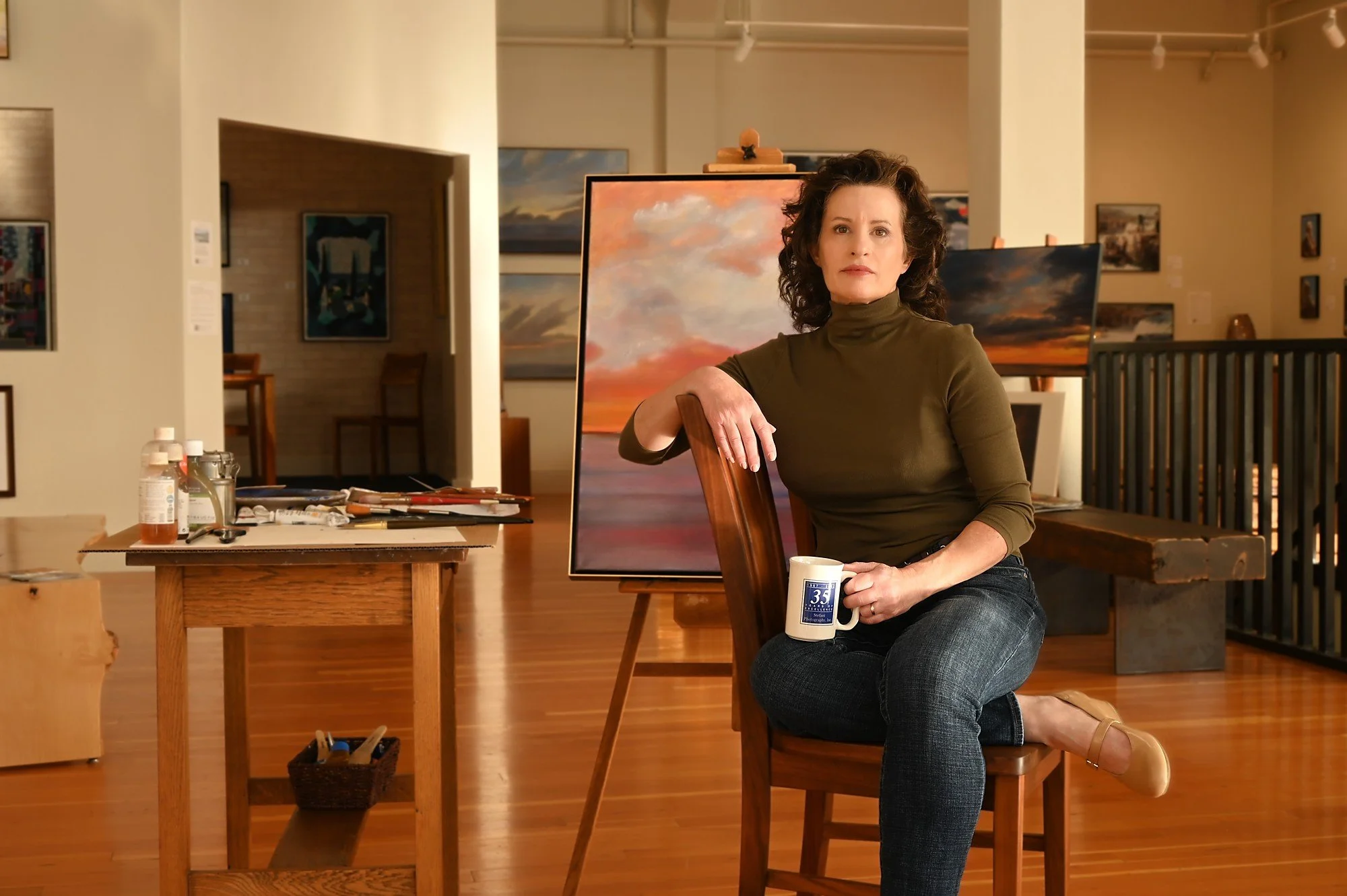
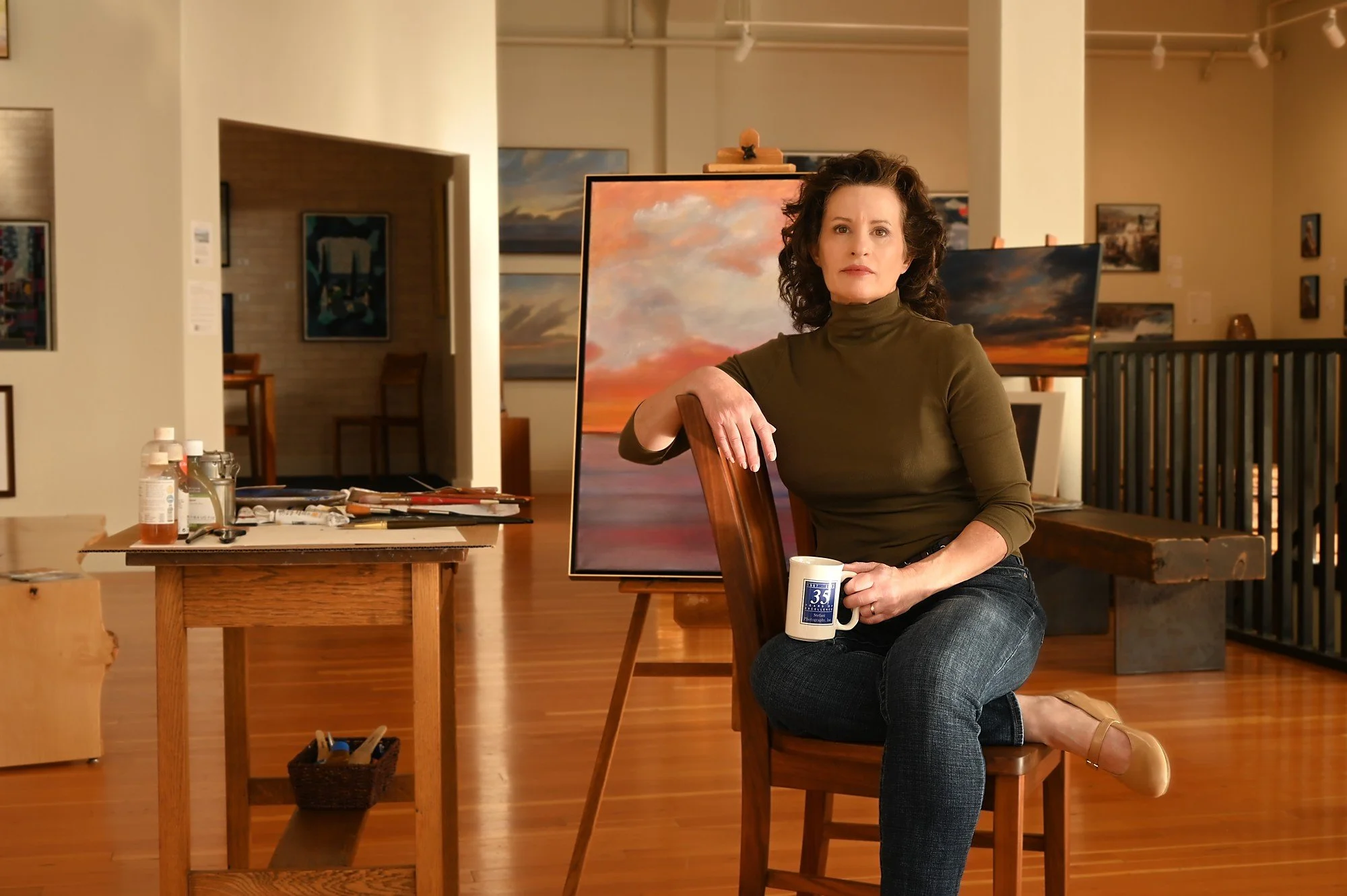
Author Christina Stefani in Stefani Art Gallery.
I never set out to write a book about how to become a professional artist.
I set out to answer questions.
Some came from artists approaching Stefani Art Gallery for the first time. Others emerged during exhibitions, conversations with collectors, discussions about pricing, or the sometimes complicated relationships that develop between artists and the people who present their work.
Over time, I began noticing something.
Many artists were trying to navigate a professional world whose expectations had never been clearly explained to them.
They had invested years in developing their skills, learning to paint, photograph, draw, or create. But when it came to approaching galleries, preparing portfolios, understanding agreements, establishing prices, or building relationships with collectors, many were left to figure things out on their own.
Sometimes through trial and error. Sometimes through disappointment. And occasionally through experiences that might have been avoided if someone had simply taken the time to explain.
I began to wonder why we weren't talking about these things more openly.
I've Been on Both Sides of the Conversation
I am an artist.
I understand the extraordinary satisfaction of making something that did not exist before. I know what it means to return to a painting day after day, to question a decision, to paint over something that almost worked, and to keep going until the work begins to reveal what it needs.
I also understand the vulnerability of showing that work to someone else.
A painting may contain months of decisions, experiments, doubts, and discoveries. Yet when we finally present it, another person may spend only a few moments deciding whether to look more closely.
That can be difficult.
I am also a gallery owner and curator.
From that side of the conversation, I have learned how much responsibility accompanies the decision to exhibit or represent an artist.
There are collectors to consider, agreements to honor, artwork to document, exhibitions to prepare, and reputations to protect.
A gallery relationship is not simply an opportunity to hang paintings on a wall. It is a professional commitment between people whose decisions affect one another.
Having experienced both sides has changed the way I think about artistic careers.
I have become convinced that understanding these relationships should not be left entirely to chance.
The Things We Rarely Learn
Artists are encouraged to develop technique, experiment with materials, study art history, and discover their own voices.
All of that is essential.
But what happens when the work leaves the studio?
How should an artist approach a gallery? What makes a portfolio useful rather than merely attractive? How should pricing be established and maintained?
What does exclusivity mean? What happens when a collector requests a commission? Who is responsible for shipping, insurance, documentation, or communication after a sale?
And how do we protect our interests while honoring the responsibilities we have accepted?
These are not minor administrative details. They influence the sustainability of a career.
Yet artists may encounter them for the first time only when something important is already at stake.
I have seen talented people make avoidable mistakes, not necessarily because they lacked integrity or commitment, but because they lacked information.
I have also seen how much can change when expectations are explained clearly.
An artist becomes better prepared. A difficult conversation becomes easier. An agreement becomes more understandable. A professional relationship begins with greater confidence.
Knowledge does not eliminate every disappointment or disagreement.
But it can prevent unnecessary ones.
Professionalism Is Not the Enemy of Creativity
There is a persistent notion that artistic freedom and professional discipline exist in opposition.
I have never believed that.
My work as an artist depends on curiosity, intuition, and the freedom to experiment.
My work as a gallery owner depends on clarity, preparation, and the ability to make commitments that others can rely upon.
These qualities are not incompatible. They support one another.
An artist who understands professional responsibilities has more freedom to make thoughtful decisions. Accurate records make it easier to speak confidently about the work. Understanding pricing and agreements helps protect a sustainable practice.
And clear communication makes it easier for galleries, collectors, and other professionals to offer meaningful support.
I often return to a simple conviction:
Professionalism is not the opposite of creativity. It is what allows creativity to endure.
The Art World Is Built on Relationships
One of the greatest privileges of operating a gallery is witnessing what happens when artwork becomes part of someone else's life.
A collector encounters a painting and recognizes something meaningful.
An artist sees work they created in solitude find a place where it will be appreciated for years.
A conversation begins between people who might never otherwise have met.
These moments remind me that the art world, at its best, is not simply a marketplace. It is a community of relationships.
Artists, galleries, collectors, curators, designers, framers, conservators, and many others contribute to the life of an artwork. Each brings different knowledge and responsibilities.
When those relationships are built on honesty and mutual respect, everyone benefits.
When they are not, the consequences can extend far beyond an individual transaction.
This is why I care so much about integrity.
It protects more than a business arrangement. It protects the trust that allows meaningful work to move through the world.
Finding My Way Back to the Work
The past several years have changed my life in ways I could not have anticipated.
After the loss of my husband, Richard, and a long period in which caring for others had occupied so much of my attention, I found myself reconsidering what I wanted the next chapter of my life to become.
There were difficult seasons. There were also moments of unexpected clarity.
I had spent much of my life creating, designing, building businesses, and helping other people bring their ideas into the world. Yet I began to recognize how much I needed to return to my own work, not simply as something I did, but as an essential part of who I am.
So I returned to painting with renewed intention.
I began looking more carefully at what interested me. Light. Atmosphere. The emotional possibilities of color. The things a painting can communicate without explaining itself.
My work began changing.
And so did I.
At the same time, I found myself thinking differently about the gallery, the knowledge I had accumulated, and what I wanted to contribute through House of Stefani.
Experience has a way of changing our priorities.
I became less interested in doing things simply because I had always done them that way. More interested in doing them well, with purpose, and in ways that might have value beyond my own lifetime.
I also discovered something rather wonderful.
Beginning again does not mean beginning without experience.
We bring everything we have learned with us. The successes, certainly. But also the mistakes, the disappointments, the difficult decisions, and the lessons we might never have chosen to learn.
I had accumulated considerable knowledge about art, design, galleries, collectors, and the complicated business of making a creative life.
It occurred to me that keeping all of it to myself would be a rather poor use of the experience.
Why I Decided to Write the Book
As I began thinking more seriously about what I wanted to contribute through House of Stefani, one idea kept returning.
Answering artists' questions one conversation at a time was not enough.
I wanted to create something they could return to.
A resource they could consult before approaching a gallery, signing an agreement, or accepting a commission. Something that might also be useful when reconsidering the direction of their professional lives.
I wanted to write the kind of book I would have appreciated earlier in my own career.
Not a formula promising success. Not a collection of shortcuts. And certainly not a suggestion that every artist should pursue gallery representation.
There are many ways to build a meaningful life in the arts.
I wanted to explain the professional principles that remain valuable across those different paths.
Craftsmanship. Preparation. Honesty. Communication. Respect.
The importance of understanding both our rights and our responsibilities.
And the patience required to build something that lasts.
As the manuscript developed, it became more than a guide to approaching galleries.
It became a book about building a professional life without losing sight of why we began making art in the first place.
Because a career is not simply a sequence of exhibitions, sales, and accomplishments.
It is also the accumulation of decisions, relationships, and work created over time.
What I Hope This Book Will Do
I hope it helps an emerging artist approach a first gallery with greater confidence.
I hope it helps an established artist recognize an area of professional practice that deserves attention.
I hope it makes an unfamiliar agreement easier to understand and encourages someone to ask a necessary question before signing.
I hope it helps artists recognize that being prepared is not the same as being perfect.
And I hope it reminds them that professionalism does not require becoming someone they are not.
You can be reserved, unconventional, experimental, outspoken, or deeply private. You can define success differently from the artist working beside you.
What matters is taking the work seriously and treating the people connected to it with integrity.
Most of all, I hope the book contributes to a more thoughtful and generous art community.
One in which knowledge is shared rather than guarded. Where artists are encouraged to grow, galleries recognize their own responsibilities, and original art is valued not only for what it may sell for, but for what it contributes to our lives.
A Beginning, Not an Ending
Writing this book has become part of a larger period of renewal in my own life.
As I have returned more fully to painting, expanded the work of House of Stefani, and considered what I hope to leave behind, I have become increasingly convinced that knowledge is most valuable when it is shared.
Completing the manuscript has also reminded me how much there is still to learn.
I don't believe any of us reaches a point where our professional or creative development is finished.
We continue making decisions. We make mistakes. We discover better ways of doing things.
And, if we're fortunate, we find opportunities to share what we've learned.
That is what I hope to do through House of Stefani Press.
The Professional Artist Handbook is the beginning of that publishing work.
It is an invitation to approach an artistic career with curiosity, preparation, courage, and care.
And if it helps even a few artists avoid unnecessary difficulties, develop stronger relationships, or find greater confidence in the work they have chosen to pursue, writing it will have been worthwhile.
There is a line at the end of the book that I particularly love.
It is also what I would say to any artist standing at the beginning of a new chapter.
Now go make something beautiful.
Continue the Conversation
This essay explores themes from The Professional Artist Handbook: A Guide to Building a Lasting Career in the Fine Arts, by Christina Stefani, from House of Stefani Press.
Written for artists who want to develop thoughtful, sustainable professional practices, the handbook explores craftsmanship, gallery relationships, collectors, pricing, agreements, integrity, and the responsibilities of building a lasting career.
Explore a complimentary chapter, Are You Ready to Approach a Gallery?, and the accompanying Professional Artist Readiness Checklist.
The Professional Artist Handbook
Christina Stefani
House of Stefani Press
A thoughtful guide to craftsmanship, integrity, and the art of building an enduring career.