This Week in Art, Design, and Culture
Curated by Christina Stefani for House of Stefani
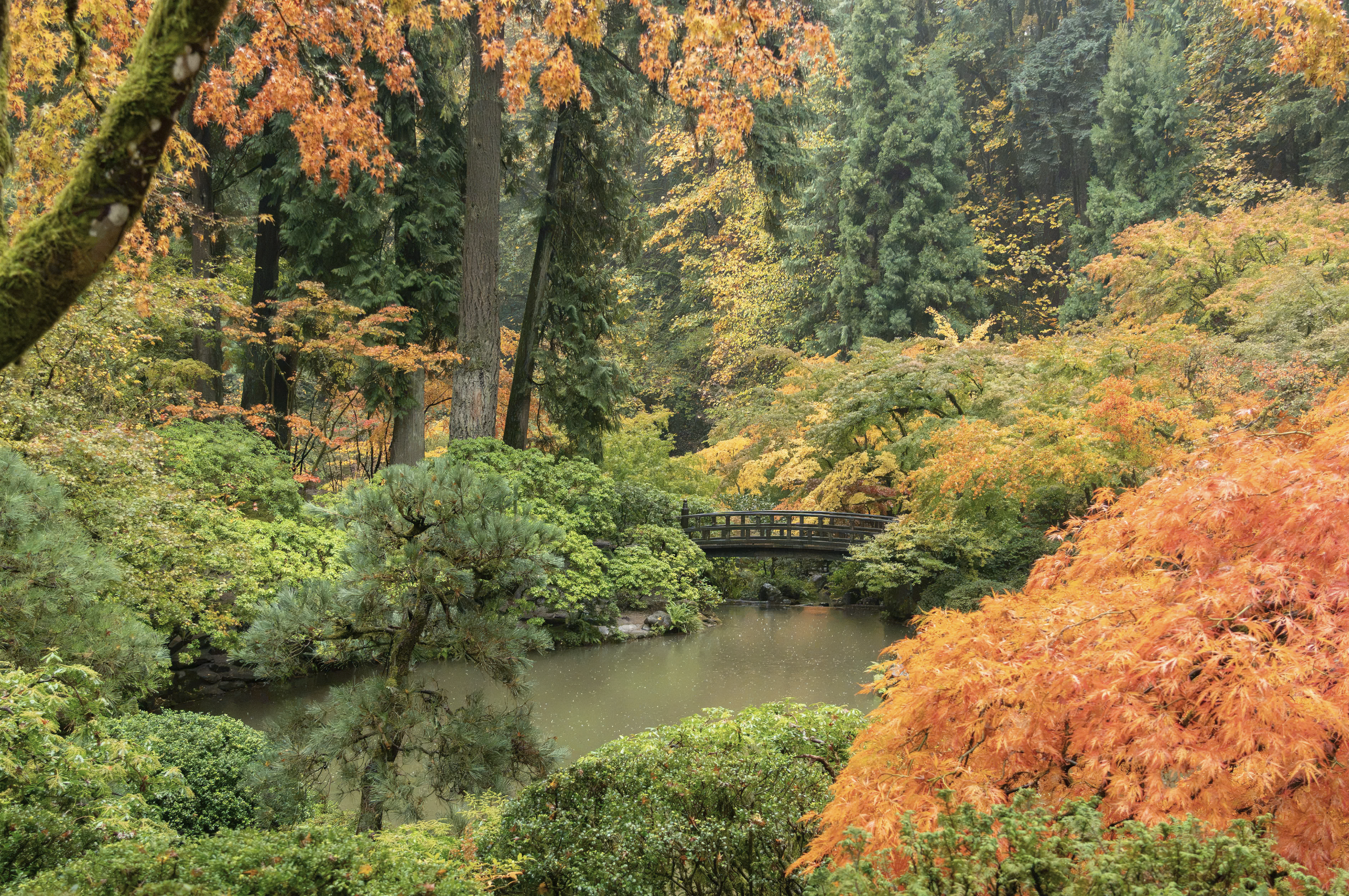
Strolling Pond Garden, Oct 30, 2026, Portland Japanese Garden, Portland, Oregon. Track the seasonal changes here.
Renewal, hope, and the enduring beauty of thoughtful craftsmanship
There is a particular beauty to autumn in the Willamette Valley.
The leaves have turned, some have fallen, and the rain has returned. The landscape changes almost daily. Colors deepen, familiar places look different, and the light has a softness that seems to belong only to this time of year.
I have always loved this season, perhaps because it reminds me that change and beauty are not opposites.
Lately, I've been thinking about the things that return. Sometimes it's something familiar: a place we love, an old tradition, a season. Other times it's something less tangible, like enthusiasm, confidence, or hope.
The interesting thing is that what returns is not always quite the same as what we remember. Neither are we.
This week's discoveries in art, architecture, and design reminded me of that.

To Love is to Expect, Corita Kent, 1972, 23 x 23 inches, serigraph. Courtesy Corita Art Center.
Corita Kent and the Art of Optimism
Corita Kent's work has been on my mind recently. At Stefani Art Gallery, we had the pleasure of placing two of her works with collectors, including Someday Is Now and a signed series of postage stamps she designed for the United States Postal Service.
Kent had a remarkable ability to communicate through color, typography, and seemingly ordinary images. Her compositions can appear exuberant and playful, but beneath their bright surfaces is an artist of considerable conviction.
The 2026 exhibition Live the Moment Light at the Palo Alto Art Center brought Kent's work into conversation with contemporary artists Soleé Darrell, Terri Friedman, and Angelica Trimble-Yanu.
Taking its title from Kent's 1977 serigraph, the exhibition explores the possibility of finding beauty and meaning in moments of transition.
What interests me most about Kent is that her optimism never required her to ignore the world around her. She understood that beauty could be a form of engagement, and that a thoughtful work of art could encourage people to see familiar things differently.
Kent also understood something important about art: it doesn't have to remain in a gallery or museum to make a difference. Her colorful Love postage stamp, issued in 1985, sold more than 700 million copies. Imagine how many ordinary moments were brightened by something as simple as a letter arriving in the mail.
There is something wonderful about that.
Explore Live the Moment Light, Palo Alto Art Center
A Beloved Garden Returns to Washington
Washington, D.C., has long been one of my favorite cities to visit, particularly for its extraordinary Smithsonian museums. The Hirshhorn Museum and Sculpture Garden is a place I love returning to, so I was especially pleased to learn that its Sculpture Garden reopened on October 31, 2026, following an extensive four-year transformation.
The project was led by Japanese artist and architect Hiroshi Sugimoto, whose work I've admired for its extraordinary restraint and sensitivity to light, space, and time.
Originally designed by architect Gordon Bunshaft, the garden has been carefully reimagined to preserve its architectural character while making room for new experiences. Nearly sixty artworks are now displayed throughout the garden and museum plaza, bringing important twentieth-century sculpture into conversation with contemporary works.
Among the most interesting changes is the reopening of a passage that has been closed since the 1980s. Sugimoto has transformed it into Passage of Reflectance, an installation of polished stainless steel that creates shifting reflections as visitors move between the museum and garden.
I appreciate the thinking behind this project.
Preservation does not always mean leaving something untouched. Sometimes caring for a place means understanding what made it significant in the first place, then making thoughtful decisions that allow its significance to endure.
The garden returns, but it also moves forward.
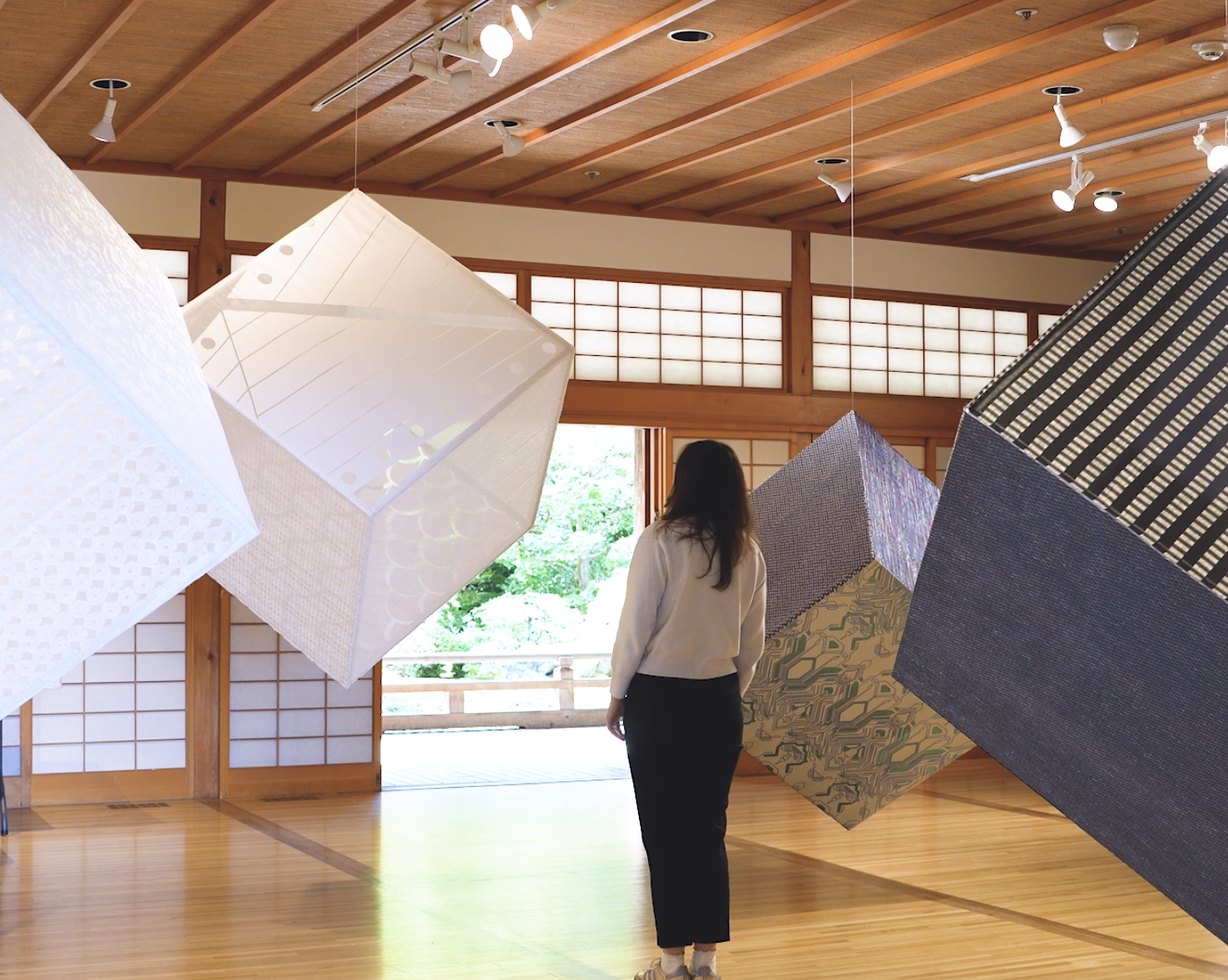
Weaving Time: NUNO –Textiles of Tradition and Transformation, Pavilion Gallery, Portland Japanese Garden, Tanabe Gallery.
Woven Through Time: NUNO in Portland
Closer to home, Portland Japanese Garden is presenting Weaving Time: NUNO, Textiles of Tradition and Transformation, an exhibition celebrating the extraordinary craftsmanship of Japanese textile design.
Led by designer Reiko Sudō, the Tokyo-based studio NUNO works with artisans throughout Japan, combining centuries-old techniques with inventive approaches to materials and contemporary production.
The exhibition includes suspended fabrics, translucent architectural installations, and folding screens inspired by the appearance of rainfall and condensation on windows.
I find that last detail especially appealing at this time of year.
We tend to think of textiles primarily in terms of clothing and interiors, but here they become a way of experiencing light, movement, texture, and even weather.
There is also a larger story worth appreciating. NUNO's commitment to working with traditional makers helps sustain specialized knowledge that might otherwise disappear.
Innovation and preservation are sometimes treated as competing ideas. Yet the finest craftsmanship often depends on both: the knowledge we inherit and the imagination to carry it forward.
Weaving Time remains on view through February 14, 2027.
Explore Weaving Time, Portland Japanese Garden
Worth Noting: Time & Beauty
In his 2026 book, Time & Beauty: The Elements of Design, interior designer Dan Fink considers the relationship between natural materials, architectural detail, thoughtful arrangements, and the character of a well-designed room.
I'm particularly interested in his emphasis on how individual elements work together. A beautiful space is rarely the result of one remarkable object. More often, it emerges from the relationships between carefully chosen things.
That is a principle worth remembering in art collecting as well.
Explore Time & Beauty from Abrams
Hope Returns
As the last of the autumn leaves fall, I've been thinking about how often we mistake a season of change for an ending.
Yet so much of life moves in cycles. The light changes. Familiar places are renewed. Old ideas find new expression. Even the things we thought might be behind us sometimes find their way back.
Hope can be like that.
It may not return all at once, or in quite the form we expected. Sometimes we simply notice that we are looking forward to things again.
And that is a beautiful thing.
–Christina Stefani | House of Stefani Journal
About the Author: Christina Stefani is an artist, gallerist, writer, and founder of House of Stefani, exploring art, design, and culture.