by Christina Stefani
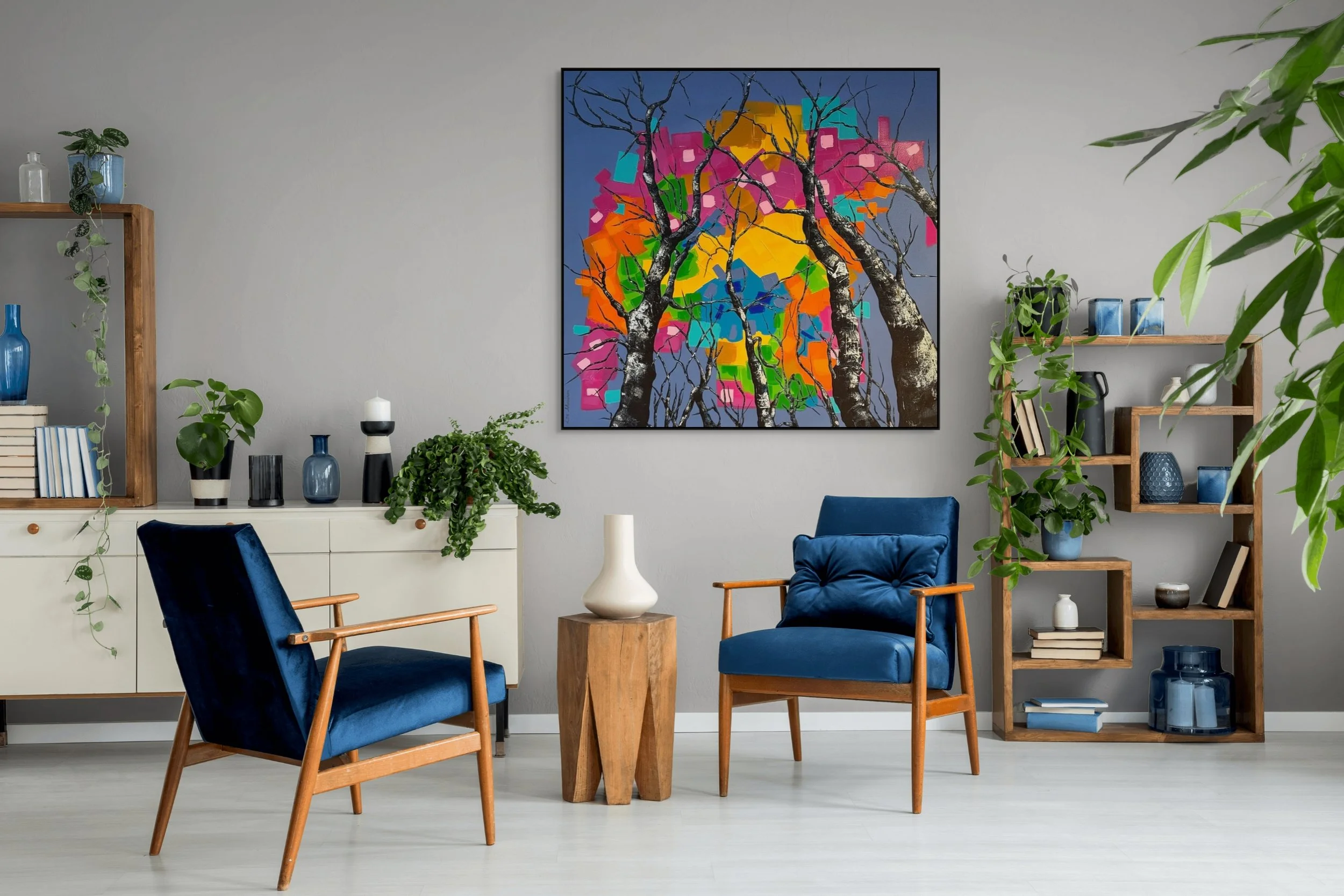
If you're buying your first original artwork, I wouldn't worry about building a collection at all. Find one piece you genuinely love.
There is a persistent idea that collecting original art is something you do after you become wealthy.
I hear versions of it all the time.
"I'd love to collect art someday."
"I can't afford original art."
"I wouldn't even know where to begin."
Perhaps this comes from the way the art market is usually portrayed. We hear about paintings selling for $20 million or $100 million. We see photographs from major auction houses and international art fairs. It can make collecting seem like a world reserved for people with extraordinary resources and years of specialized knowledge.
But that isn't how most collections begin.
Most begin with one piece.
Someone sees something, keeps thinking about it, and eventually decides they would rather live with it than leave without it.
That is collecting, too.
And you may be much closer to beginning than you think.
First, Forget About Building a "Collection"
If you're buying your first original artwork, I wouldn't worry about building a collection at all.
Find one piece you genuinely love.
That's enough.
You don't need a theme. You don't need an acquisition strategy. You certainly don't need to know which artists are going to become famous.
Those things may become interesting later.
For now, pay attention to your response.
Do you keep returning to the work?
Do you notice something different each time?
Can you imagine encountering it every morning for the next ten years?
Those questions matter far more than whether the painting matches your sofa.
Decide What You Can Comfortably Spend
You don't need an enormous art budget.
You do need an honest one.
For one person, beginning might mean $300. For another, $1,000. Someone else may be comfortable spending $5,000.
There is no correct starting number.
Set a range that allows you to purchase something meaningful without turning the experience into a financial burden.
Then tell the gallery.
A good gallery should be perfectly comfortable helping someone who says, "I'd like to begin collecting, and I'd prefer to stay under $1,500."
That information isn't embarrassing.
It's useful.
It helps us show you what is actually possible.
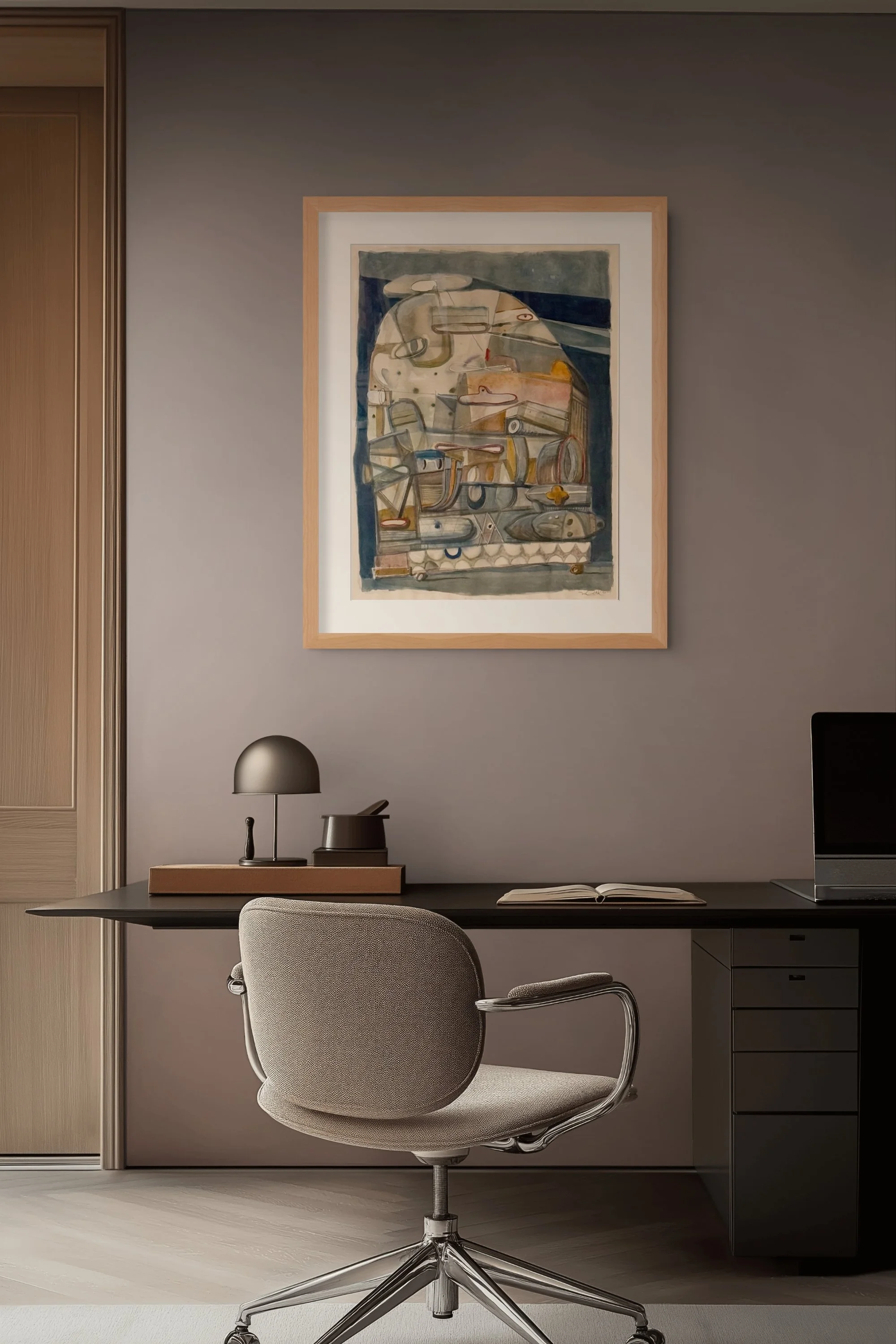
A smaller original by an artist whose work moves you is often a much more meaningful purchase than a large decorative object chosen simply because you have a wall to fill.
Look Beyond the Largest Paintings
New collectors sometimes assume that the most important works are the biggest ones.
Not necessarily.
Smaller paintings can be extraordinary.
So can drawings, works on paper, photography, original prints, studies, and limited editions.
Many accomplished artists produce work across several sizes and media, which creates natural entry points for collectors at different budgets.
A smaller original by an artist whose work moves you is often a much more meaningful purchase than a large decorative object chosen simply because you have a wall to fill.
Start with the work.
You can find the wall later.
Learn the Difference Between an Original and an Edition
This is one area where a little knowledge goes a long way.
An original painting is a unique object.
An original print may be produced in a limited edition through processes such as woodblock printing, etching, lithography, or screenprinting.
Fine-art photography is also commonly produced in editions.
Then there are reproductions, which are copies of an existing original artwork.
None of these categories is inherently wrong.
What matters is knowing what you're buying.
Ask whether the work is unique or editioned. If editioned, ask about the edition size. Ask who produced it, how it was made, and whether documentation accompanies it.
A reputable artist or gallery should be happy to explain.
Emerging and Mid-Career Artists Can Be Wonderful Places to Begin
You don't need a famous signature to build a meaningful collection.
Some of the most rewarding relationships collectors develop are with living artists whose careers they are able to follow over many years.
You may acquire an early painting and later watch the artist's work evolve.
You may attend exhibitions.
You may meet the artist.
You may eventually add another work from a completely different period.
The experience becomes personal in a way that simply purchasing a recognizable name sometimes does not.
This doesn't mean buying someone because you believe their prices will rise.
Buy the work because it deserves a place in your life.
If the artist's career grows, wonderful.
But appreciation should be a possibility, not the reason you love the painting.
Remember the Costs Around the Artwork
This is one practical detail new collectors sometimes overlook.
If a work is unframed, framing can become a meaningful additional expense.
Large or fragile works may require professional delivery or installation.
Photography and works on paper may require archival framing or glazing.
Ask about these things before purchasing.
If you're comparing two artworks at similar prices and one is already beautifully framed while the other requires significant additional work, their true costs may be quite different.
There should be no surprises.
Ask Questions
You are allowed to ask questions in a gallery.
In fact, please do.
Ask about the artist.
Ask how the work was made.
Ask whether there are related works.
Ask about provenance.
Ask whether the price includes the frame.
Ask how the artwork should be cared for.
Ask whether you can see it in different light.
Ask whether the gallery can show you other works within your budget.
You don't need to demonstrate expertise.
Curiosity is enough.
A good gallery should help you understand what you're considering without making you feel pressured to buy it.
Take Your Time
Unless there is another interested collector, there is rarely a reason to manufacture urgency around an art purchase.
Go home.
Think about it.
Look at the photograph again.
Return to the gallery if you can.
If you're still thinking about the work several days later, that tells you something.
I've found that meaningful artwork has a peculiar way of staying with us.
The pieces we forget immediately probably weren't ours to begin with.
Know When to Walk Away
You should never feel bullied into purchasing art.
Be cautious when someone promises that a work is guaranteed to appreciate, pressures you with artificial urgency, cannot clearly explain what you're buying, or avoids reasonable questions about condition, authorship, edition, or provenance.
Buying art requires some trust.
Pay attention when that trust isn't there.
There will always be another artwork.
Buy Fewer Things, But Choose Them Carefully
This may be the most practical advice I can offer.
Many of us spend surprising amounts of money filling our homes.
A decorative object here. Something inexpensive for an empty wall there. Another piece because the room doesn't quite feel finished.
Over several years, those purchases add up.
Consider buying less.
Leave a wall empty until you find something worth putting there.
Save toward one original painting rather than purchasing several things you don't particularly care about.
A home does not become meaningful because every surface is filled.
Sometimes one extraordinary object is enough.
Your First Purchase Doesn't Need to Be Perfect
New collectors sometimes put enormous pressure on their first acquisition.
Don't.
Your taste will evolve.
Your knowledge will deepen.
You may eventually discover artists and movements you know nothing about today.
That's part of the pleasure.
Years from now, your first piece may not be the most important or valuable work in your collection.
But there is a good chance it will remain one of the most meaningful.
Because it represents the moment when you stopped merely looking at art and decided to bring it into your life.
Begin With Curiosity
In our Learning to See series, I recently wrote that every meaningful collection begins long before the first purchase.
I believe that.
Learning to collect begins with learning to pay attention.
But eventually, there comes a moment when looking becomes choosing.
You don't need a fortune.
You don't need an art-history degree.
You don't need anyone's permission to call yourself a collector.
You need curiosity, a little knowledge, a budget you are comfortable with, and one work of art you would genuinely miss if you walked away.
Start there.
The rest of the collection can take a lifetime.
A Conversation Worth Continuing
If you're beginning to collect art, ask questions. Visit galleries. Look slowly. A good gallery should make the art world more understandable, not more intimidating. And if there's something about collecting you've always wanted to ask, we'd love to hear it. Future House of Stefani articles are often inspired by real conversations with artists and collectors.