Why Do Some Works of Art Stay With Us for a Lifetime?
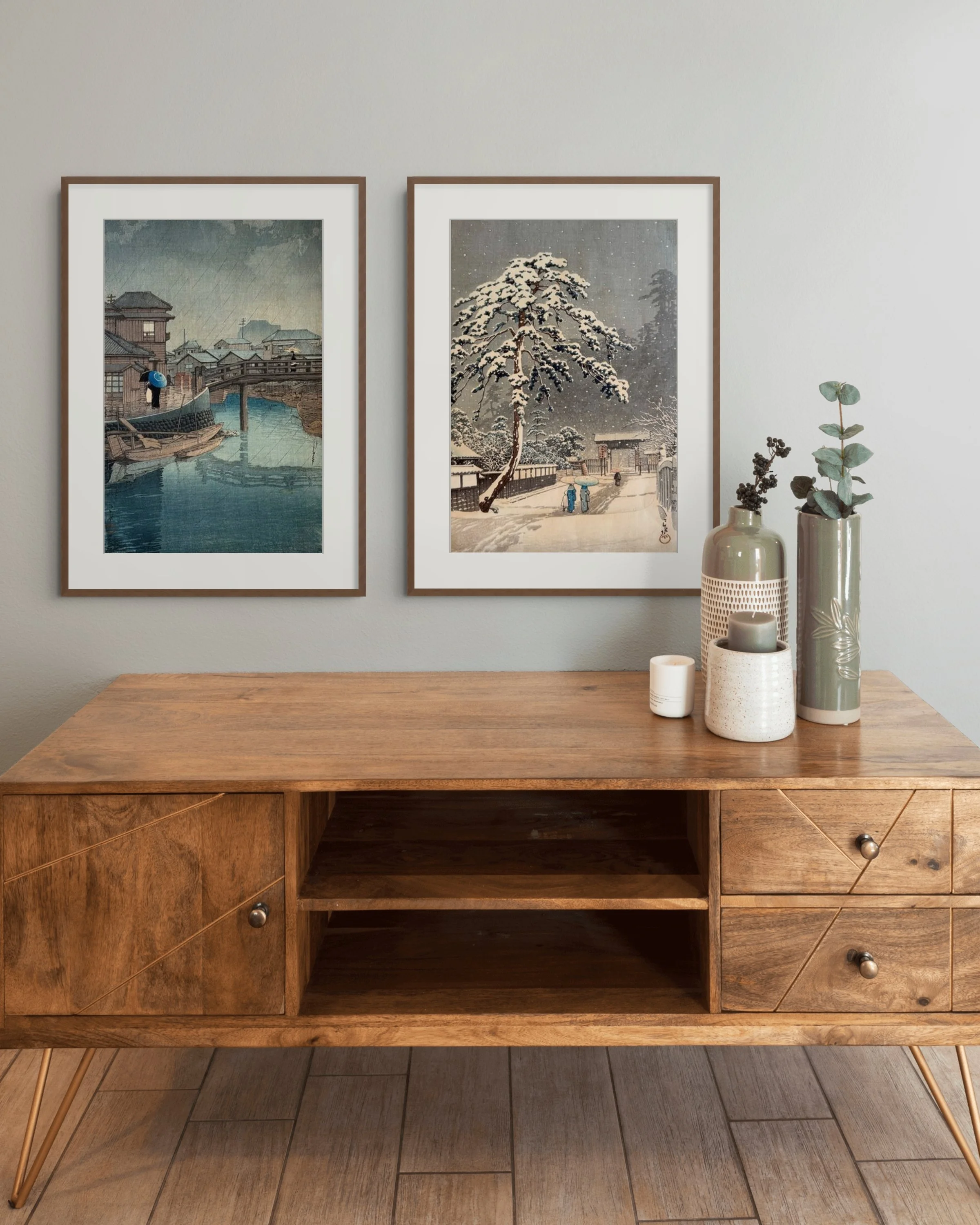
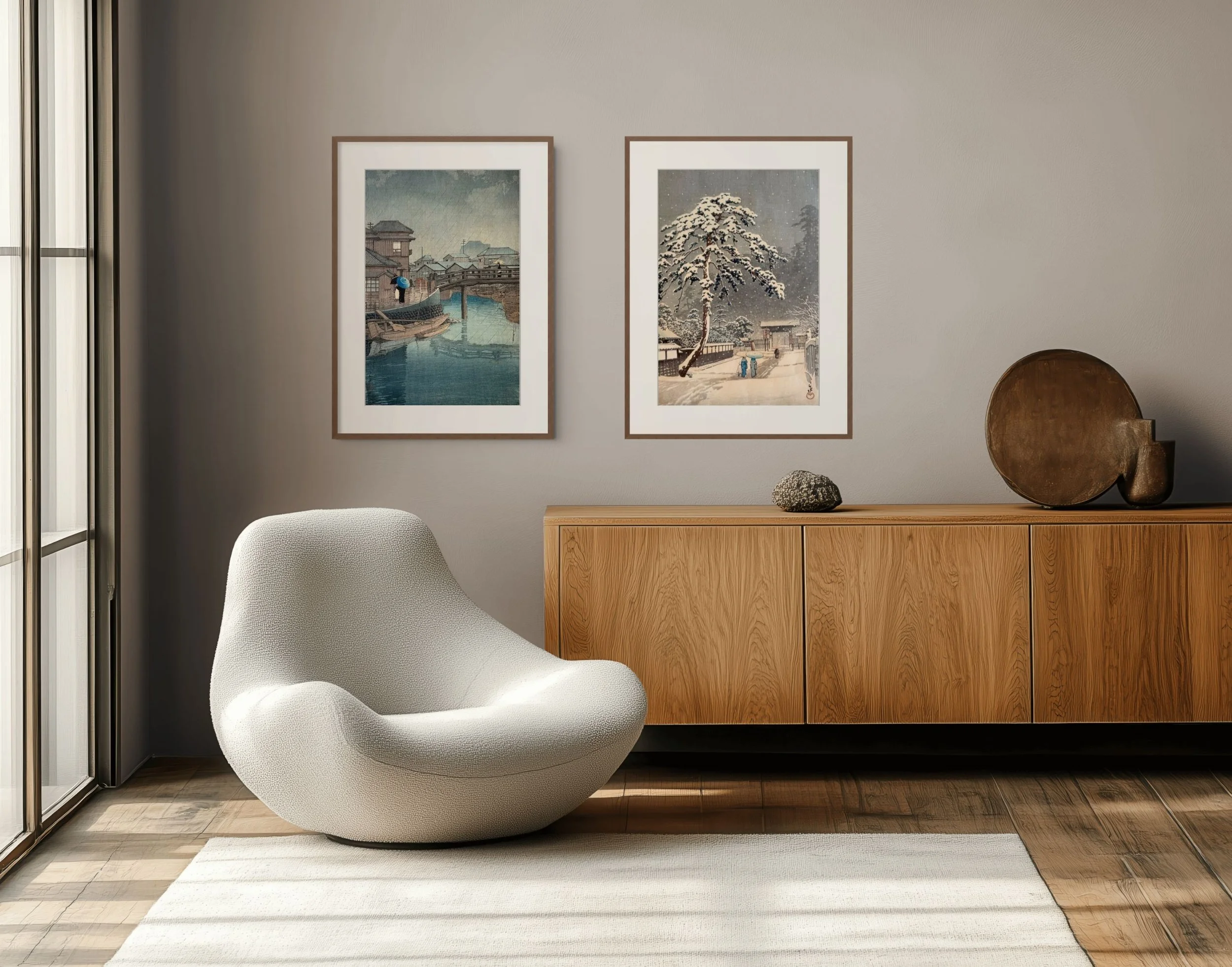
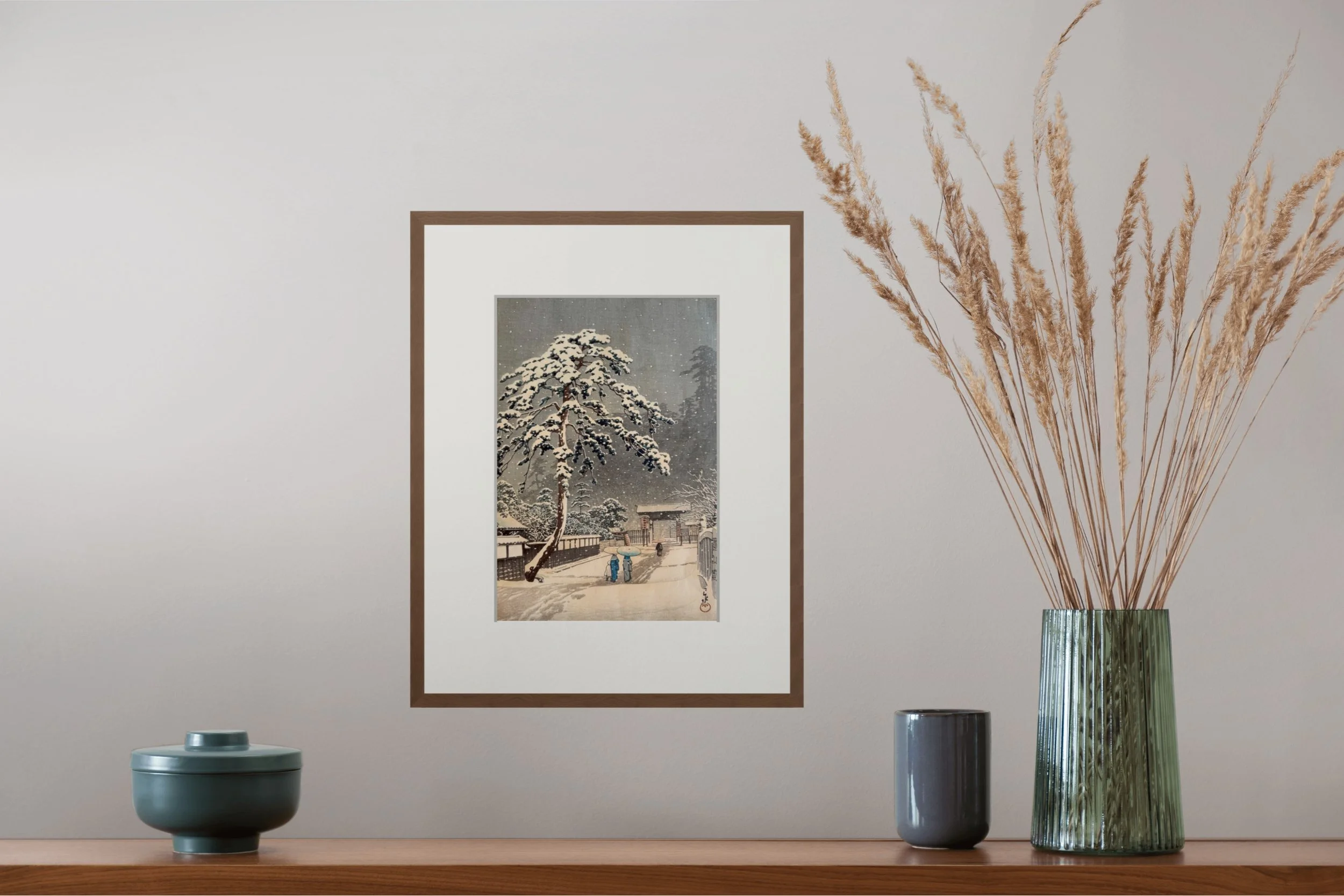
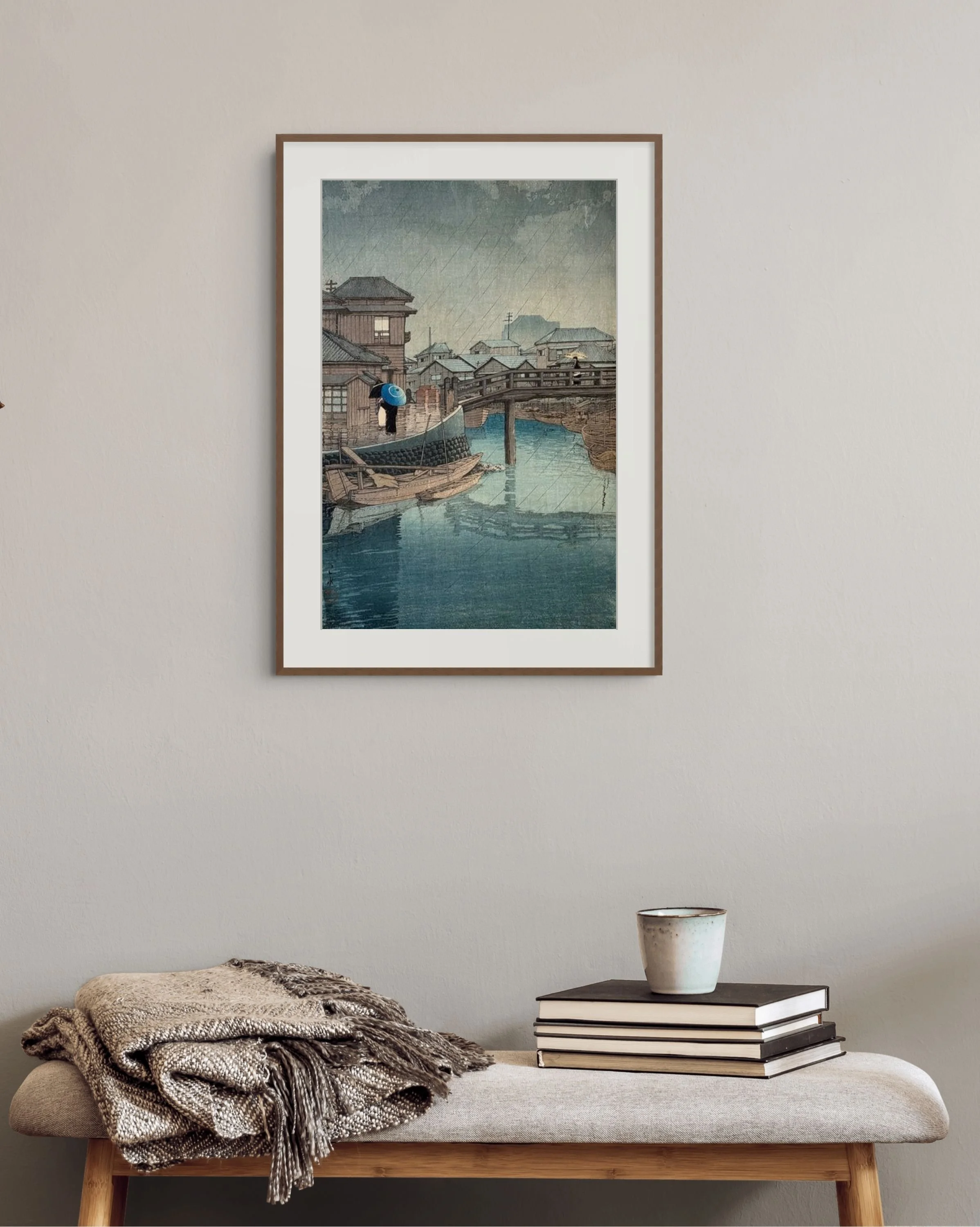
Rain at Shinagawa and Snow at Honmonji Temple, Kawase Hasui (1883-1957). Courtesy Stefani Art Gallery.
Learning to See
Essays on Beauty, Craftsmanship, and the Experience of Art
I. Why Do Some Works of Art Stay With Us for a Lifetime?
There are works of art that impress us immediately.
Their scale is breathtaking. Their color is brilliant. Their technical skill is undeniable. We admire them, speak about them, and remember them long after we've left the gallery.
Then there are quieter works.
They ask very little of us at first.
A harbor in the rain.
A path through fresh snow.
A single vase holding three carefully chosen branches.
Nothing dramatic happens. Nothing calls attention to itself. Yet days later, sometimes years later, we realize those are the works we continue thinking about.
Why?
Because beauty is not always immediate.
Often, it unfolds through attention.
At House of Stefani, we believe learning to appreciate art is much like learning to appreciate music or literature. The more carefully we observe, the more we begin to notice relationships that were always present but easily overlooked. Light reflected in still water. The rhythm of repeating forms. The quiet balance between color and space. The subtle emotional effect of a single figure walking beneath an umbrella.
These discoveries do not happen because the artwork changes.
They happen because we do.
That is one reason original works of art continue to reward us throughout our lives. Unlike images we consume quickly and forget just as quickly, meaningful works invite us into an ongoing relationship. We return to them repeatedly, finding something new each time because we ourselves have changed.
One artist understood this experience with extraordinary sensitivity.
Kawase Hasui (1883–1957), one of Japan's most celebrated printmakers, rarely painted grand historical events or dramatic narratives. Instead, he devoted much of his career to quiet moments shaped by weather, season, and light. A rainy harbor. A temple after fresh snowfall. An empty street at dusk. Through remarkable craftsmanship and careful observation, he transformed ordinary places into enduring meditations on atmosphere and memory.
His prints remind us that beauty is often found not in spectacle, but in attention.
Over the coming weeks, our new Learning to See series will explore Hasui's remarkable work, the shin-hanga movement that helped revive Japanese woodblock printing in the twentieth century, and the qualities that continue to draw collectors to these extraordinary prints today.
More importantly, we'll explore a larger question.
How do we learn to see more deeply?
Because once we do, the world itself begins to look different.