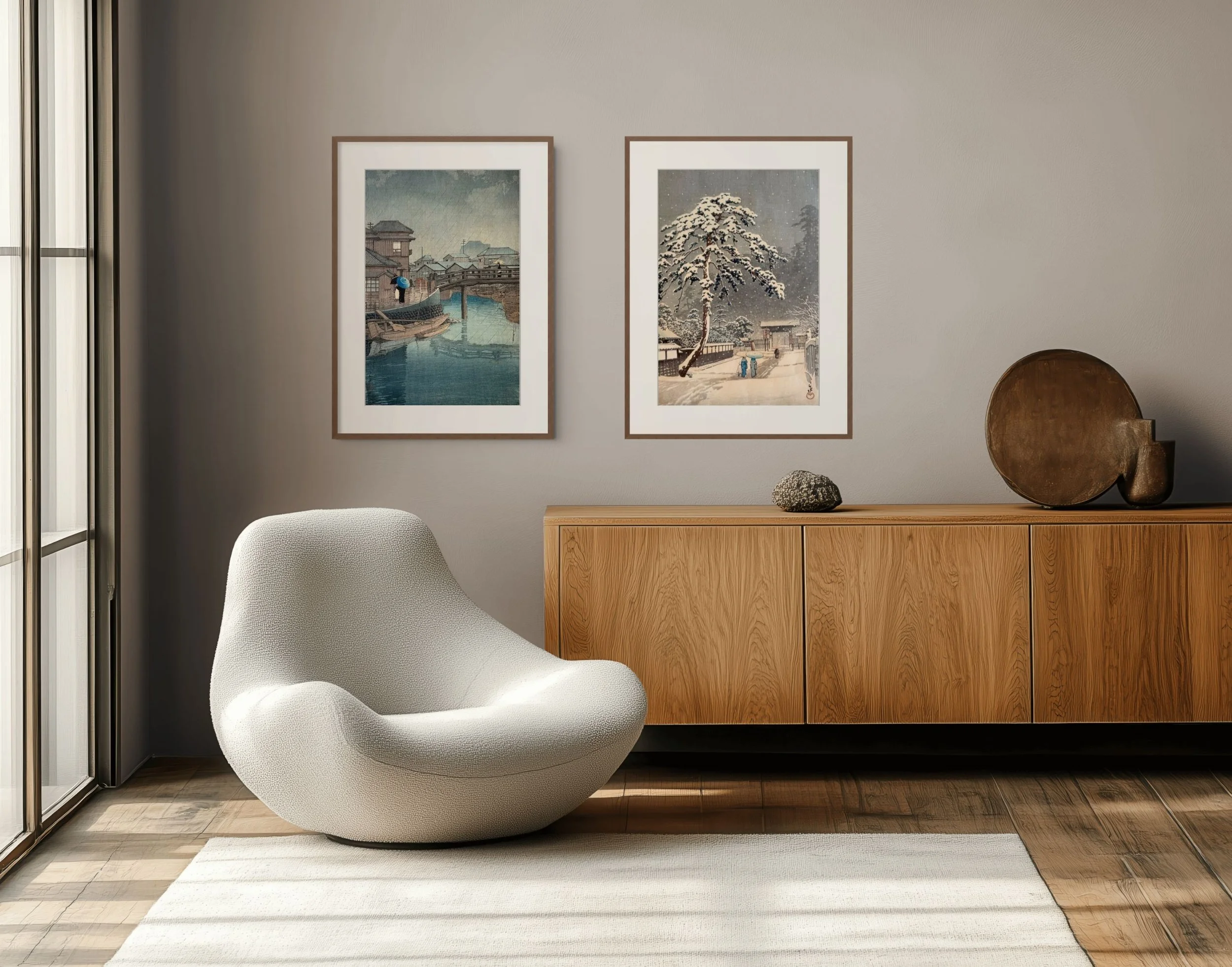
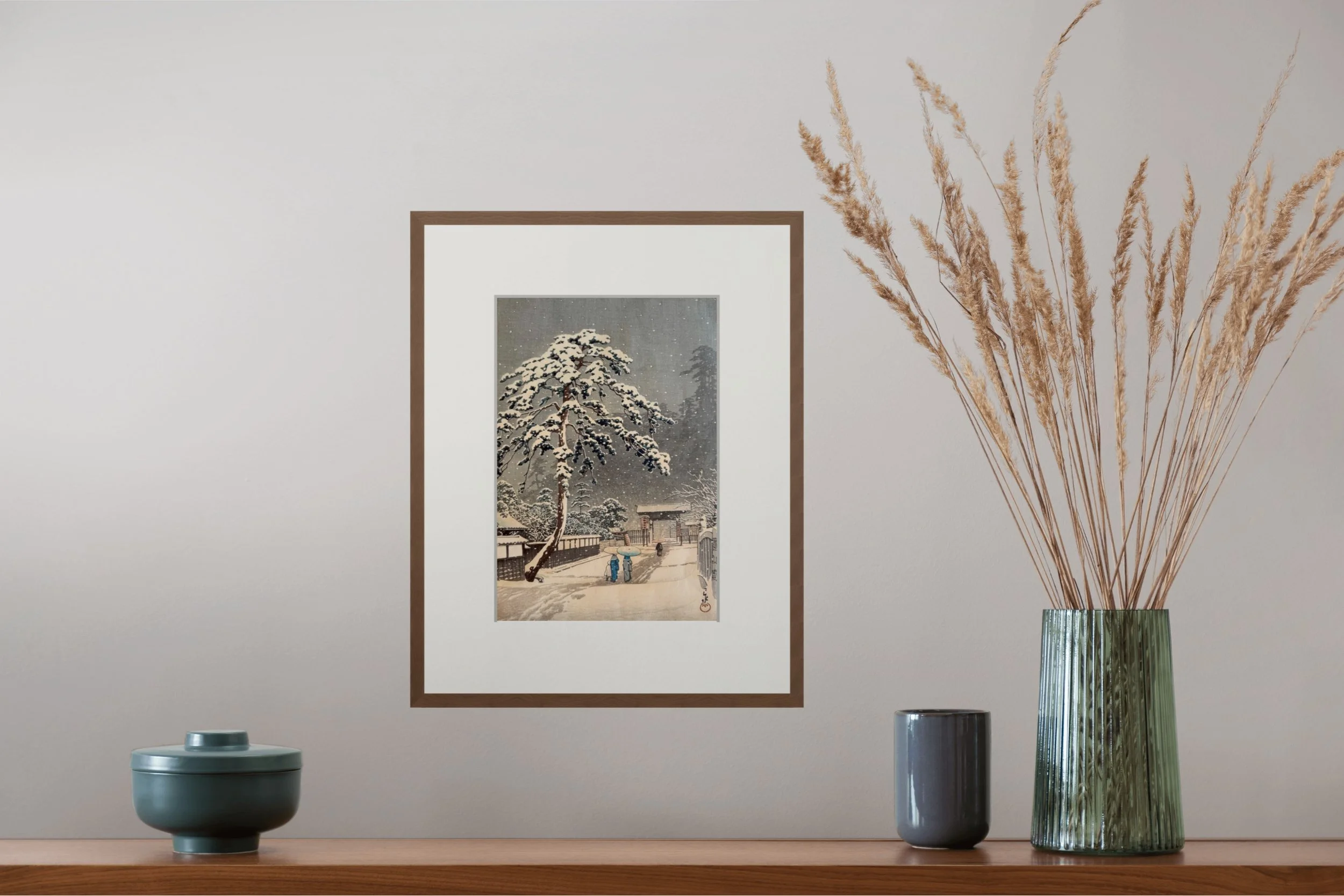
Rain at Shinagawa
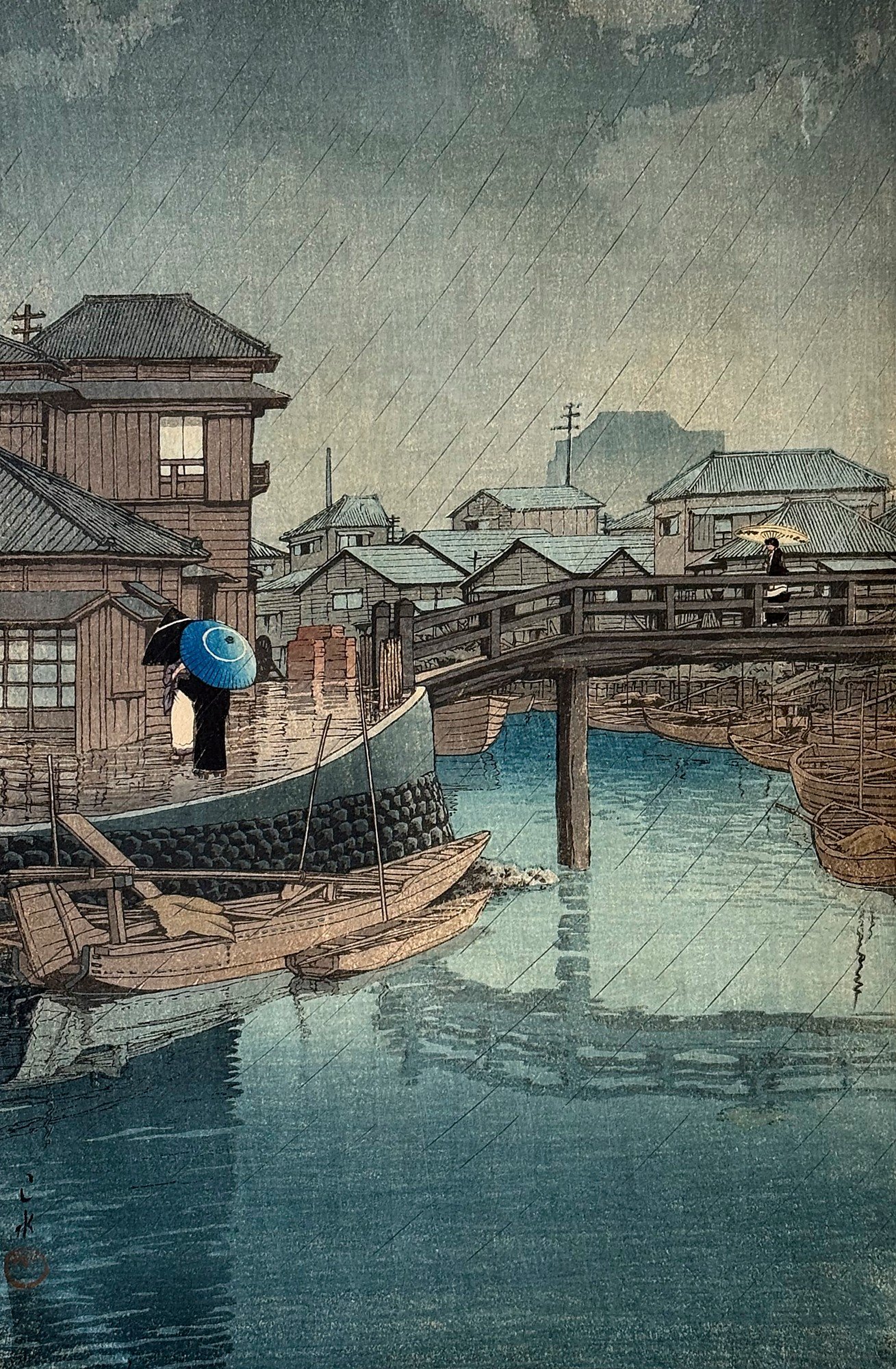
Rain at Shinagawa, Tokyo, Kawase Hasui, Japanese Woodblock Print (Shin-hanga)
Learning to See
Essays on Beauty, Craftsmanship, and the Experience of Art
IV. What Rain Allows Us to See
"Rain does not change the world. It changes how we notice it."
Most of us spend our lives trying to avoid the rain.
We hurry beneath umbrellas.
We look down at puddles rather than across them.
We wait for the weather to improve before taking a walk.
Rain becomes an interruption.
An inconvenience.
Something to endure.
Artists have often seen it differently.
Rain softens light.
It quiets streets.
It slows movement.
It dissolves sharp edges and replaces certainty with atmosphere.
The familiar becomes unfamiliar.
For Kawase Hasui, rain was never simply weather.
It was a way of seeing.
At first glance, Rain at Shinagawa appears almost uneventful.
A harbor.
Several boats.
A bridge.
A handful of people crossing beneath umbrellas.
Nothing extraordinary seems to happen.
Yet the longer we remain with the print, the more we begin to understand that the rain itself has become the true subject.
Notice what it does.
The horizon recedes into mist.
Buildings lose their sharp outlines.
Reflections lengthen across still water.
Every surface becomes quieter.
Even the figures seem less concerned with arriving somewhere than with simply moving through the moment.
The rain has transformed not only the landscape.
It has transformed time.
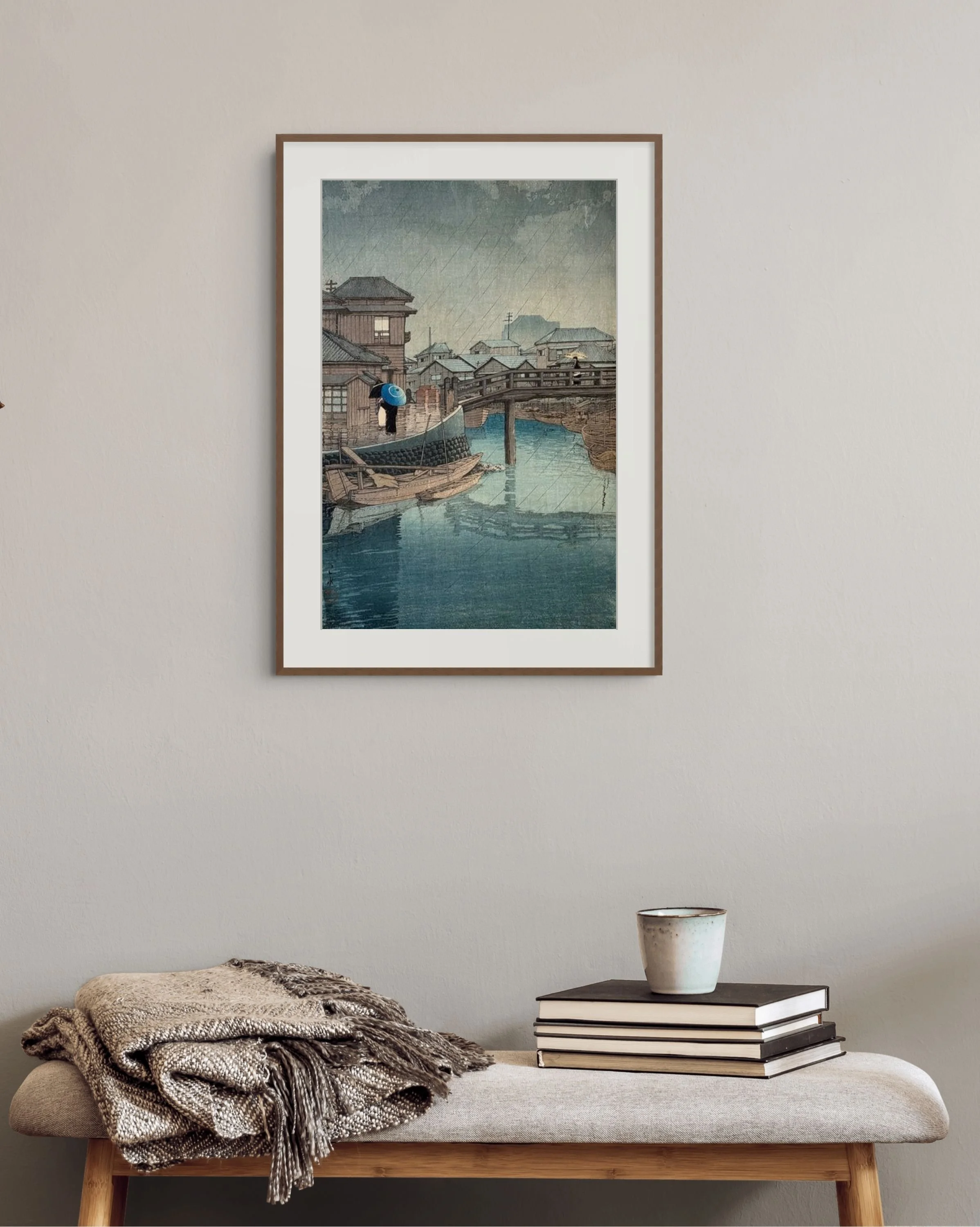
One of the remarkable qualities of Hasui's work is that he rarely tells us what to feel.
He never insists.
He simply creates the conditions under which feeling may arise.
That restraint is part of his genius.
Many artists build emotion through drama.
Hasui builds emotion through observation.
The diagonal rhythm of falling rain.
The gentle repetition of umbrellas.
The calm geometry of moored boats.
The subtle conversation between water above and water below.
Nothing calls attention to itself.
Everything works together.
Perhaps that is why so many people find themselves returning to his prints.
They are not exhausted in a single viewing.
They reveal themselves gradually.
The first time we notice the rain.
The next time, the reflections.
Later, the remarkable balance of the composition.
Years afterward, perhaps we realize that what moved us most was never the harbor at all.
It was the feeling of stillness.
There is a temptation in museums and galleries to ask:
"What does this picture mean?"
Sometimes a better question is:
"What does this picture help me notice?"
Hasui teaches us to notice weather.
Not simply as a condition of nature, but as something that shapes human experience.
Rain changes how people walk.
How they speak.
How sound travels.
How color appears.
How memory is formed.
The world has not become more beautiful.
It has become more visible.
I sometimes wonder whether this is one reason original works of art matter so deeply.
A reproduction may remind us what a picture looks like.
An original teaches us how another human being learned to see.
Standing before Rain at Shinagawa, we begin to realize that Hasui was never asking us to admire his technical skill, extraordinary though it was.
He was inviting us to stand beside him for a few quiet moments on a rainy afternoon and discover that beauty had been waiting there all along.
An Invitation
The next time it rains, resist the urge to hurry indoors.
Watch how reflections change.
Listen to how the world grows quieter.
Notice the colors that emerge when sunlight disappears.
Perhaps carry an umbrella and take a short walk.
You may discover, as Hasui did, that rain does not hide beauty.
Sometimes it reveals it.