This Week in Art, Design, and Culture: What Water Knows
Curated by Christina Stefani for House of Stefani

Bay of Sagami, Enoura, 2025 © Hiroshi Sugimoto: Courtesy of Gallery Koyanagi
The rain returned this week.
Not dramatically. Just enough to darken the pavement, soften the air, and make it clear that something is changing.
Here in Oregon, the first rain after summer has a particular feeling. The light shifts. Greens seem deeper. Greys return to the sky. The landscape begins moving toward another season before the calendar has quite caught up.
I have been noticing those colors lately.
Blue. Grey. Green. Cream. Gold.
They are also the colors that keep appearing in the oceans I paint.
Perhaps that is one reason I return to water so often. It is never really one color, never completely still, never exactly the same thing twice.
And yet we recognize it immediately.
I have also been thinking about wisdom.
Not intelligence. Not information. Not even knowledge, exactly.
Wisdom seems to involve something that can only be acquired through time: knowing what deserves our attention, when to act, when to wait, what to keep, what to release, and occasionally when something is finished.
Last week I wrote about staying with something long enough to know it.
Perhaps wisdom is what begins to happen after that.
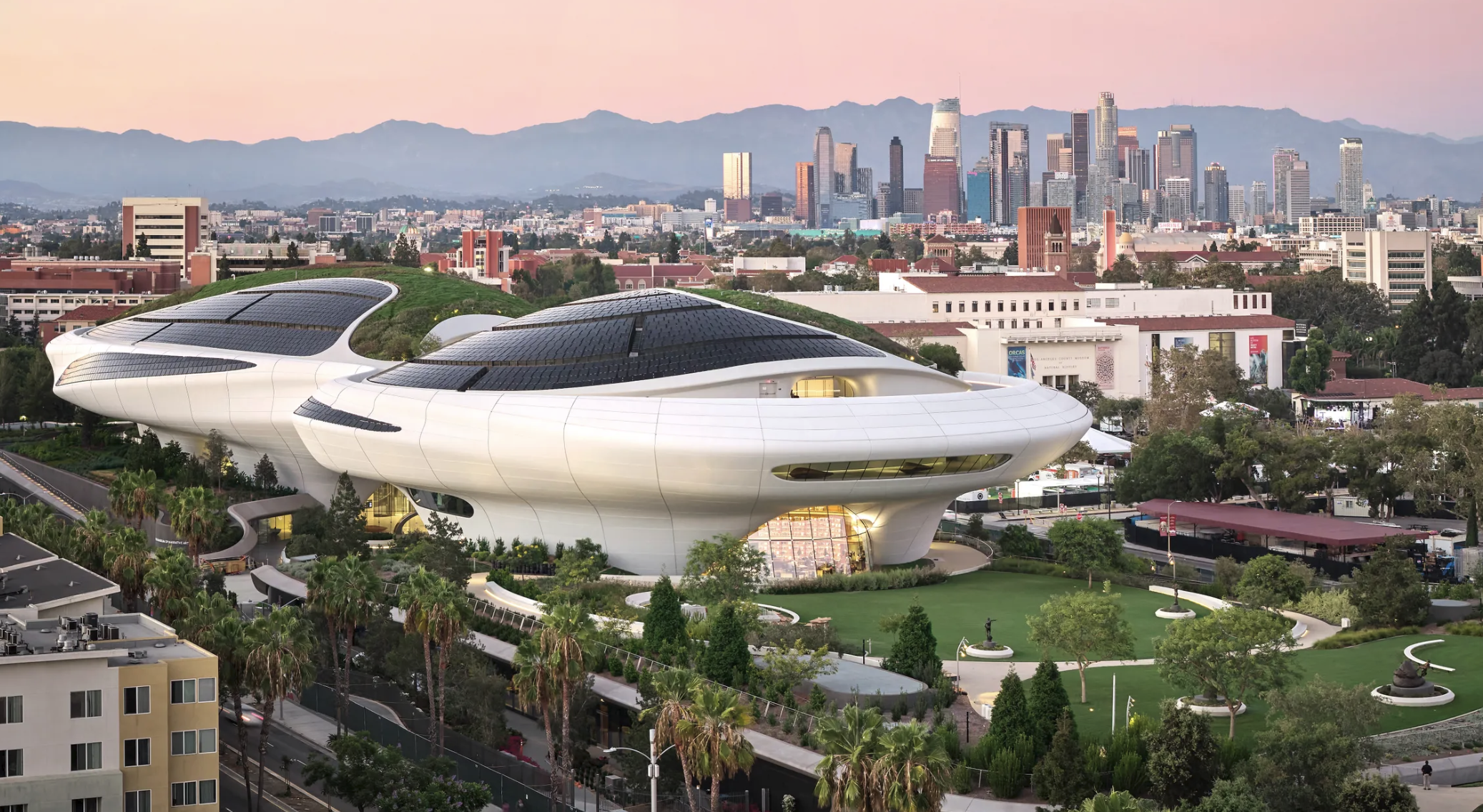
Lucas Museum of Narrative Art. Photo © Hufton+Crow.
An Image, and the Story It Carries
A new museum opening in Los Angeles this month asks a surprisingly fundamental question: what counts as an image worth preserving?
The Lucas Museum of Narrative Art, founded by George Lucas and Mellody Hobson, opens September 22 in Exposition Park.
It is not simply a museum about film, and certainly not simply a museum about Star Wars. Its more ambitious proposition is that visual storytelling belongs to a much longer human continuum.
Across more than 100,000 square feet of gallery space, the museum will bring together painting, illustration, comics, photography, murals, cinema, and other forms of narrative image-making.
I find the premise fascinating.
We have always made images to tell one another who we are.
Long before photography, cinema, advertising, or social media, there were images carrying stories from one person to another and, sometimes, from one century to another.
Perhaps the more interesting question is not whether something belongs to fine art or popular culture.
Perhaps it is:
What does the image carry?
What Happens When a Way of Making Disappears?
In Tokyo, another exhibition approaches images from almost the opposite direction.
Hiroshi Sugimoto: Extinction, at the National Museum of Modern Art, Tokyo through September 13, brings together approximately 60 gelatin silver photographs spanning Sugimoto's career from the late 1970s to the present.
The title refers not to Sugimoto himself, but to the photographic process at the center of his work.
As digital photography has displaced film, the exhibition asks us to consider gelatin silver photography as a practice now at risk of disappearing.
That interests me deeply.
A technology can become obsolete while the knowledge required to practice it remains profound.
Sugimoto's photographs, including his extraordinary seascapes, are inseparable from patience, technical command, light, chemistry, paper, exposure, and time.
We gain extraordinary things when technologies change.
But sometimes we lose a kind of knowing.
The knowledge stored in the hand.
The eye trained by repetition.
The understanding of a material acquired only by working with it for years.
Preserving an object is one form of stewardship.
Preserving the knowledge of how to make it may be another.
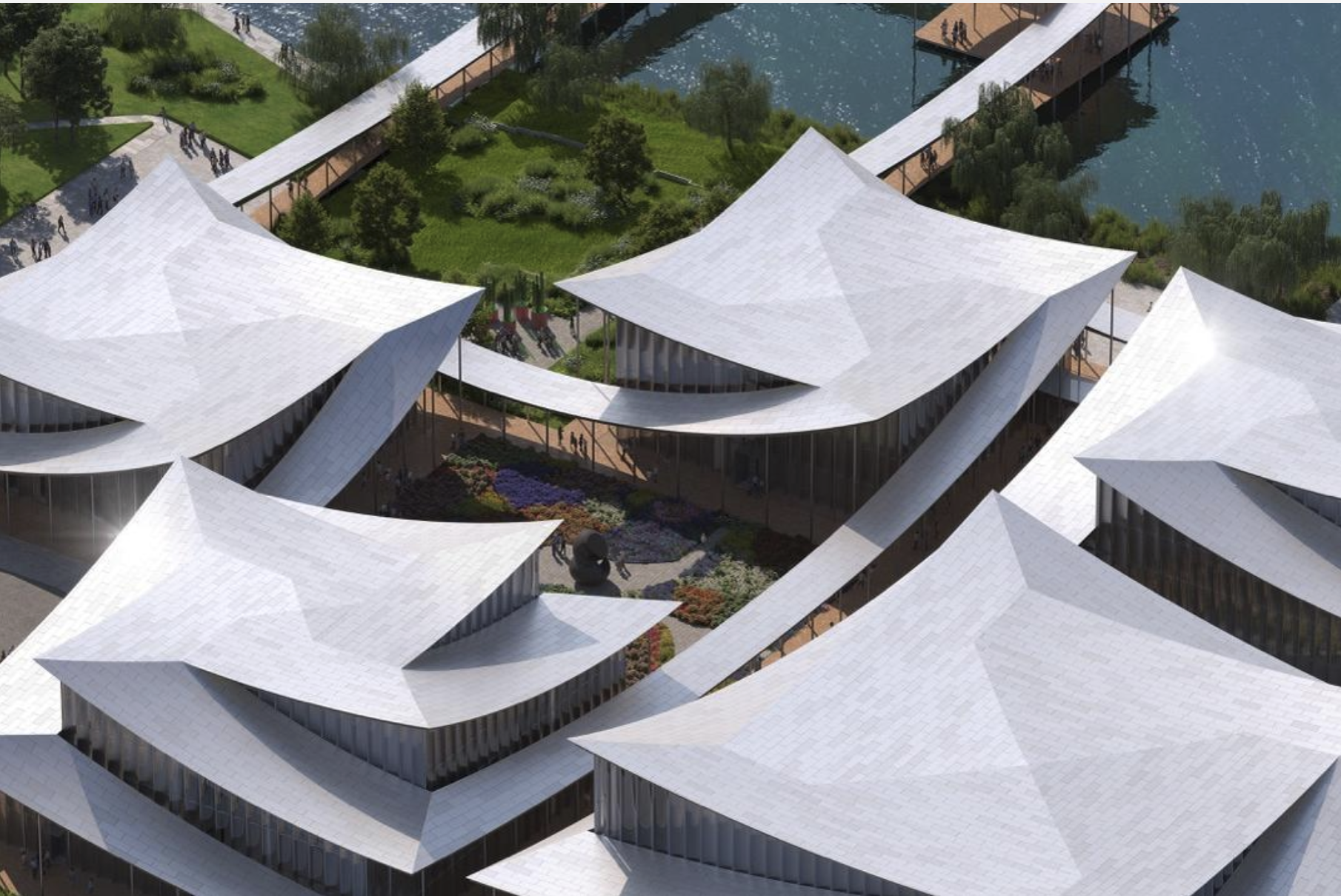
Suzhou Museum of Contemporary Art, courtesy Suzhou MoCA
Architecture Between City and Water
Water appears again in a new museum beside Jinji Lake in Suzhou, China.
The Suzhou Museum of Contemporary Art, designed by Bjarke Ingels Group, is conceived not as a single monumental building but as a collection of interconnected pavilions.
A continuous roof moves through the complex, reinterpreting the covered corridors traditionally used to move through Chinese gardens. Paths, bridges, galleries, gathering spaces, city, and lake are woven together rather than strictly separated.
I like that idea.
Architecture does not always need to dominate a landscape.
Sometimes it can teach us how to move through one.
And sometimes tradition is carried forward most successfully not by reproducing what came before, but by understanding the principle beneath it.
The Suzhou museum is contemporary architecture, unmistakably so.
But somewhere underneath that sweeping roof is an old idea:
the pleasure of wandering through a garden and allowing the path to reveal the view gradually.
On the Reading Table
A related approach to architecture appears in a substantial new monograph published this week.
Kengo Kuma: New Works, written with Grace La, surveys Kuma's projects completed around the world between 2012 and 2024.
Across 352 pages, the book explores an architectural practice deeply concerned with material, place, landscape, permeability, and the relationship between buildings and their surroundings.
Kuma's work has long interested me because materials are rarely treated as mere surface.
Wood is allowed to behave like wood.
Stone has weight.
Light becomes part of the structure.
Landscape is not simply the space left over after the building is finished.
There is wisdom in understanding the nature of a material before asking it to become something else.
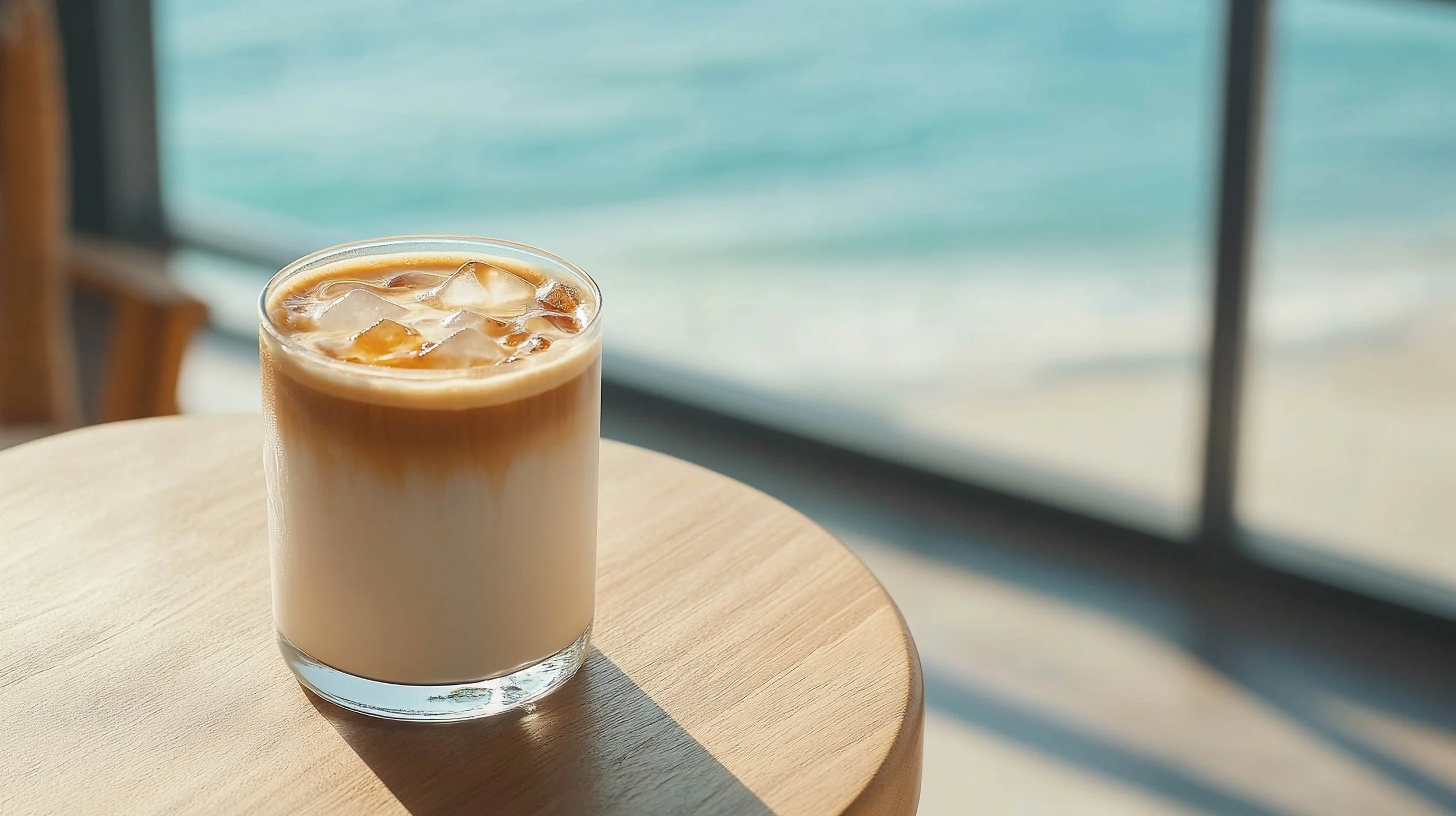
Iced chai by the sea.
From the Studio
Almost every day, a friend brings me an iced chai.
Milk, chai, ice, cinnamon.
It is a small thing.
And because it happens so often, it would be easy to treat it as one.
But repetition does not always diminish meaning.
Sometimes repetition creates it.
There is affection in remembering what someone likes. There is friendship in showing up again tomorrow. There are forms of love that announce themselves grandly, and others that quietly arrive in a cup.
I think I have become increasingly interested in the latter.
Iced Chai with Milk & Cinnamon
This is less a formal recipe than the simple drink that has become part of my days at the gallery.
You will need
Chai tea or chai concentrate
Milk
Ice
Cinnamon
Fill a glass generously with ice.
Add chai and milk in whatever proportion tastes right to you. I prefer it creamy but still distinctly spiced.
Stir well.
Finish with cinnamon, if desired.
Nothing complicated.
Which may be precisely the point.
What I'm Carrying With Me This Week
The rain is falling again.
The oceans in my studio are blue and grey and green, touched with cream and gold.
A photographer in Tokyo is preserving a way of making images that may someday disappear.
A new museum in Los Angeles is asking which images carry our stories.
An architect in Suzhou has made a contemporary path from an ancient way of moving through a garden.
And nearly every day, someone remembers what I like to drink.
None of those things is the same.
But perhaps wisdom is partly the ability to recognize what deserves to be noticed before it is gone.
A season.
A craft.
A landscape.
A friendship.
The ordinary things that, given enough time, become part of a life.
The rain returned this week.
I am paying attention.
See you next Saturday.
Warmly,
–Christina Stefani | House of Stefani Journal
About the Author: Christina Stefani is an artist, gallerist, writer, and founder of House of Stefani, exploring art, design, and culture.