Behind the Scenes of Every Exhibition: An Inside Look at Art Gallery Preparations
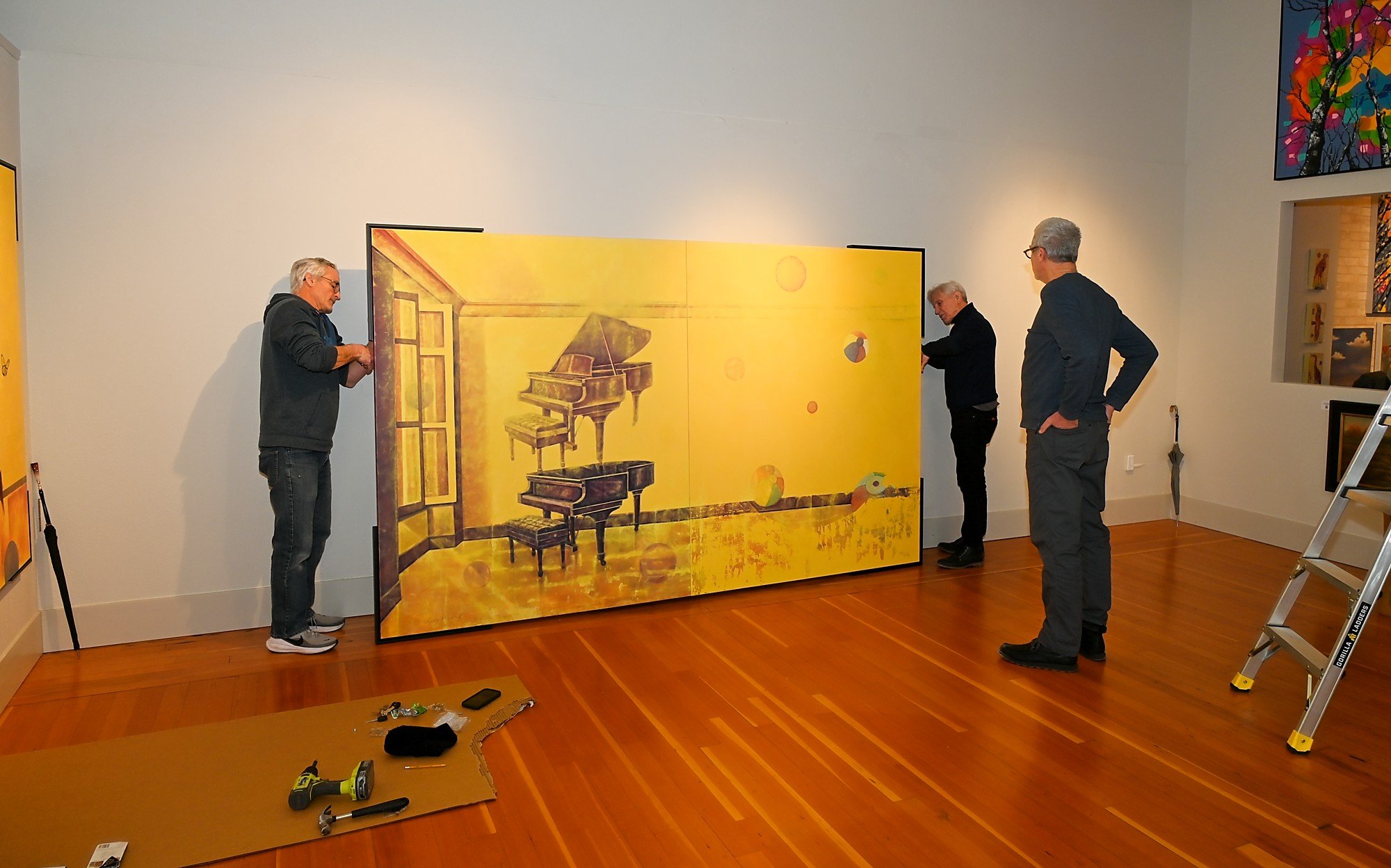
"I never realized how much a good gallery actually does." We hear this comment often. Hang day at the gallery: artist Gary Westford and his framer hang Eric Satie’s Apartment at Stefani Art Gallery.
One of the greatest compliments we receive is when a visitor says,
"Everything looks so effortless."
The truth is that thoughtful exhibitions are anything but effortless.
Long before an opening reception, and long after the last guest leaves, countless hours of work go into presenting artwork professionally and creating opportunities for artists and collectors to connect.
Much of that work is invisible.
It happens quietly, behind the scenes.
Because it is unseen, it is also easy to underestimate.
We believe artists deserve to understand the care, planning, and commitment that goes into every exhibition and every professional relationship we build.
Here is a glimpse behind the scenes.
Curating the Exhibition
An exhibition begins with thoughtful selection.
Which works belong together?
How do they relate to one another?
How does each piece contribute to the experience of the exhibition as a whole?
Curating is about more than filling walls.
It is about creating meaningful conversations between works of art.
Preparing Every Artwork
Every accepted artwork is documented, measured, photographed as needed, inventoried, labeled, and prepared for exhibition.
Details are reviewed.
Information is verified.
Presentation is refined.
These small tasks create confidence for both artists and collectors.
Building the Exhibition
Lighting.
Placement.
Spacing.
Sight lines.
Traffic flow.
Every exhibition requires dozens of decisions that influence how artwork is experienced.
The goal is simple:
To allow every work to be seen at its best.
Sharing the Story
Collectors connect with more than paintings.
They connect with artists.
That means preparing artist biographies, artwork descriptions, website content, newsletters, social media, exhibition materials, and conversations that help people understand and appreciate the work.
Every story told well helps build a lasting artistic career.
Welcoming Collectors
The Gallery is continually introducing new people to original art.
Sometimes those introductions happen during exhibitions.
Sometimes through private appointments.
Sometimes through designers, referrals, or community relationships that have been developed over many years.
Meaningful collector relationships are among the Gallery's greatest responsibilities.
They are built patiently, one conversation at a time.
Connecting People
One introduction can change an artist's career.
A designer looking for the right painting.
A collector beginning their first collection.
A business seeking artwork for a new space.
A curator looking for future opportunities.
Many of the Gallery's most valuable contributions happen through these quiet introductions that never appear on social media.
Caring for the Details
Professional galleries also spend countless hours managing the practical details that allow exhibitions to succeed.
Inventory.
Photography.
Insurance.
Labels.
Sales documentation.
Certificates of Authenticity.
Shipping.
Packaging.
Delivery.
Installation.
Payment processing.
Collector follow-up.
Artwork pickup.
Website updates.
Exhibition planning.
Refreshments.
Clean-up.
Every one of these tasks contributes to the artist's professional presentation.
Stewardship
Perhaps the Gallery's most important responsibility is stewardship.
We care for artwork.
We care for the physical gallery space.
We care for collectors.
We care for relationships.
And we care for the reputation of every artist we represent.
That work continues long after an exhibition closes.
Sometimes a collector returns months later.
Sometimes years later.
The conversations continue.
The relationships deepen.
The artist's career grows.
That is the work of a Gallery.
It is not always visible.
But it is always there.
Christina's Note
One of the things I love most about gallery work is that so much of it happens quietly. The collector who returns a year later. The introduction that leads to a commission. The conversation that inspires someone to begin collecting original art. Those moments rarely make headlines, but they are often the ones that shape an artist's career. They remind me that our work isn't measured only by what happens on opening night. It's measured by the relationships we nurture over time.