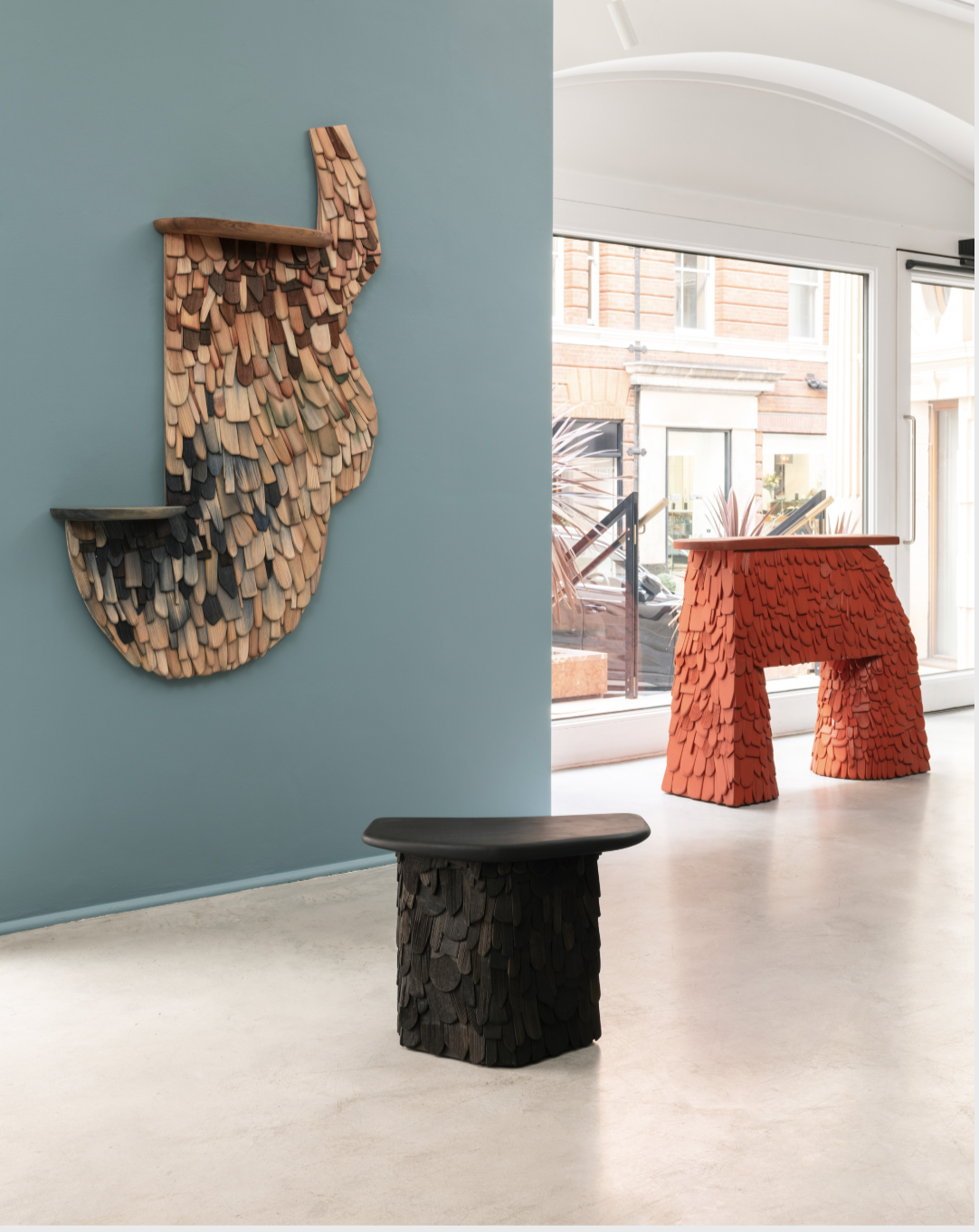
Curated by Christina Stefani for House of Stefani

Sir Thomas Lawrence’s 1815 portrait of the Duke of Wellington sold through Christie’s for £9.67m, setting the artist’s record. This sale marked the beginning of Christie’s Classic Week, which totaled £50.7m and featured other significant Old Master and cultural artworks.
A More Discerning Season
There are weeks when the art world feels loud, and weeks when it feels revealing. This one feels revealing.
The headlines suggest recovery: stronger auctions, record results, renewed activity across major houses. But beneath the numbers is a more interesting shift. Collectors are not simply returning to the market; they are returning with sharper expectations. They want beauty, yes, but also context. They want provenance, material intelligence, and a sense that an object belongs to a larger life.
That is why the rise of collectible design feels so important. A Judd table, a Val-Kill chair, a beautifully made watch, a painting with a clear history, a room composed with restraint: these are no longer separate categories. They are part of the same conversation about how we live with culture.
I am especially drawn to the museum stories this week. The Met’s forthcoming Val-Kill exhibition reminds us that furniture can carry ideals. MoMA’s focus on modernism in Western Africa expands the map of architectural imagination. The Judd Foundation’s deeper commitment to design confirms what many collectors already feel instinctively: the line between art and design is often less a wall than a passage.
There is also a necessary seriousness in the air. Provenance, repatriation, and cultural heritage are not administrative details; they are part of the soul of collecting. To bring an object into one’s home is to enter into a relationship with its story.
For House of Stefani, this is the world we care about: thoughtful, international, layered, and alive to both beauty and responsibility. The most meaningful collections are not assembled in haste. They are composed over time, with curiosity, care, and a willingness to let each piece deepen the atmosphere of a life.

Jan van Huysum (1682-1749), Fruit and Flowers in a Wicker Basket. Oil on panel, measuring 31⅜ x 23⅝ inches (79.7 x 60 cm). Sold for £6,516,000 at Christie’s London auction on June 30, 2026.
Top Developments I'm Watching This Week
The auction market is breathing again, but selectively. ArtTactic data reported by The Art Newspaper shows H1 2026 sales at Christie’s, Sotheby’s, and Phillips up 70% year over year to $6.8B, with stronger sell-through, online volume, and renewed strength beyond trophy lots. The signal is not “everything is back”; it is that quality, provenance, and emotionally legible collecting categories are moving again.
Luxury collectibles are now central, not adjacent. Phillips reported $507M in H1 auction sales, up 60% year over year; three of its five top lots were watches, and watch sales exceeded its Modern and contemporary art sales so far this year. This reinforces a broader taste shift: younger collectors are moving fluidly between art, watches, design, fashion, and cultural objects.
Old Masters and classical material are having a prestige moment. Christie’s Classic Week evening sales set seven artist auction records, including Sir Thomas Lawrence at £9.67M and Jan van Huysum at £6.516M. The important signal is not nostalgia; it is collector appetite for scholarship, rarity, and historical confidence.
Design is becoming more institutional. Judd Foundation has appointed its first director of design, Alexandra Cunningham Cameron, ahead of Donald Judd’s 2028 centennial, with a mandate spanning furniture, architecture, product design, archives, scholarship, and exhibitions.
Museums are leaning into craft, identity, and cross-disciplinary storytelling. MoMA’s July calendar includes Architects of Liberation: Modernism in Western Africa, while The Met’s upcoming Cottage Industry: The Val-Kill Furniture Shop reframes furniture through women-led enterprise, immigrant and rural craft, and social reform.
Art travel is shifting toward destination culture. PAD Saint-Tropez and NOMAD Hamptons show collectible design following high-net-worth audiences into leisure destinations, while MONA’s planned Bangkok outpost points to private museums expanding through hospitality and real-estate partnerships.
Provenance and cultural property remain operational risks. Sotheby’s due diligence helped expose forged provenance in an attempted antiquities sale, while Bogotá’s Museo Nacional de Colombia is exhibiting 1,194 repatriated pre-Columbian objects returned between 2022 and 2026.
Architecture is becoming a cultural flashpoint. UNESCO is reviewing Florence’s controversial “black cube” redevelopment, and Washington, DC’s proposed 250-foot triumphal arch raises questions about skyline precedent, monumentality, and political power in public space.
Emerging Themes
The collector’s eye is widening. Fine art, furniture, watches, archival fashion, travel, and design are converging into one lifestyle-led collecting universe.
The most resilient works have a story. Buyers are responding to provenance, rarity, artist legacy, cultural context, and material integrity.
Museums and luxury are borrowing from each other. Couture week, train design, design fairs, museum restaurants, and artist estates all point to culture as an immersive world, not a single object.
Trust is part of taste. Documentation, ethics, conservation, and transparent sourcing are becoming part of the luxury experience itself.
Overhyped vs. Important
Overhyped: Treating the auction rebound as a universal market recovery. The data is strong, but still led by quality consignments, top-tier wealth, and carefully curated categories.
Overhyped: Every fashion-art crossover. Some are merely branding; the stronger ones build legacy, scholarship, philanthropy, or cultural continuity.
Actually important: Collectible design’s migration into Saint-Tropez, the Hamptons, Marfa-adjacent Judd scholarship, and museum programming around craft all suggest design is becoming a serious collecting language.
Actually important: Provenance, sanctions, and cultural property scrutiny are now part of the collector experience, not back-office concerns. UK guidance explicitly warns art market participants about sanctions and enhanced due diligence exposure.
Founder Takeaway
The week’s strongest signal is the return of confidence with sharper taste. Collectors are not simply buying more; they are buying across categories, seeking objects with presence, provenance, and a life beyond transaction. At House of Stefani, we serve as a calm, elegant guide through that world.
See you next week. Warmly,
–Christina Stefani | House of Stefani Journal
About the Author: Christina Stefani is an artist, collector, and founder of Stefani Art Gallery and House of Stefani. Her work explores transformation, beauty, love, and the emotional language of abstraction.