The Art of Collecting: How Taste Becomes a Point of View
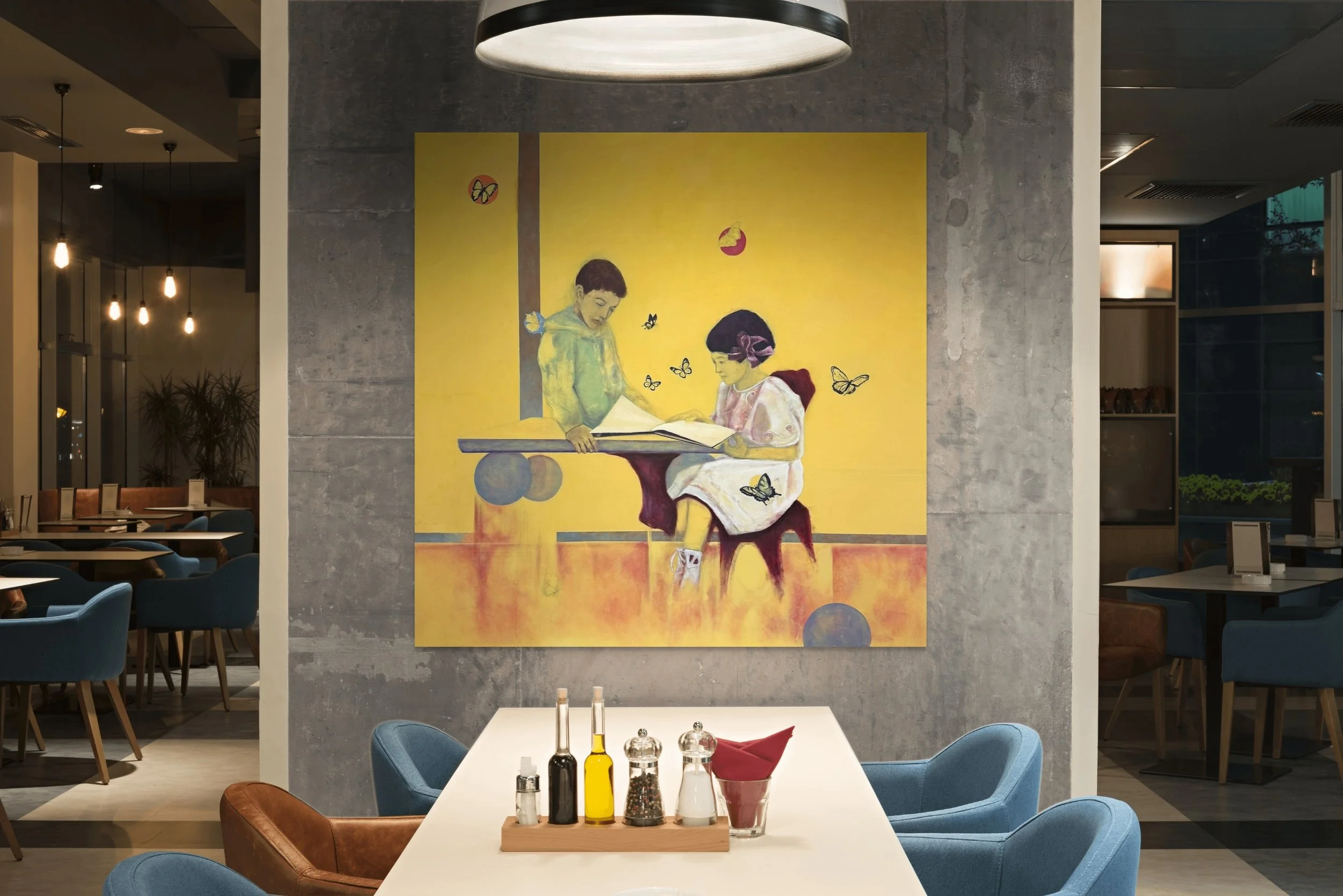
The Music Room by Gary Westford, courtesy Stefani Art Gallery
Taste is not neutral.
It is shaped by what we are exposed to, the context we inhabit,
and, most importantly, the choices we make again and again.
What we collect reflects not only what we admire, but what we choose to stand behind. Each decision carries weight. Over time, these decisions accumulate into something more than preference. They become a point of view.
At House of Stefani, we see collecting as an active, evolving practice. It is not about accumulation for its own sake, nor about chasing consensus. It is about alignment: between the work, the collector, and the life that surrounds it.
Collecting as a Living Edit
The canon is not replaced so much as expanded. New voices enter. Older ones are reread. Familiar names shift in meaning when encountered alongside contemporary practices. In this way, collecting becomes a form of editing history in real time, one shaped not by institutions alone, but by individuals willing to engage deeply and live thoughtfully with art.
This is why collecting is never finished. A collection grows not just in size, but in coherence. Early choices are revisited. Assumptions are challenged. Works that once felt certain may reveal new complexities, while quieter pieces gain gravity with time.
Taste matures through exposure, yes, but also through commitment.
Collecting as Authorship
At its best, collecting is a form of authorship.
It requires selection, discernment, and risk. To collect well is to take responsibility for one’s choices, to stand behind them even when they resist easy explanation. This authorship is not loud. It does not announce itself. It reveals itself slowly, through relationships between works and through the lives they inhabit.
A meaningful collection does not aim to impress. It aims to endure.
Stages of a Collection
While no two collections are alike, we often see taste take shape across distinct stages:
Anchors: works that establish a foundation and offer historical or conceptual grounding.
Works for Living: pieces that reward long-term proximity, revealing themselves gradually through daily presence.
Emerging Positions: works chosen by instinct rather than consensus, where curiosity outweighs certainty.
These stages are not hierarchical. They coexist. Together, they form a rhythm between stability and exploration—between what is known and what is still unfolding.
Living With Art
At Stefani Art Gallery, we believe art reaches its fullest expression when it is lived with. Away from spectacle and urgency, meaning deepens. Art becomes part of daily experience, shaping how spaces feel and how time is perceived.
To live with art is to allow it to challenge, comfort, and evolve alongside you. It is an ongoing conversation. One that resists final answers.
A Practice, Not a Transaction
Collecting, in our view, is not about ownership alone. It is about care, context, and continuity. It asks for patience, humility, and a willingness to look closely. Again and again.
In an age driven by immediacy, collecting becomes a countercultural act. It is a commitment to depth over speed, to resonance over relevance.
At House of Stefani, we approach collecting as a long-standing practice. Rooted in legacy, guided by mastery, and sustained by belief in the enduring power of art.
This is not about having more.
It is about seeing better.
–Christina Stefani